
AI summarizer
Get the main ideas from PDFs, articles, and YouTube videos, then ask follow-up questions.
Ask a research question, understand the evidence, and synthesize your research – all in one workspace.
Loved by over 10,000+ researchers











Search scholarly literature from your research question, inspect the results, and add relevant papers to your project. Keep your question and sources together as your research takes shape.
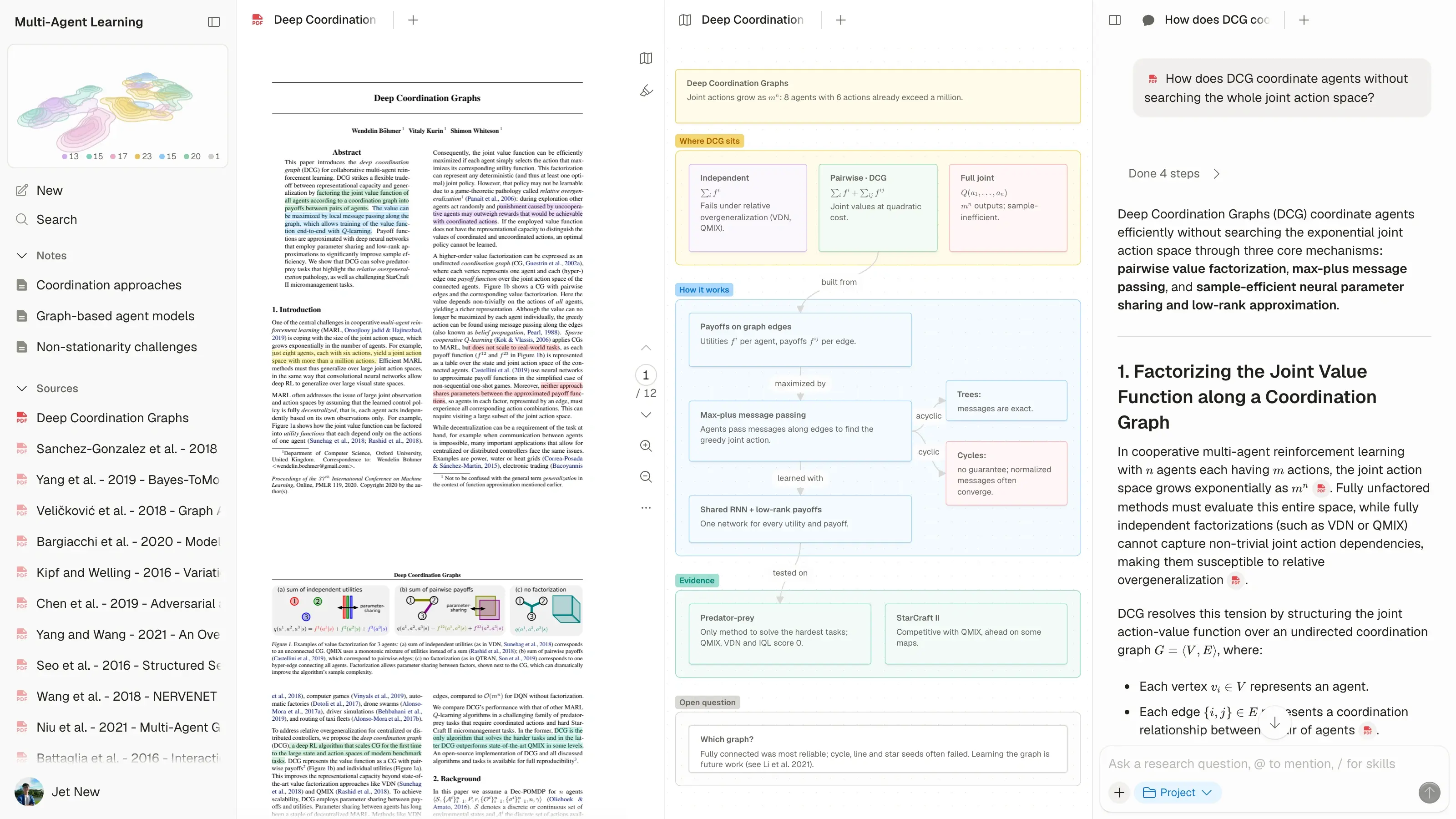
Explore a paper’s ideas in an editable knowledge map. Ask about its methods, findings, or unfamiliar concepts, and open cited sources to inspect the evidence behind an answer.
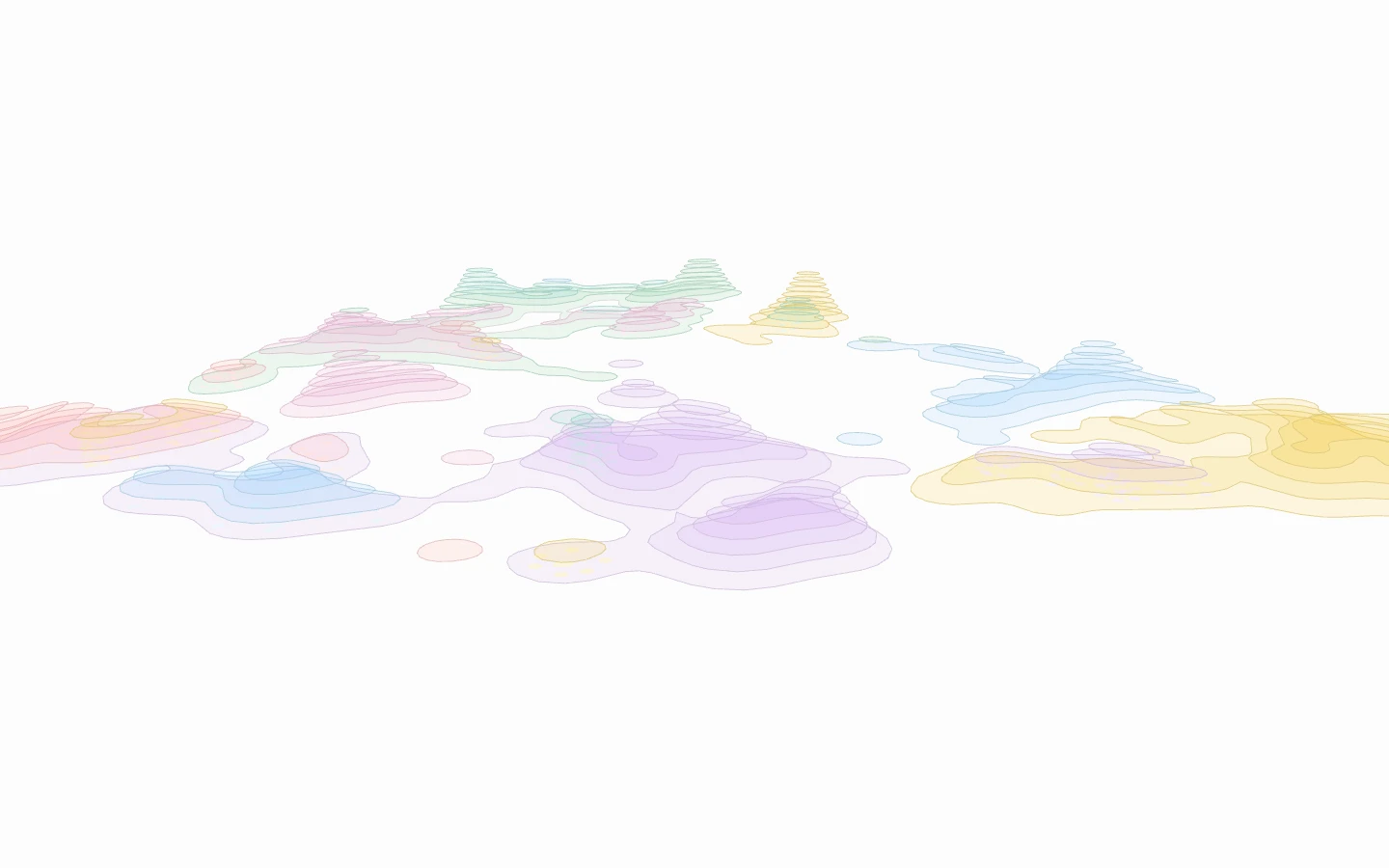
Compare findings across your papers, explore connections on a semantic map, and develop cited synthesis notes. Keep your sources, maps, and notes together as your literature review takes shape.
Start with a PDF, article, or YouTube video. Summarize it, ask questions, or explore its ideas in a concept map.
Get the main ideas from PDFs, articles, and YouTube videos, then ask follow-up questions.
Summarize a paper or report, then explore the methods, findings, and concepts you want to understand.
Summarize a web article and keep it alongside your questions and research notes.
Summarize a lecture or interview from its available transcript, then ask about what was said.
Ask questions about a PDF and open cited sources to investigate the answer.
Generate an editable concept map from a source and explore how its ideas connect.
Reveal argument structure, causal effects, process flows, relationships, timelines and more with multi-level zoom.
Explore your literature from different angles and perspectives to uncover new insights.
Multi-step reasoning across your papers, every claim explained with its source.
Every citation is auto-indexed on import, with a breakdown of how it justifies the claim.
Compare findings across papers and turn the pattern into an inspectable map.
Ask questions over your sources and inspect the citation trail behind each answer.
Move from an answer or map node back to the exact passage that supports it.
See what each cited paper contributes to the argument you are reading.
Keep sources, notes, questions, and maps linked inside one research workspace.
Turn highlights and ideas into notes that stay attached to their evidence.
Export notes and download knowledge maps when you need to use your work elsewhere.
Compare findings across papers and turn the pattern into an inspectable map.
Ask questions over your sources and inspect the citation trail behind each answer.
Move from an answer or map node back to the exact passage that supports it.
See what each cited paper contributes to the argument you are reading.
Keep sources, notes, questions, and maps linked inside one research workspace.
Turn highlights and ideas into notes that stay attached to their evidence.
Export notes and download knowledge maps when you need to use your work elsewhere.
“Atlas is beautiful and thoughtfully made.
As a researcher, I really appreciate being able to explore and interrogate any source type in depth through Atlas's chat and knowledge map functions.
The citations function is SO helpful, as I get to trace the precise quotes/content from my chat conversations back to exactly where they are mentioned in each source.”

Research Assistant at Duke-NUS Global Health Institute

“Atlas is beautiful and thoughtfully made.
As a researcher, I really appreciate being able to explore and interrogate any source type in depth through Atlas's chat and knowledge map functions.
The citations function is SO helpful, as I get to trace the precise quotes/content from my chat conversations back to exactly where they are mentioned in each source.”
Research Assistant at Duke-NUS Global Health Institute
“Atlas has been a real time-saver for me. I'm not some AI expert or data scientist - I just needed a tool to help me wade through the sea of articles I come across daily. What I love about Atlas is how it gives me the gist of an article in seconds.”

Co-founder at Knoyo Health
“TLDR: Saves time, summarizes well. My personal favourite use case is to ask it to summarize YouTube videos so that I can decide whether to watch it. It can perform off-the-shelf RAG over multiple websites and even WhatsApp / Telegram Web chats.”
Head of AI at KiteEdge
“WHAT THE HECK DID YOU CREATE. It's like an ultimate GPT. I was actually quite surprised how the AI pulled so many concepts tgt. I think it's a huge addition to many super users of GPT. Excited to use it for my own research!”

“As a software engineer in a big company that has to read lots of documentation, this helps me summarize multiple fragmented docs to get me up to speed on the domain I'm working on - in a fraction of the time.”

Software Engineer at TikTok
“Atlas is constantly trying to push the boundaries of information and interaction design using innovative visual forms.
Using Atlas has not only given me a clear mental model to synthesize and consolidate information, but also an enjoyable and tactile feedback loop to generate original ideas.”


“Atlas is constantly trying to push the boundaries of information and interaction design using innovative visual forms.
Using Atlas has not only given me a clear mental model to synthesize and consolidate information, but also an enjoyable and tactile feedback loop to generate original ideas.”
