
7 Best Elicit Alternatives for AI-Powered Research
Elicit alternatives compared: Atlas, Consensus, Semantic Scholar, Scite, ResearchRabbit, SciSpace, and Undermind scored by data extraction, cost, and fit.
- Byline

Summary
For 2026, the main jobs are paper search, data extraction, cite checks, and private files.
Use Elicit for data pull, Scite for cite checks, Semantic Scholar for free search, and Atlas for private sources.
Use Semantic Scholar or ResearchRabbit for free search, Scite for cite checks, and Atlas for your own sources.
Elicit is still strong for search and data pull, while other tools help with maps, cites, and saved source sets.
Atlas helps after you collect papers. Each answer can point back to cited PDF passages. The workspace also turns a growing library into maps you can reuse across a literature review. That makes it a better fit after Elicit helps you find or pull the first batch of papers.
Elicit is strong at paper search and data pull. You may need a broader source set, a map view, or a different way to read.
Before replacing Elicit, name what must survive the move. A paper list still needs search. A data table still needs Elicit. A cite trail needs Scite. A seed-paper map needs ResearchRabbit or Connected Papers. A hard methods section needs SciSpace. A kept PDF library that now has to become an argument needs Atlas.
For the July 2026 update, I tested this comparison against a six-step review flow. The steps were search, data pull, cite checks, paper reading, synthesis, and writing. I started with the item that has to survive each switch: a paper list, data table, cite trail, PDF library, or draft argument. That method keeps the comparison grounded in research work instead of turning it into a generic AI-tools ranking.

 Atlas
AtlasSynthesize the papers you kept from Elicit
Upload your selected papers and compare findings through cited answers.
Where Elicit Excels and Falls Short
Elicit's strengths are meaning-based paper search, data pull, and review support. It does not handle every source type. PDFs, reports, and web pages may fall outside the job. It also lacks a visual map and deep library order. These gaps are where other tools differ.
Disclosure: we make Atlas, one of the products discussed in this post. We publish our scoring criteria and name the research workflows where other tools are stronger.
Where Elicit Leads
Elicit excels at:
- Searching academic papers by meaning.
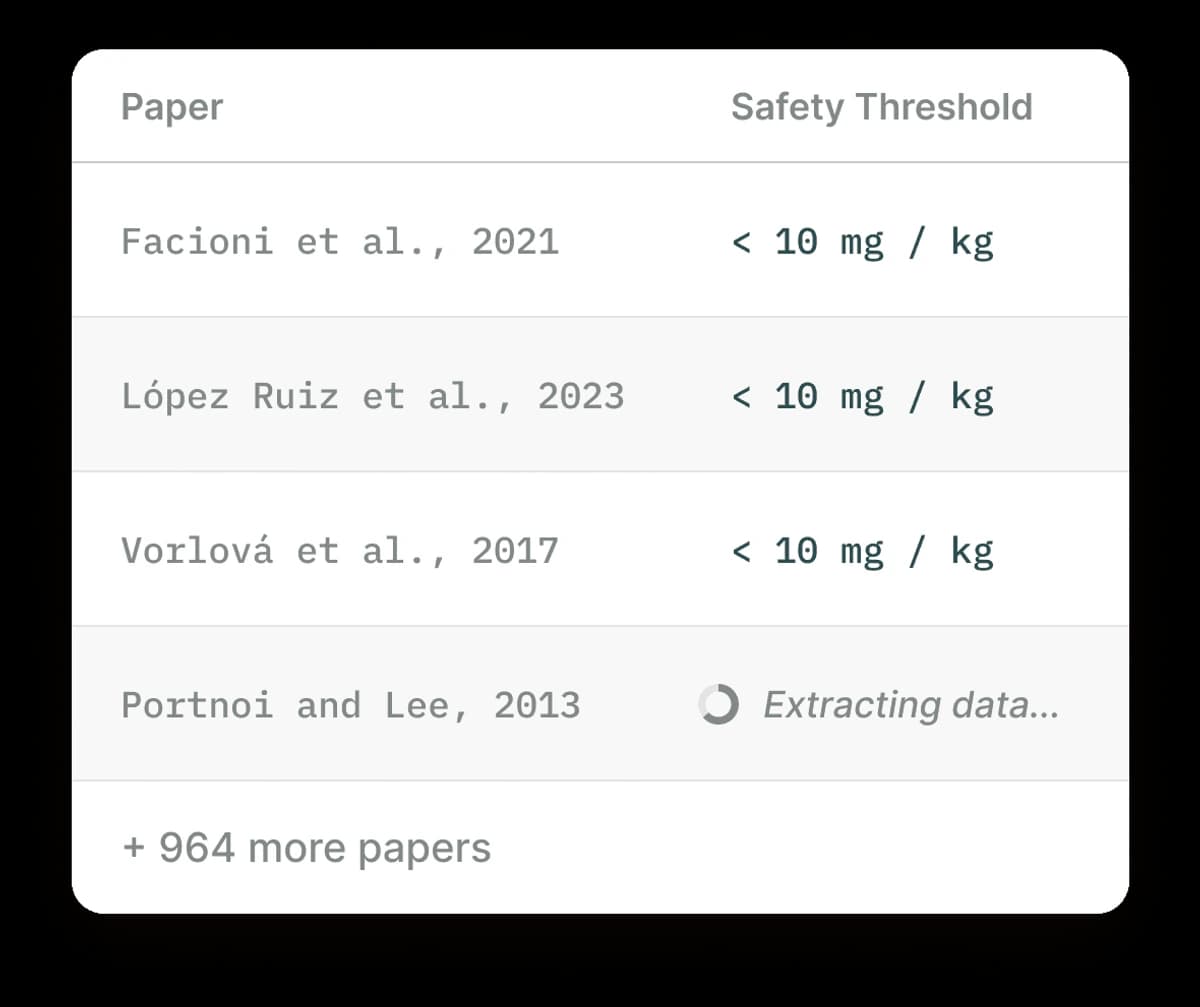
- Pulling fields, such as methods, outcomes, and limits.
- Creating tables across studies.
- Supporting review workflows.
Where Other Tools Help
But users commonly want:
- Support for PDFs, reports, and web pages.
- Visual maps for ideas and claims.
- Better order for a growing paper library.
- Lower cost for heavy use.
- Real-time web information.
Let's look at alternatives that address these gaps.
Elicit Alternatives Compared
This is the comparison table promised in the brief. Elicit is still the benchmark for paper search and data tables. Atlas is the better fit when the next job is reading across a saved source set. Each column reflects a specific workflow stage to help you pick by the job you need to complete next.
| Tool | Paper search | Data pull | Cite quality | Source breadth | Review support | Typical paid tier |
|---|---|---|---|---|---|---|
| Elicit | Strong. | Strong. | Paper-level citations. | Academic papers. | Strong. | $14/month Plus. |
| Atlas | No broad index. | Limited. | Cited answers from uploads. | PDFs, articles, notes. | Best after screening. | $20/month Pro. |
| Consensus | Strong for questions. | No. | Study-linked answers. | Academic papers. | Light. | $11.99/month Premium. |
| Semantic Scholar | Strong. | No. | Paper pages and citation graph. | Academic papers. | Light. | Free. |
| ResearchRabbit | Cite-network search. | No. | Cite graph. | Academic papers. | Search support. | Free. |
| Scite | Cite-context search. | No. | Support, contrast, or mention labels. | Academic papers. | Evidence-check support. | $20/month. |
| SciSpace | Paper search and PDF reading. | Light. | Paper-linked notes. | Papers and uploaded PDFs. | Light. | $20/month Premium. |
| Undermind | Deep paper search. | No. | Search reasons and fit notes. | Academic papers. | Strong discovery support. | $20/month. |
Table 1: Elicit alternatives compared by paper search, data pull, citation quality, source breadth, review support, and typical paid tier.
The Elicit Handoff Test
Before switching tools, separate the job Elicit already does well from the job that now feels blocked. Use this handoff test:
Identify the Blocked Research Step
The Elicit Handoff Test makes six practical claims:
- Paper lists need search.
- Data tables need Elicit.
- Cite trails need Scite.
- Seed-paper maps need visual discovery.
- Hard methods sections need reading help.
- Kept PDF libraries need synthesis.
Treat those as separate jobs before you pay for another tool.
| If the blocked job is... | Stay with or add... | Why |
|---|---|---|
| Finding the first relevant papers for a question | Elicit, Semantic Scholar, Undermind | The job is still search recall. |
| Pulling study fields into rows and columns | Elicit | The job is extraction, where Elicit is strongest. |
| Checking how later papers treat a claim | Scite | Citation context shows whether later work supports or disputes the claim. |
| Expanding from a seed paper into nearby work | ResearchRabbit or Connected Papers | The job is network discovery. |
| Reading a difficult methods section | SciSpace | The job is comprehension at the paper level. |
| Writing across a final saved paper set | Atlas | The job is cross-source synthesis with citations. |
Table 2: Handoff guide matching each blocked research job to the tool best suited to handle it.
Replace only the missing step
Researchers often switch away from Elicit because one later step is painful, but that is usually a sign to add a tool rather than replace it. In most serious reviews, Elicit remains the front-end table builder. Any alternative earns its place only if it handles a different stage better.
Migration Checklist: Moving Work Out of Elicit
Do not migrate everything. Move only the artifacts that still have research value:
Keep research outputs you can reuse
- Export or copy only the final paper list. Discard intermediate search results.
- Keep the data columns that explain why you kept, cut, or cited a paper.
- Save PDFs for the papers you will cite or synthesize.
- Put citation-check tasks into Scite if the argument depends on contested papers.
- Put reading-support tasks into SciSpace if the issue is comprehension.
- Put retained PDFs, notes, and reports into Atlas if the issue is cross-source synthesis.
- Write a stop rule before testing another tool, such as "this must replace one current step within a week."
Give Each Output One Destination
A handoff often works better than replacing Elicit. Let Elicit find papers and organize their fields. Then use a second tool to check the evidence, explain the papers, or help you write across the set you kept.
7 Best Elicit Alternatives
The seven tools below solve different parts of the research process. Compare them by the step that Elicit does not cover well enough for your project.
1. Atlas: Best for Research Synthesis
Best for: Researchers who want to connect ideas across all their sources.
Atlas literature review workspace takes a different path than Elicit. It does not search broad paper indexes. You build your own library by uploading PDFs, articles, and notes. Atlas then helps you find links and write across that set.
In a practical Elicit-to-Atlas flow, Elicit handles the table first. That table might include methods, outcomes, limits, and sample details. Atlas becomes useful once you have the papers worth keeping. Upload that short list. Ask a question such as "Which steps improved adherence?" Then check the cited passages before writing.
How it compares to Elicit:
- Works with academic papers, web pages, videos, and other source types.
- Visual mind map shows links.
- Builds a lasting library over time.
- Writes across sources.
- No external paper search.
Key features:
- PDF and article upload.
- AI chat across all sources.
- Mind map view.
- Automatic link finding.
- Cite tracking.
Best for: Researchers who already have their papers and want to organize and connect them.
Pricing: $20/month Pro.
2. Consensus: Best for Evidence-Based Answers
Best for: Quick answers backed by peer-reviewed research.
While Elicit helps you explore and extract from papers, Consensus answers specific questions. It is faster when you need a quick answer. It is less useful when you need deep extraction.
How it compares to Elicit:
- Faster for specific questions.
- Shows research consensus.
- Cleaner, simpler interface.
- Less detailed extraction.
- Cannot create comparison tables.
Key features:
- Search across a large academic index.
- Consensus meter: Yes, No, or Mixed.
- Study type labels.
- Copilot integration.
Best for: Getting quick, evidence-based answers rather than deep paper review.
Pricing: Free tier available, Premium $8.99/month.
3. Semantic Scholar: Best Free Search
Best for: Researchers on a budget who need help finding papers.
Semantic Scholar is free and offers AI features like TLDR summaries and citation graphs. It has fewer workflow features than Elicit. It is still excellent for finding papers and seeing research influence.
How it compares to Elicit:
- Completely free.
- Strong cite analysis.
- Research alerts and feeds.
- TLDR summaries.
- No structured data extraction.
- Less advanced search.
Key features:
- TLDR one-sentence summaries.
- Cite influence tracking.
- Author pages and metrics.
- Research feeds and alerts.
- Open API access.
Best for: Researchers who mainly need paper search.
Pricing: Free.
4. ResearchRabbit: Best for Paper Discovery
Best for: Finding related papers through citation networks.
ResearchRabbit is best at one job. It helps you find papers you did not know existed. Add seed papers, and it shows cite networks to surface related work.
How it compares to Elicit:
- Excellent cite network view.
- Collection-based organization.
- Email alerts for new papers.
- Free to use.
- No AI chat or question answering.
- No data extraction.
Key features:
- Cite network graphs.
- Collection organization.
- Paper recommendations.
- New paper alerts.
- Zotero integration.
Best for: The expand phase of a review: finding related work after you know the seed papers.
Pricing: Free.
5. Scite: Best for Citation Context
Best for: Understanding how papers cite each other.
Scite provides one clear value. It shows whether cites support, contrast, or merely mention a paper. That context helps you read research debates. Elicit does not capture that layer. For more tools that cite sources, see our guide to AI that cites sources.
How it compares to Elicit:
- Smart cite classes.
- Shows support or dispute.
- Cite context search.
- Citation checks for drafts.
- Less advanced extraction.
- Smaller paper database.
Key features:
- Smart Citations with context.
- AI Assistant for questions.
- Citation check tool.
- Browser extension.
Best for: Readers who need to know how later papers treat a claim.
Pricing: Free trial, from $12/month.
6. SciSpace: Best for Paper Understanding
Best for: Making hard papers easier to read.
SciSpace helps you read papers. It used to be called Typeset. It is useful in fields you do not know well. Its highlight-to-explain feature makes dense text easier to read.
How it compares to Elicit:
- In-line concept notes.
- Math and formula notes.
- Literature review matrix.
- Chrome extension for any PDF.
- Smaller paper database.
- Less structured extraction.
Key features:
- Copilot highlight-to-explain.
- Paper summaries.
- Literature review automation.
- Cite extraction.
Best for: Students and researchers reading papers outside their expertise.
Pricing: Free tier available, Premium $12/month.
7. Undermind: Best for Deep Research
Best for: Complete literature searches.
Undermind focuses on thorough literature searches that find papers other tools miss. It fits researchers who value broad coverage and can wait for a deeper search.
How it compares to Elicit:
- More thorough search results.
- Better at finding obscure papers.
- Explains search reasoning.
- Slower than Elicit.
- Higher price point.
Key features:
- Deep meaning-based search.
- Search explanation and reasoning.
- Paper relevance scoring.
- Thorough coverage focus.
Best for: Review projects that need broad coverage. See our AI systematic review tools guide for more options in this space.
Pricing: Free tier available, Pro from $20/month.
Other Elicit Alternatives You Will See
These tools appear often in Elicit-alternative searches. They are not always a direct replacement for Elicit's paper search and extraction workflow.
Paperguide
Paperguide is closest to Elicit when the job is reading and sorting papers. It is worth testing if you want a paper-first workspace. It is less direct if you need Elicit's exact table flow.
Anara
Anara focuses on research reading and writing help. Treat it as a candidate for drafting review notes. Do not treat it as a drop-in tool for systematic screening.
Iris.AI
Iris.AI is the more focused option for research teams. It supports search, mapping, and review workflows. It can be a better team fit when process control matters more than a light personal tool.
Connected Papers
Connected Papers is strongest as a visual discovery layer. Use it when you have one key paper and want to see nearby work. Then move the final paper set into Elicit, Atlas, Zotero, or another tool.
Perplexity AI
Perplexity is useful for fast web-backed orientation. It helps when the question includes current policy, market, or product facts. It is weaker than Elicit for academic extraction because it is not built around paper tables.
Knowledgie
Knowledgie appears in this category as a research assistant. Check its source coverage, export options, and citation context before you choose it over Elicit.
Fireflies.ai
Fireflies.ai is a meeting transcript and summary tool. It is not an academic paper-search tool. It belongs in your shortlist only if your research includes calls or interviews.
Gamma
Gamma helps turn research into slides and documents. It can support the communication stage after a review. It does not replace Elicit's paper search or extraction workflow.
Obviously AI
This tool is a no-code prediction platform aimed at business data analysis. It does not belong in a shortlist of paper search, citation context, or review screening tools.
Notion AI
Notion AI is useful when your notes already live in Notion. It can summarize and rewrite those notes. It does not provide paper search, data columns, or cite-network search.
Decision Guidance by Research Job
Choose the tool that solves the next unfinished step in your review. The best option changes depending on whether you still need papers, need to check a claim, or are ready to write across the sources you kept.
- Choose Atlas if you already have papers and want a linked knowledge base with cited answers.
- Choose Consensus if you need quick answers based on research findings.
- Choose Semantic Scholar if you want free paper search with AI summaries.
- Choose ResearchRabbit if you want to view citation links and find related papers.
- Choose Scite if you need to know whether later papers support or dispute a claim.
- Choose SciSpace if you need help reading hard papers in a field you do not know well.
- Choose Undermind if you need broad coverage and can wait for a deeper search.
If your choice is between "keep pulling fields" and "start writing across sources," use Elicit for the table. Use Atlas for the second step. Upload the retained PDFs and ask questions across the full set. Synthesize your research corpus with cited answers once you have the papers you plan to keep. For a broader comparison, see our guides to tools for research analysis and the best AI research assistants.
A Practical Research Workflow
Use a small set of tools with separate roles so search results, extracted data, citation checks, and retained papers move forward without duplicating work.
Combine Tools by Research Stage
Most researchers benefit from using multiple tools:
Discovery phase:
- ResearchRabbit for cite network search.
- Semantic Scholar for broad search.
- Elicit for meaning-based search.
Analysis phase:
- Elicit for structured data pull.
- Scite for cite context.
- SciSpace for reading hard papers.
Synthesis phase:
- Atlas for connecting ideas across papers.
- Consensus for quick evidence checks.
Literature Review Example
Here is one way to combine these tools:
- Start with Elicit : Search for your research question.
- Expand with ResearchRabbit : Add key papers and find linked work.
- Check consensus with Consensus : See what the field agrees on.
- Understand with SciSpace : Read hard papers in plain language.
- Organize with Atlas : Upload key papers and build links.
- Verify with Scite : Check how your key papers are cited.
For a full guide, see our AI for literature review article. You can also compare literature review AI tools for a workflow breakdown.
Cost, Privacy, and Tool Limits
Before adopting a tool, compare its long-term cost, treatment of unpublished files, database coverage, and known failure modes.
Three-Year Cost
Pricing for research AI tools shifts often. Current rates from each vendor's pricing page were checked in May 2026:
| Tool | Free tier | Paid tier (monthly) | 3-year solo cost |
|---|---|---|---|
| Elicit | Limited monthly queries. | $14/month Plus. | $504. |
| Atlas | None. | $20/month Pro. | $720. |
| Consensus | 20 searches/month. | $11.99/month Premium. | $432. |
| Semantic Scholar | Unlimited and free. | N/A. | $0. |
| ResearchRabbit | Free full features. | N/A. | $0. |
| Scite | None. | $20/month. | $720. |
| SciSpace | Limited free. | $20/month Premium. | $720. |
| Undermind | Free trial. | $20/month. | $720. |
Table 3: Three-year solo cost for each tool based on pricing pages checked in May 2026.
For a graduate student or solo researcher, a lean stack can stay simple. Use Semantic Scholar for search. Use ResearchRabbit for citation networks. Add one paid tool for synthesis. Per Elicit's pricing page and Atlas pricing, the paid tiers sit in a tight $14-20/month band. At that price gap, your choice should come down to workflow fit rather than price.
Privacy and Data Handling
Research teams often handle draft papers and private data. Privacy matters more here than it does in most work apps.
| Tool | Trains on uploads | Retention | Notes |
|---|---|---|---|
| Elicit | No, per Elicit privacy. | User-controlled. | OpenAI subprocessor with zero-retention API. |
| Atlas | No. | User-controlled. | Per-document encryption, user-held keys on Pro. |
| Consensus | No. | Standard. | Reads from its indexed paper database. User uploads are not part of the model. |
| Scite | No. | Standard. | Operates on published citation data. |
| SciSpace | No, per SciSpace privacy. | Standard. | OpenAI subprocessor. |
Table 4: Data handling summary for the five tools most likely to process unpublished research drafts.
The practical rule is simple. For unpublished work, prefer tools that document zero-retention API use with their LLM providers. Many top paid tools now say this. Still, read the policy page before sign up.
When to Stop Testing Tools
A common failure mode is tool shopping. You spend more time testing tools than doing research. Three signals show you have enough:
You have one search tool you trust: This could be Elicit, Consensus, or Semantic Scholar. Trust comes from running the same query in two tools, and if the results overlap, you can move on.
You have one synthesis tool that holds your project: This is where notes, highlights, and links live. Atlas, a Notion database, or a plain Obsidian vault can work if you use one place.
You have a clear stop rule for new tools: Give a new tool a 30-minute trial. If it does not replace a current tool within a week, stop using it because half-tried tools are a hidden cost.
What These Tools Search
Most of these tools sit on top of the same paper indexes. That is why their results often overlap. Knowing the source helps explain the gaps.
Semantic Scholar is a broad academic search index. It draws from publisher feeds, preprint servers, and web sources. Per the Semantic Scholar about page, it covers all major fields. It is deepest in computer science, biomedicine, and social science. Humanities coverage is thinner. Non-English coverage is partial.
Elicit, Consensus, Undermind: All three rely on Semantic Scholar or similar indexes. OpenAlex is another common source. The difference is the layer on top. Elicit is built for data tables. Consensus gives yes/no answers from study findings. Undermind goes deeper with recursive search. The same search will often surface many of the same papers.
Scite focuses on cite context. It reads the sentences around cites and labels them as support, dispute, or mention. The Scite methods page explains how it works. Coverage is strongest in fields with dense cites, such as life sciences, psychology, and economics.
ResearchRabbit builds visual cite networks from a seed set of papers. As of 2026, it has no paid tier. It works best as a discovery layer in the expand phase of a review rather than as a primary search tool.
SciSpace indexes papers and adds a chat-with-PDF layer. It is strongest for readers working in a second language, and it also helps with dense methods sections.
Common AI Research Failures
Three patterns that recur in academic AI workflows, each with a fix.
One risk is over-trusting AI summaries. Every paid tool here uses an LLM to summarize papers. Hallucination rates have dropped since 2023, but they are not zero, so read the original paragraph for any claim that will appear in your own writing. The Stanford HAI 2024 report on LLM use in science flags cite accuracy as a recurring risk.
Search recall is easy to confuse with full coverage. Elicit returning 50 papers can feel complete, but it is not, and the same query in Google Scholar may return 5,000 hits. AI tools rank the most relevant 20-50 papers. Systematic reviews still need database searches such as PubMed and Web of Science.
Do not treat chat-with-PDF as a methods check. SciSpace and similar tools answer questions about a paper's own text. They may summarize a flawed method as sound because the chat response is drawn from the paper's own claims. The field's reception of those claims only appears in the citation record, so pair any chat-with-PDF tool with Scite to see how later papers treated the same work.
Annual Research Budget
A graduate student or solo researcher can use the pricing pages above for a one-year review budget:
- Search and find work: $0. Use Semantic Scholar plus ResearchRabbit.
- Synthesis tool: $168-240/year. Use Elicit Plus or Atlas Pro.
- Optional cite context: $240/year. Add Scite only if your field uses cite labels heavily.
- Optional methods help: $240/year. Add SciSpace if you need help reading hard papers.
The yearly total is $168-720 depending on add-ons. The free baseline works for many projects when you combine Semantic Scholar, ResearchRabbit, and a free synthesis tool. Paid tools earn their keep when the paper set grows too large for manual extraction, which tends to happen past 50 papers in one project.
AtlasSynthesize the papers you kept from Elicit
Upload your selected papers and compare findings through cited answers.
Frequently Asked Questions
Elicit has a free tier with 5,000 credits per month. For heavy use, Elicit Plus costs $12/month with more credits and features.