


OneNote has been part of Microsoft Office since 2003. It still works well for pen notes and loose notes. But in 2026, many users want cleaner sync, better exports, stronger search, or notes that link together without extra work.
This guide ranks 8 apps by the jobs people usually use OneNote for. Those jobs are meetings, research, quick capture, pen notes, and long-term storage.
The comparison uses current product documentation and the jobs that tend to decide a move: import, quick capture, file control, search, backlinks, sync, and special inputs such as handwriting. It does not claim a controlled migration benchmark. Test one representative notebook in the two strongest candidates before moving a full archive.
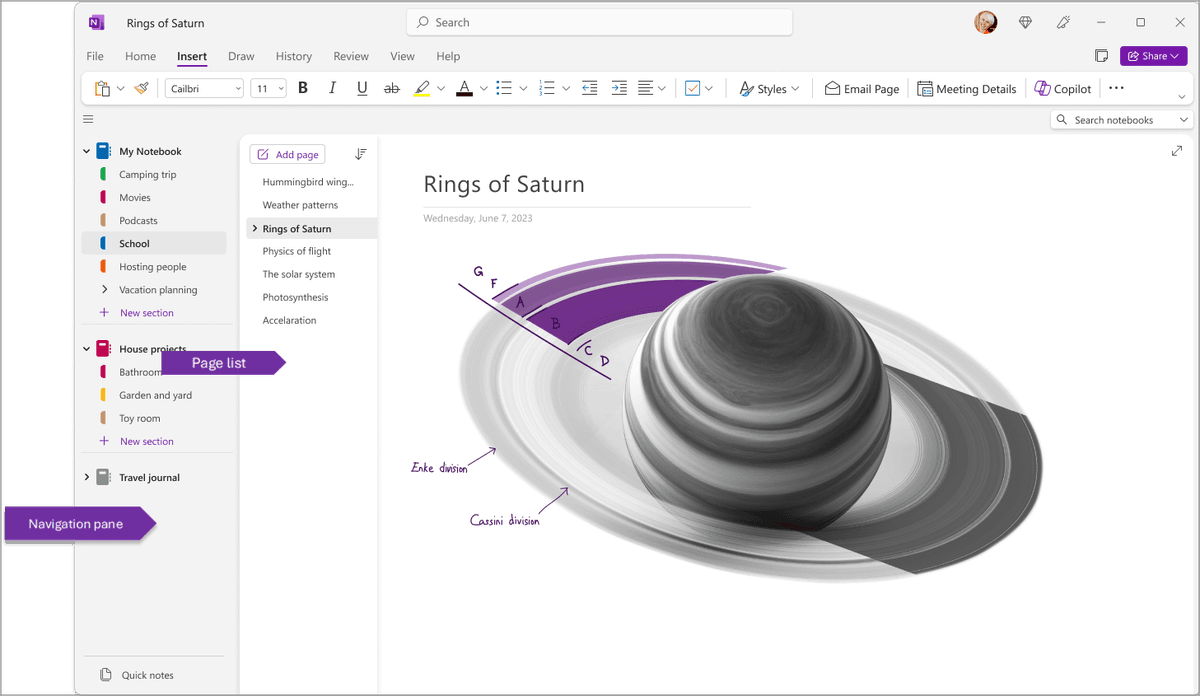
OneNote is still strong for notebooks and pen notes. The apps below are better for local files, research answers, or fast capture.

Ask cited questions about research notes
Add Markdown or text notes, ask a question, and inspect cited passages.
How this comparison works
Each app is compared against the jobs that usually break during a move from OneNote: import, quick capture, file control, search, backlinks, sync, handwriting, and attachment handling. The capability claims come from the current official product and help pages linked throughout the guide.
That evidence can establish what a product supports, but it cannot predict how a particular OneNote archive will migrate. Old clips, ink, tables, attachments, and nested sections create different failure modes, and vendor pricing or import support can change.
Use the table to narrow the field, then export one notebook that includes the formats you actually depend on. Check the result on every required device before choosing a replacement.
What to check before replacing OneNote
Start with the part of your current workflow that is failing. A better app for team docs may be worse for pen notes. A better app for local files may be worse for shared class or work folders. If your main issue is platform coverage, compare this list with the cross-platform note-taking app guide.
Check five things before switching:
- Sync: large notebooks should update on every device without manual repair.
- Export: your notes should leave the app as useful text and recoverable attachments. PDF-only exports create cleanup work.
- Structure: the app should match how you think: pages, folders, backlinks, tables, or objects.
- Capture: quick notes should still be fast on phone and desktop.
- Special inputs: handwriting, web clips, PDFs, and audio notes need a real replacement.
For a deeper framework across second-brain apps, see our second-brain apps guide.
Why replace OneNote?
Most users leave OneNote for three reasons. First, large notebooks can sync slowly. Users with years of notes feel this most.
Second, OneNote lacks newer linked-note features. It does not offer native backlinks, graph views, or cited answers across a notebook.
Third, OneNote requires a Microsoft account. That can be a problem for people leaving Microsoft tools or working under strict IT rules.
8 best OneNote alternatives
Use this ranked overview before reading the full notes below. Atlas is the focused pick for editable notes and research answers with sources. The other picks are for team docs, local files, web clips, Apple notes, open files, outlines, and typed records.
- Atlas: best when you want to edit notes and ask cited questions across notes and documents.
- Notion: best when the replacement needs team docs, tasks, and shared pages.
- Obsidian: best when local Markdown files and plugins matter most.
- Evernote: best when web clipping and OCR are the main jobs.
- Apple Notes: best free option for Apple-only note capture.
- Joplin: best free open app with a notebook tree.
- Logseq: best for daily notes, outlines, and linked bullets.
- Capacities: best when notes need types like Person or Project.
1. Atlas for cited research answers
Atlas lets you write and edit Markdown-backed notes and ask cited questions across your notes and documents. You can import Markdown or text notes and export Atlas notes. It does not provide OneNote-style ink or direct whole-notebook import.
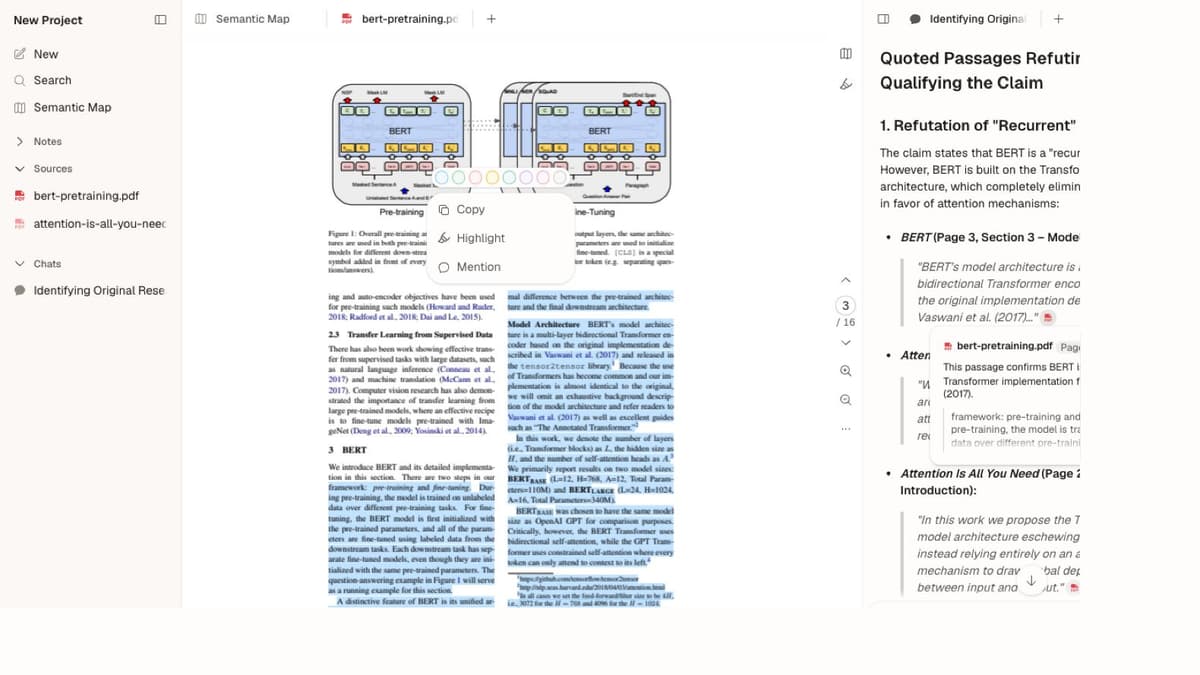
This first-party Atlas capture shows citation navigation on the unrelated BERT paper. It supports the cited-answer feature described here; it does not show an Atlas mind map or the results of this article.
Choose Atlas when the goal is to connect and edit notes while getting answers with sources. Test an exported project before moving a library. For pen-first capture, keep OneNote or test another ink app. Pricing: a 10-source, 10-chat evaluation allowance; Pro is $20/month or $204/year.
2. Notion for team workspaces
Notion is the closest replacement for people who want one workspace for notes, tasks, and docs. Its workspace, page, and subpage model maps loosely to OneNote's notebook, section, and page model.
Notion also adds tables, templates, and team edits. That makes it stronger than OneNote for shared work. Pricing: Free tier, Plus from $10/month.
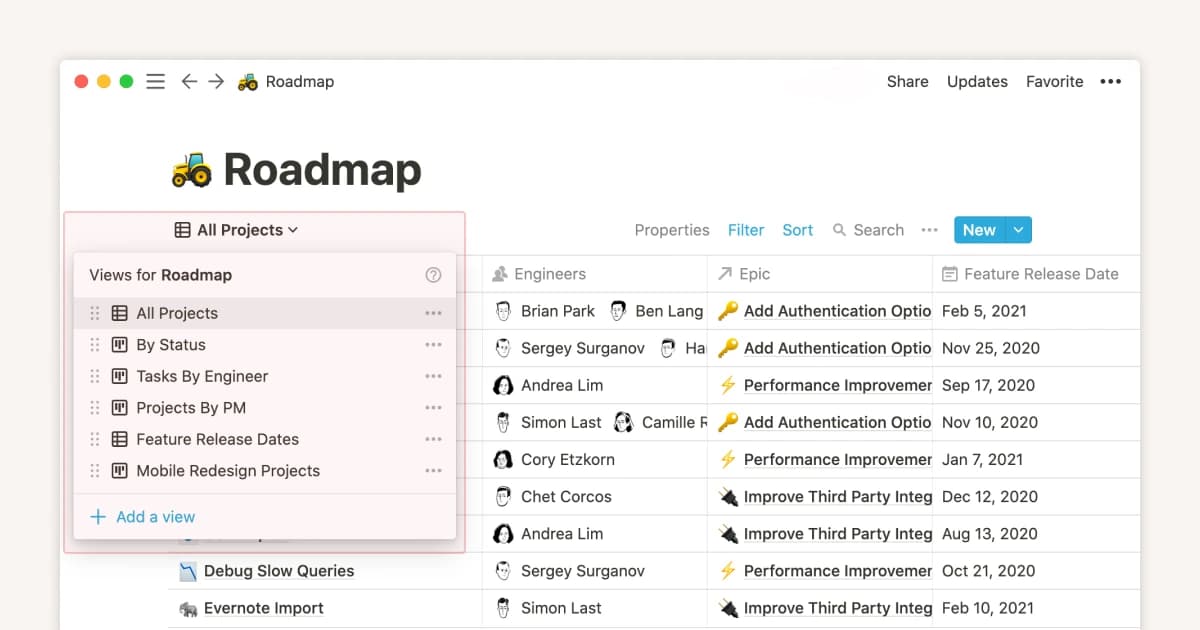
The screenshot shows one project database presented in several views. It is an older product example. Source: Notion's database-views guide; Notion retains copyright.
3. Obsidian for local files and plugins
Obsidian stores notes as local Markdown files. That makes it the best choice if you want file ownership and deep control. For the direct tradeoff, read the Obsidian vs OneNote comparison.
Plugins can turn it into many workflows. The graph view turns OneNote's file cabinet into linked notes. Pricing: Free for personal use, $8/month Sync.
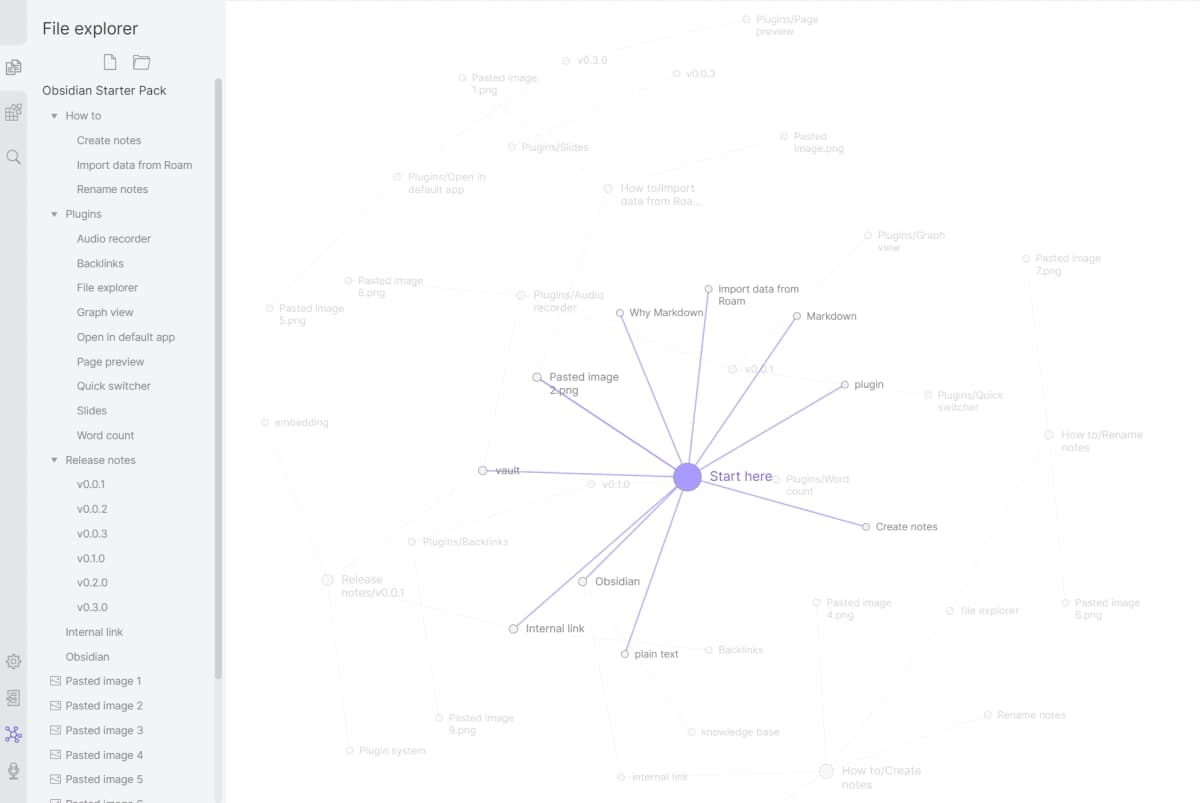
The graph shows linked notes in Obsidian. Source: Obsidian Graph View documentation; Obsidian retains copyright.
4. Evernote for web clipping and OCR
Evernote and OneNote have competed for years. Evernote still wins on web clipping, OCR, and PDF markup. The broader Evernote alternatives guide explains where it still beats newer note apps.
It costs more than many newer apps. It still works well for people who save web pages and scans. Pricing: Limited free tier, Personal $14.99/month.
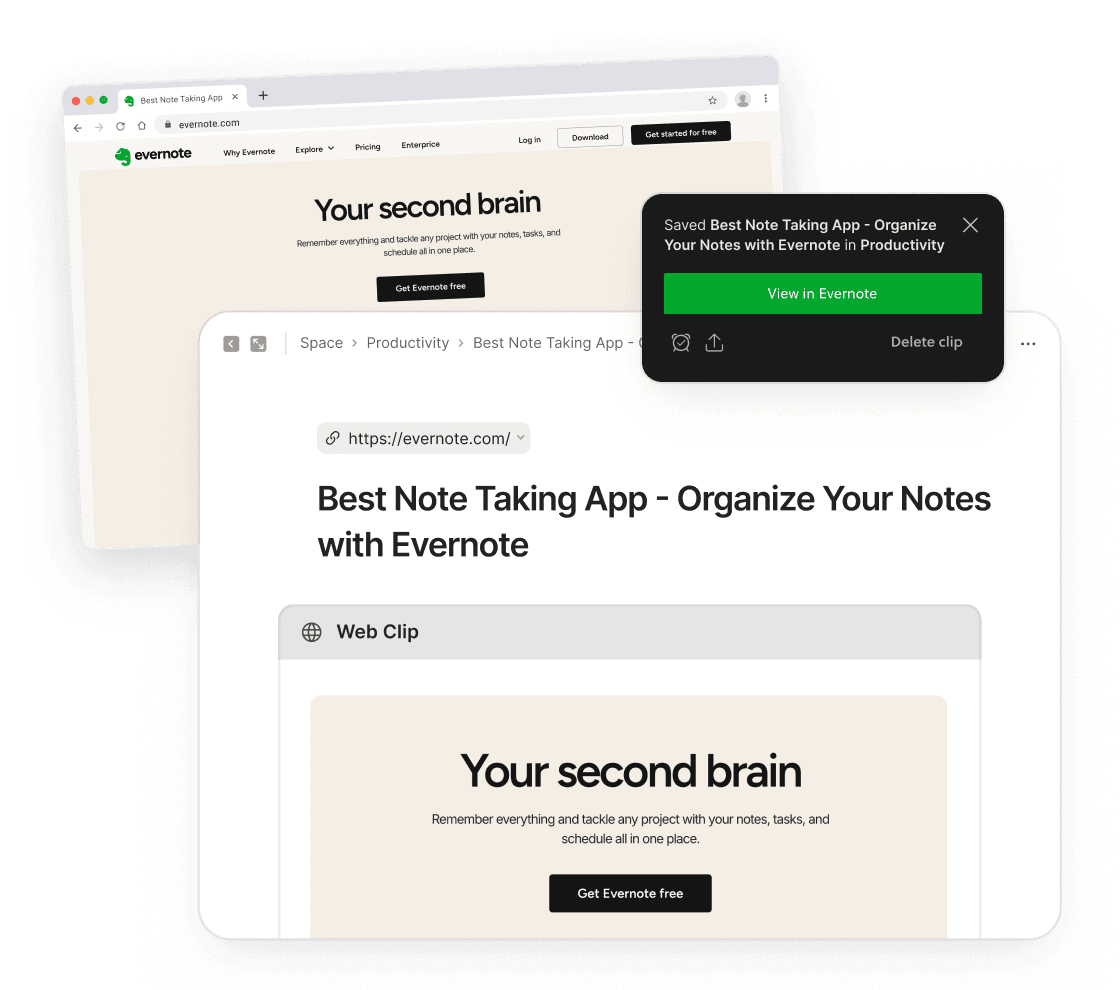
Evernote’s current Web Clipper page shows its article-saving panel. The screenshot demonstrates web clipping, not OCR or PDF markup. Source: Evernote Web Clipper; Evernote retains copyright.
5. Apple Notes for Apple devices
Apple Notes is now strong enough for many Apple users. Smart folders, shared notes, math notes, and iCloud sync cover the basics with less setup. Apple Intelligence features depend on the device, language, and region.
It is best for Apple-only users who want free capture. For the head-to-head, see Apple Notes vs OneNote. Pricing: Free with Apple ID.

Apple Notes keeps heading styles, emphasis, and list controls in the iPhone note editor. Source: Apple Notes user guide; Apple retains copyright.
6. Joplin for open notebooks
Joplin is the closest match to OneNote's notebook, section, and page structure. It is open source and can sync through Joplin Cloud, Nextcloud, Dropbox, or WebDAV.
It is best for users who want a free open notebook app. Pricing: Free, with optional Joplin Cloud from $2.99/month.
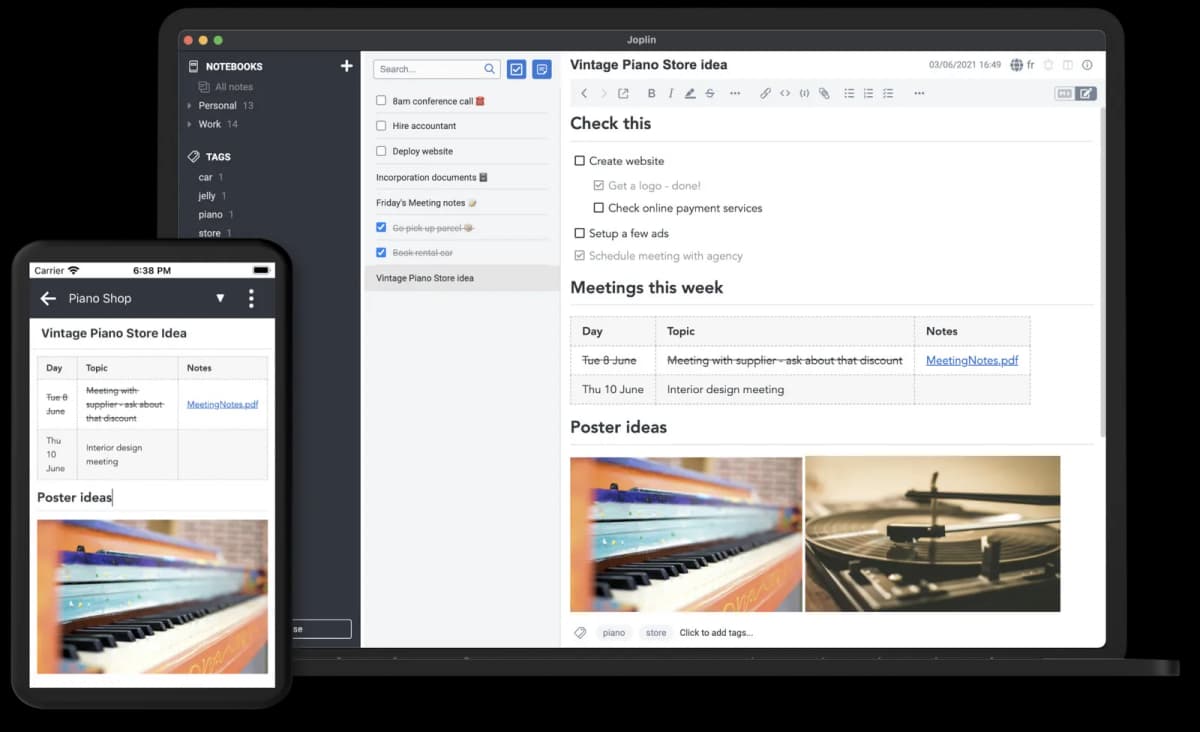
Joplin’s screenshot shows the notebook tree beside an editable note. Source: Joplin; Joplin retains copyright.
7. Logseq for outlines and daily notes
Logseq swaps OneNote pages for daily notes and outlines. Every bullet can link to another note.
It fits researchers and journalers who think in outlines. Pricing: Free, open source.
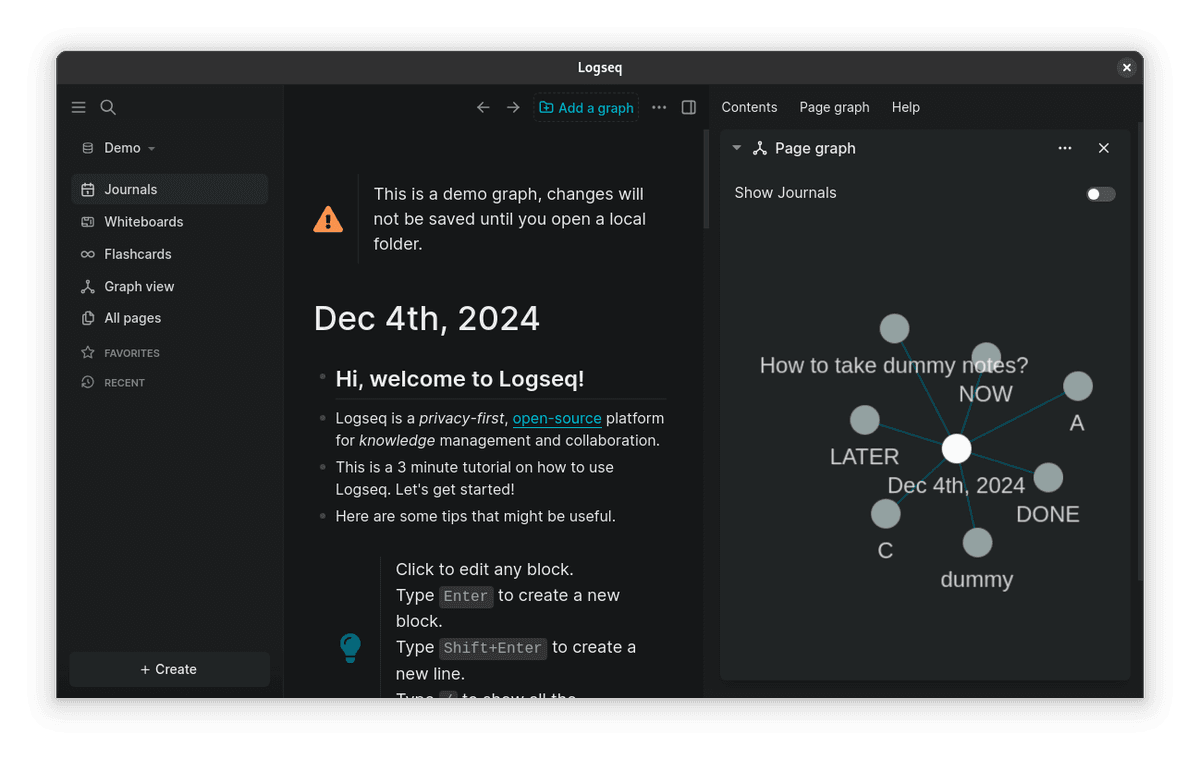
This Logseq screenshot pairs a daily journal with nested blocks and their linked page graph. Source: It's FOSS; the publisher retains copyright.
8. Capacities for typed notes
Capacities replaces pages with typed objects such as Person, Book, Project, and Idea. That structure helps when a note belongs to a known category.
It fits researchers and PARA-method users who want guided note types. Pricing: Free tier, Pro $9.99/month.
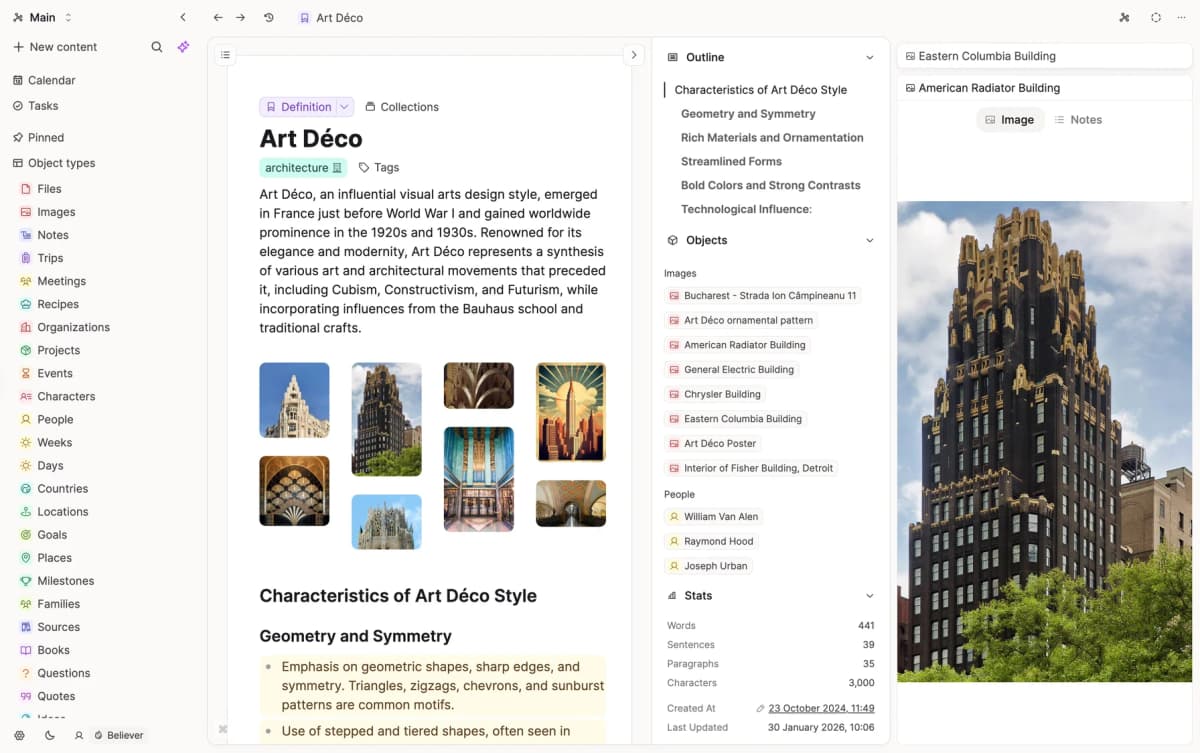
The workspace shows object types in the sidebar and a typed object with structured content. Source: Capacities object types documentation; Capacities retains copyright.
How each alternative works day to day
Screenshots make the choice easier than feature lists. OneNote is a free-form notebook. These apps look different because each one solves a different job.
Atlas lets you edit notes and get answers from them, with sources attached to the response.
OneNote alternatives compared
Use this table as a first filter. Pick the row that solves your main problem. Then read the section above before moving real notebooks.
| App | Free Tier | Paid From | Local Files | Bidirectional Links | AI Features |
|---|---|---|---|---|---|
| Atlas | Evaluation allowance | $20/mo | Cloud | Yes (mind map) | Source-cited Q&A |
| Notion | Yes | $10/mo | Cloud | Yes (backlinks) | Notion AI |
| Obsidian | Yes | $8/mo Sync | Yes | Yes (graph) | Plugin-based |
| Evernote | Limited | $14.99/mo | Cloud | Limited | AI Edit |
| Apple Notes | Free | N/A | iCloud | Limited | Apple Intelligence |
| Joplin | Yes | Optional sync | Yes | Limited | None native |
| Logseq | Yes | N/A | Yes | Yes | Plugin-based |
| Capacities | Yes | $9.99/mo | Cloud | Yes | AI assistant |
Table 1: Use these rows to compare OneNote alternatives by price model, file ownership, linking, and AI note features.
Choose by your main OneNote problem
Start with the use case that creates the most friction today. A clean import matters less if daily work still feels wrong after the move. Use this section as a shortcut before you test migration.
- Meeting notes: choose Notion if you want database tracking. Choose Atlas if you need cited answers across past meetings and documents.
- Research notes: try Atlas, Obsidian, or Capacities. Use Atlas when citations matter.
- Daily capture: use Apple Notes if you live in Apple devices. Use Notion if you need all major platforms.
- Handwriting: stay with OneNote for Surface pen workflows. Obsidian can work with Excalidraw. GoodNotes is the closest iPad option.
- Open source: choose Joplin or Logseq.
If two problems matter equally, test the two leading apps with the same notebook. Keep the one that preserves the notes you already have and makes the repeated daily task easier.
Test migration, cost, and lock-in
Move notes without losing files
The migration path depends first on where the notebook is stored. Microsoft's whole-notebook web export works for personal OneDrive notebooks, not notebooks in a work or school OneDrive or SharePoint account. For those accounts, review Microsoft's account-transfer instructions and your organization's data policy before copying anything. A page PDF is a readable archive, not an editable notebook.
- To Obsidian: check its official OneNote Importer and preview an ink page, attachment, link, and shared page before a full import.
- To Joplin: check its current OneNote import instructions and the required OneNote desktop version before exporting.
- To Notion, Logseq, or Evernote: confirm a current supported import path for your account and file format first; do not assume a PDF or Word export restores an editable notebook.
- To Atlas: upload exported PDFs as research sources, or import Markdown or text files as editable notes. Atlas does not directly import whole OneNote notebooks, so test the exported format and a small project before moving a library. Keep OneNote or another ink app if handwritten pages are essential.
Estimate cleanup from a representative sample, not a generic library-size threshold. Preserve the original until the destination's files and its own export have been inspected.
Compare three-year costs
Notes apps are tools you live with for years. Compare paid plans by three-year cost before you trust the monthly sticker.
| App | Year 1 | Three-year cost | What's included |
|---|---|---|---|
| Atlas Pro | $240 | $720 | Cloud, source-cited AI Q&A |
| OneNote | $0 | $0 | Free with Microsoft account |
| Notion (free) | $0 | $0 | Up to 5 collaborators |
| Notion Plus | $96 | $288 | Unlimited file uploads |
| Obsidian (personal) | $0 | $0 | Local files, plugins |
| Obsidian + Sync | $96 | $288 | E2E encrypted cross-device sync |
| Evernote Personal | $179.88 | $539.64 | Web clipper + OCR |
| Apple Notes | $0 | $0 | Free with Apple ID |
| Joplin | $0 | $0 | Free, Joplin Cloud $36-96/yr optional |
| Logseq | $0 | $0 | Free, open source |
| Capacities Pro | $120 | $360 | Cloud, typed objects |
Table 2: Use this cost view to compare paid note-taking plans over three years. The monthly price on each pricing page hides how small differences add up.
The cheapest stack is still free: OneNote, Notion free, Obsidian personal, Joplin, or Logseq. The lowest paid upgrade here is Notion Plus at $288 over three years. Evernote Personal is about $540 over three years, after the 2024-2025 price increases.
Team pricing is different. Notion Business is $20/user/month, or about $3,600/year for ten seats. Obsidian's work license is $50/user/year. OneNote remains the default if your team already pays for Microsoft 365.
Check format lock-in before switching
The deeper cost of switching is not the monthly price. It is the move itself. OneNote exports are often messy. Ink, tables, and attached files cause most of the cleanup.
- To Notion: verify the import format its current documentation supports; do not infer whole-notebook fidelity from a Word or PDF page export.
- To Obsidian or Joplin: use the documented importer for the installed app version, then inspect ink, attachments, links, and hierarchy against the original.
- To Apple Notes: Export to PDF, then drag the PDFs into Apple Notes. The PDFs arrive as attachments rather than editable notes.
- To Atlas: upload exported PDFs as sources, or import Markdown or text files as editable notes. Atlas notes can be exported; a PDF upload remains a source, not an editable note.
This guide has not timed a migration or measured loss rates. Note the sample size, account type, app versions, and items that must be repaired manually before estimating a larger move. A school or employer may also prohibit transferring its material to a personal account.
Privacy, Compliance, and Microsoft Lock-In
OneNote uses the same admin controls as Microsoft 365. If your company already runs on Microsoft 365, that may be enough. If you are choosing for yourself, ask three simpler questions. Where do notes live? Who can read them? How easy is export?
Atlas is a cloud research workspace; review its current privacy policy and your organization's rules before uploading sensitive material. Notion gives teams security controls. Obsidian stores files on your device, and Obsidian Sync documents end-to-end encryption. Evernote stores notes in the cloud. Compare the actual account, sync configuration, and data contract rather than assuming all plans have the same controls.
Apple Notes uses iCloud. Turn on Advanced Data Protection if you need stronger privacy. Joplin is open source and can sync through WebDAV, Nextcloud, Dropbox, or Joplin Cloud. Logseq keeps files local by default. Capacities is hosted in Germany with GDPR-focused controls.
If privacy is the main reason you are leaving OneNote, start with Joplin, Logseq, or Apple Notes. If your company must stay inside Microsoft 365, OneNote may still be the practical default.
Test one notebook before switching
OneNote still handles loose notes well, so test a replacement against the job that is failing. Import one shared notebook into Notion if you need team docs and tasks. Copy one text-heavy notebook into Obsidian if you want local Markdown files. Apple users who mainly capture short notes should repeat the test in Apple Notes.
Use a notebook that contains at least one ink page, attachment, internal link, and shared page if those formats matter to you. Record whether each item opens, remains editable, appears in search, and can be exported from the candidate app. Repeat the check on the phone or computer with the weakest support. Keep the OneNote original until you have opened the exported result and recovered the attachments; a successful import message alone does not prove that the notebook survived the move.
Atlas fits when you want to edit notes and ask research questions with supporting sources. Test a small Markdown or text import for editable notes and a PDF upload for cited research; neither is a direct whole-notebook OneNote import. Compare connected note apps beyond OneNote before moving the full library.
Ask cited questions about research notes
Add Markdown or text notes, ask a question, and inspect cited passages.