
MindMeister Alternatives (2026): 7 Collaborative Mind Maps
The 7 best MindMeister alternatives in 2026 for collaborative team mind mapping. Atlas, Miro, MindManager, Mindomo, XMind, MindNode, and Coggle compared.
- Byline

Summary
Choose Mindomo for a lower-cost browser replacement and Miro when workshops matter more than map-only editing.
Atlas fits research teams when maps must come from PDFs or shared notes and keep cited source passages attached.
MindManager fits Microsoft-heavy teams, XMind and MindNode fit solo prep, and Coggle fits free public diagrams.
Before switching, test map import, live editing speed, export formats, AI source checks, and viewer/editor pricing.
Atlas is an AI workspace for maps built from sources. Drop in PDFs, web pages, and shared team notes. Atlas builds a visual map from that material and keeps answers tied to cited passages, so the map does not drift away from the files.
Disclosure: we make Atlas, one of the products discussed in this post. We publish our scoring criteria and name the mapping workflows where other tools are stronger.
MindMeister earned its reputation as a browser mind-map tool for live editing, task handoff, and shared maps. Teams switch when the job changes. Some need a full whiteboard such as Miro. Some need Microsoft exports through MindManager. Some need a cheaper browser map in Mindomo. Research teams may need Atlas because the map has to come from shared sources.
This guide ranks seven MindMeister alternatives for the team workflows MindMeister competes for. Solo users should weigh desktop editing and export quality more heavily than live collaboration.

 Atlas
AtlasSee how source-grounded maps work
Compare five tools that map documents, notes, and research papers.
Why Switch From MindMeister?
For a side-by-side benchmark of nine mind-mapping tools, including time-to-first-node and weekly-maintenance scores, see our mind-mapping software guide.
Teams usually leave MindMeister for one of three reasons:
- Price matters once every editor needs a paid seat. MindMeister Business is $12.49/user/month. Mindomo Team is $5.50/user/month for a similar browser editing job.
- The stack may point elsewhere. Microsoft 365 teams get more value from MindManager's Office and SharePoint exports. Product teams often need Miro because it covers workshops, sticky notes, and flows too.
- AI may need to work from sources. MindMeister AI can create nodes from a prompt. Atlas goes further when the team needs a map and cited answers from uploaded files. Atlas also keeps more context as the team adds material.
What to Look For
Do not choose by feature count alone. Start with the work your team repeats every week. A class group needs low-cost browser maps. A product team may need workshop tools. A consulting or research team may need a map that stays tied to source files.
Check five things before switching:
- Whether the tool imports your old maps without cleanup.
- Whether live editing stays fast with your real team size.
- Whether pricing is per editor, per seat, or tied to an enterprise plan.
- Whether exports match the documents, slides, or task tools you use.
- Whether AI output can be checked against source files when the map supports research.
For collaboration, test a real meeting map with at least three editors. Watch for cursor lag, comment flow, permissions, and whether non-editors can review without paid seats.
For AI, separate prompt-made maps from source-made maps. Prompt-made maps are fine for brainstorming. Source-made maps matter when a research, consulting, or strategy team needs to trace each branch back to the material.
For pricing, compare the first-year team cost and the SSO tier. MindMeister includes SSO at Business. Several alternatives reserve it for Enterprise, which can change the real bill.
If the fifth point is your main concern, see how source-grounded maps work from documents before choosing another blank-canvas tool.
Interface Snapshots
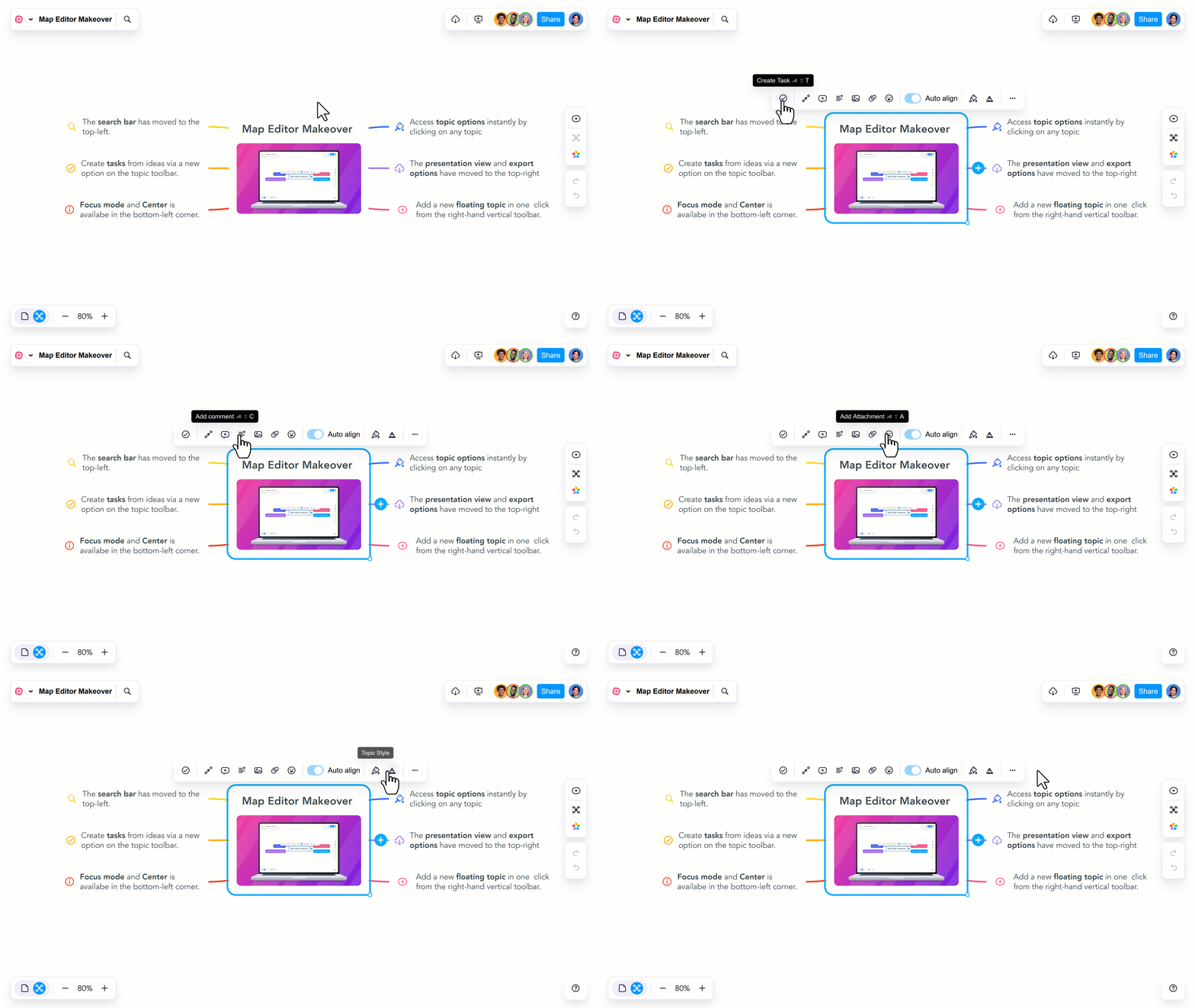
The MindMeister editor shows the manual browser map workflow that alternatives need to replace or improve.
The screenshots below show why the tools are not interchangeable. Atlas and Mindomo focus on source or map generation. Miro is a whiteboard. MindManager looks closer to business planning software. XMind, MindNode, and Coggle stay closer to classic mind maps.
Use this table to compare the visual job each interface is built around before you scroll through the screenshots.
| Tool | What the interface shows | What it means for switchers |
|---|---|---|
| MindMeister | Manual browser map editor | The baseline is live branch editing and presentation work. |
| Atlas | Research map beside cited answers | Choose it when the map must come from source files. |
| Miro | Mind map inside a larger board | Choose it when workshops need more than a map. |
| MindManager | Business map with planning structure | Choose it for Office-heavy planning and reports. |
| Mindomo | Browser map workspace | Choose it for a lower-cost MindMeister-like workflow. |
| XMind | Polished desktop-style map | Choose it for solo prep before sharing. |
| MindNode | Native Apple map document | Choose it for Apple-first individual work. |
| Coggle | Simple public browser map | Choose it when public diagrams are acceptable. |
Table 1: The interfaces reveal whether each tool prioritizes manual mapping, workshops, planning, or source-grounded research.
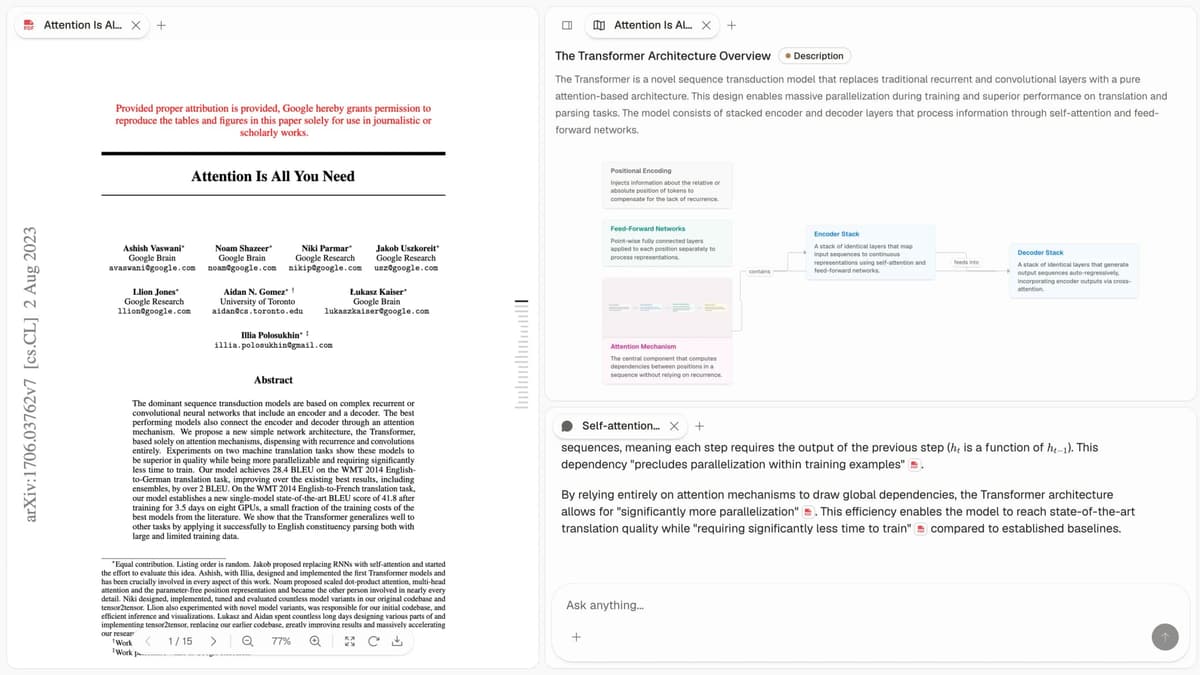
The Atlas research workflow fits when a map needs to come from sources rather than manually drawn branches.
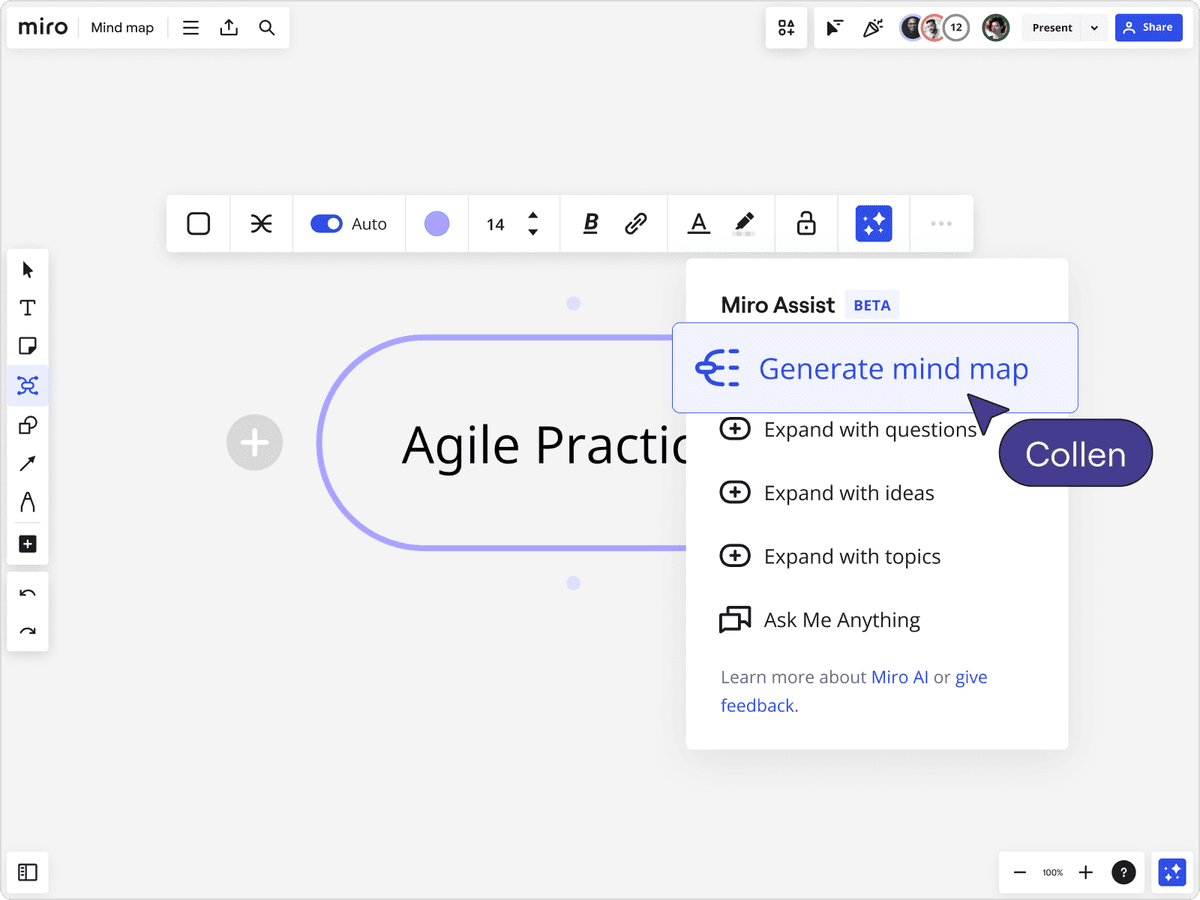
Miro is the broad whiteboard choice when mind maps are one part of a workshop board.
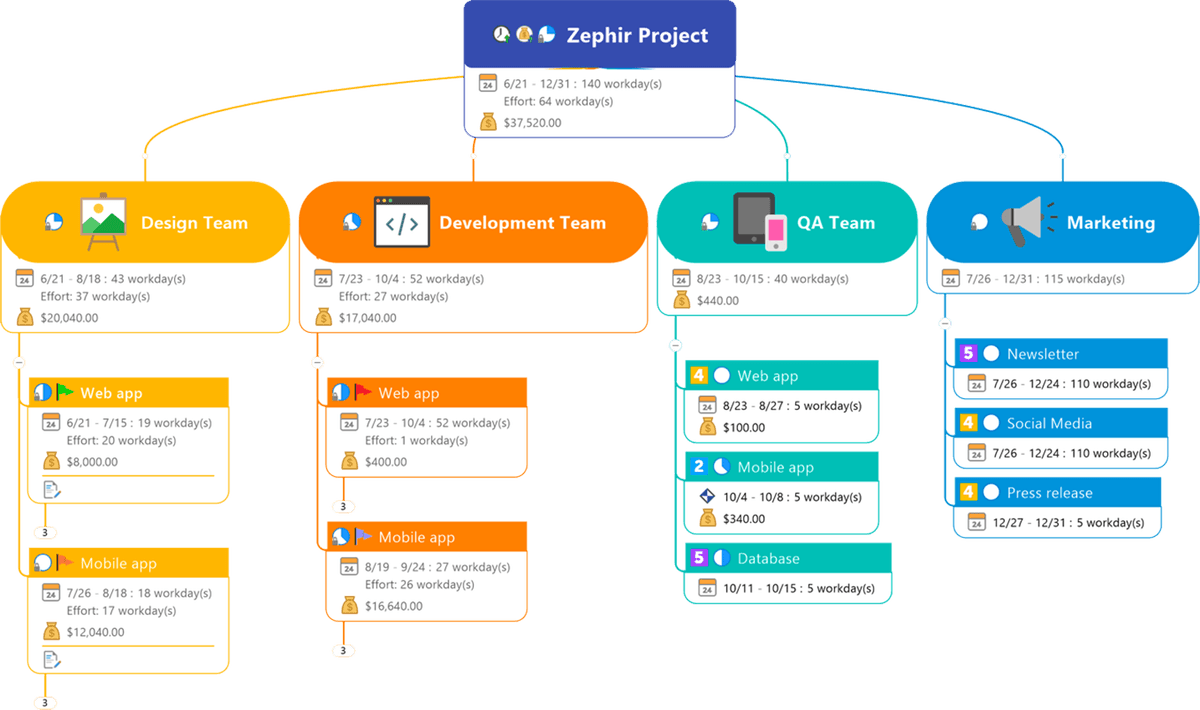
MindManager shows the business-planning style behind the Microsoft-stack recommendation.
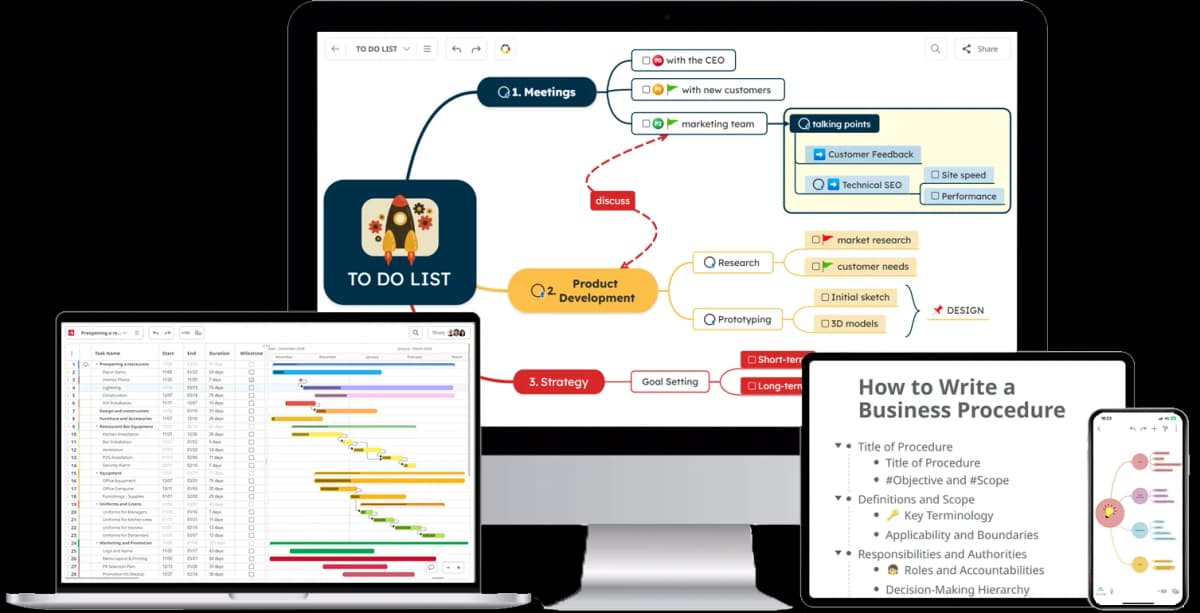
Mindomo is the closest visual match for teams that want a lower-cost browser-based MindMeister replacement.
XMind is designed for polished individual map preparation rather than live team editing. MindNode is the Apple-native option for individual mapping work.
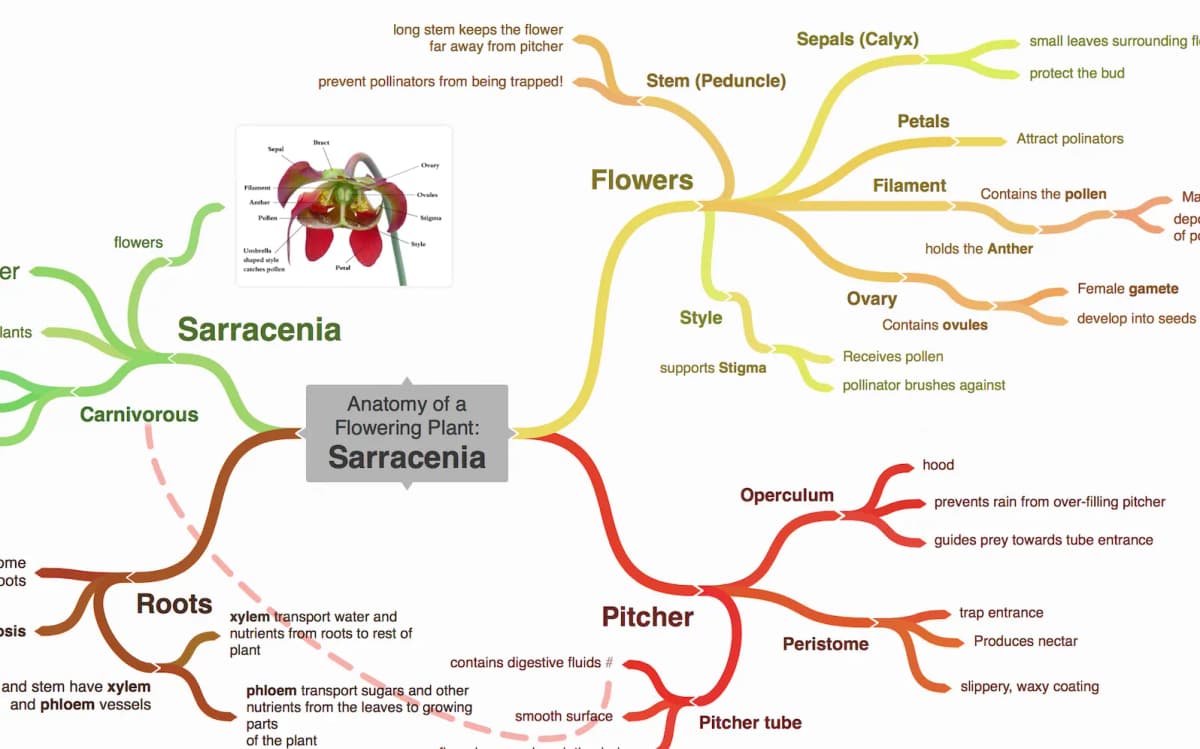
Coggle is the simple browser option when public diagrams are acceptable.
7 Best MindMeister Alternatives
1. Atlas for Source-Grounded Team Maps
Atlas turns shared notes, PDFs, and research into a map with cited Q&A. It differs from MindMeister because it works from the team's content instead of starting with a blank canvas. The map updates as the team uploads more sources. That helps research and consulting teams keep visual work tied to evidence.
Choose Atlas when a map needs to explain what a set of sources says. Atlas Pro is $20/mo.
2. Miro for Cross-Functional Teams
Miro has a strong mind-map template and the broadest whiteboard in this list. Sticky notes, flowcharts, kanban, and Figma/Jira integrations can sit beside the map. Use it when one tool must cover maps, planning, retros, and workshops. Its enterprise controls are also the most mature here.
Choose Miro when product, design, and ops teams want one shared whiteboard. It has a free tier, and Starter is $8/editor/month.
3. MindManager for Microsoft Teams
MindManager is the corporate mind-map option. It has MS Office integration, exports to PowerPoint, Word, and Project, plus SharePoint and Teams support. It is desktop-first on Windows and Mac, with optional cloud co-editing.
Choose MindManager when the team already works in Microsoft 365. Essentials starts at $169/year.
4. Mindomo for Browser-Based Mapping
Mindomo is the closest browser-based MindMeister replacement. It has live editing, presentation mode, and outline view. It also has a strong education tier with classroom plans and assignment workflows. Team pricing is lower than MindMeister.
Choose Mindomo when price or school use is the main reason to switch. It has a free tier for 3 maps, and Premium is $5.50/month.
5. XMind for Solo Desktop Work
XMind is desktop-first, with strong templates, themes, and offline use. It fits solo prep work inside a hybrid team. Build the polished map offline, then move the result into a shared canvas. It is weaker than MindMeister for live group editing.
Choose XMind for solo prep work. It has a free tier, and Pro is $4.99/month.
6. MindNode for Apple-Only Teams
MindNode is the Apple mind-map app, with native macOS, iPadOS, iOS, iCloud sync, and Apple Pencil support. It works well for Apple-only team members who want a native client. Pair it with Atlas or Miro when the whole team needs a shared layer.
Choose MindNode for Apple-only work. It has a free tier, and Plus is $2.49/month.
7. Coggle for Free Public Diagrams
Coggle is a free browser mind-map tool. Public diagrams are unlimited, and private diagrams start at $5/month. There is no download. It fits student projects, open-source docs, and teams that are comfortable with public diagrams.
Choose Coggle for public diagrams and simple group maps. Public use is free, and Awesome is $5/month.
Comparison Table
Use this table to build a shortlist. Pick the row that matches your main workflow first, then check the pricing and live-editing columns.
| Tool | Best For | Free Tier | Paid From | Real-time Collab | AI Features |
|---|---|---|---|---|---|
| Atlas | AI synthesis across team sources | Yes | $20/mo | Yes | Mind-map + cited Q&A |
| Miro | Cross-functional whiteboarding | Yes (3 boards) | $8/editor/mo | Yes | Miro AI |
| MindManager | MS-stack corporate | Trial | $169/yr | Cloud co-edit | MindManager Snap AI |
| Mindomo | Browser MindMeister replacement | Yes (3 maps) | $5.50/mo | Yes | Mindomo AI |
| XMind | Solo/desktop prep | Yes | $4.99/mo | Limited | XMind Copilot |
| MindNode | Apple-only members | Yes | $2.49/mo | Limited | Limited |
| Coggle | Free public diagrams | Yes | $5/mo | Yes (public) | None |
Table 2: Compare collaboration, AI, platform fit, and editor pricing before replacing MindMeister.
Team Buying Factors
Best Alternative by Use Case
Read this as a routing table. Start with the use case closest to your team, then use the pricing table below to check the cost.
| Use case | Best pick | Why |
|---|---|---|
| Source-backed team maps | Atlas | It builds maps and cited answers from uploaded material. |
| Cross-functional workshops | Miro | It covers maps, sticky notes, flows, and team rituals. |
| Microsoft-heavy corporate work | MindManager | It exports to Office files and fits SharePoint or Teams. |
| Lower-cost browser replacement | Mindomo | It feels closest to MindMeister at a lower team price. |
| Solo desktop prep | XMind | It is fast offline and has polished templates. |
| Apple-only work | MindNode | It has the best native Apple experience. |
| Free public diagrams | Coggle | It keeps public diagrams free and shareable. |
Table 3: The best replacement depends on whether the team needs source maps, workshops, formal diagrams, or solo planning.
One-Year Cost for Eight Editors
MindMeister's headline Business price is $12.49/user/month on annual billing. For an 8-person team, the annual bill looks like this:
| Tool | Monthly per editor | Annual (8 editors) | SSO included |
|---|---|---|---|
| MindMeister Business | $12.49 (annual) | $1,199.04 | Yes |
| Mindomo Team | $5.50 | $528 | No (Enterprise) |
| Miro Starter | $8 (annual) | $768 | No (Business+) |
| Miro Business | $16 (monthly) | $1,536 | Yes |
| MindManager | $169/year per seat | $1,352 | Yes (Enterprise) |
| XMind Pro | $4.99 (annual) | $479 | No |
| MindNode Plus | $2.49 | $239 | N/A (Apple-only) |
| Coggle Awesome | $5 | $480 | No |
| Atlas Pro | $20 | $1,920 | N/A (per-user) |
Table 4: The cheapest team option that retains real-time collaboration is Coggle Awesome at $480/year for an 8-seat team. Mindomo Team is the closest 1:1 MindMeister replacement at $528/year, less than half the MindMeister Business price. For Apple-only teams, MindNode Plus at $2.49/user/month is the absolute cheapest, $239/year for 8 seats.
Enterprise SSO can change the math. MindMeister includes SSO at the Business tier. Miro, Mindomo, and many other tools reserve SSO for Enterprise. For teams near 50 seats, that line item can matter more than the editor price.
The viewer/editor split also matters. MindMeister, Miro, and Mindomo let viewers comment for free. Only editors are billed. If most people only review diagrams, paying by editor can be 3-5x cheaper than paying for every seat.
Collaboration at Scale
Mind-map tools need live editing to feel fast. The seven alternatives split into three groups:
- Live browser editing covers MindMeister, Mindomo, Miro, and Coggle. These tools sync quickly and work well for 10-30 editors. Miro can handle larger workshops.
- Cloud co-editing covers MindManager. It works for small teams but feels slower than a pure live canvas.
- Solo-first sharing covers XMind and MindNode. They are fast for one person. Teamwork usually means export, import, or cloud sync.
For workshops, check the tools around the map. Miro has timers, voting, private mode, and breakout support. MindMeister is solid for map-only sessions. The rest have thinner meeting tools. If your team runs weekly brainstorms, workshop depth may matter more than price.
Privacy, Compliance, and Data Residency
Mind maps often contain private work such as org charts, customer journeys, hiring notes, product plans, or M&A notes. Compare the privacy requirements before moving that material:
- MindMeister: EU-hosted by default (German company, Meister), GDPR-aligned, SOC 2 Type II, ISO 27001 on Business tier.
- Mindomo: EU-hosted (Romanian), GDPR-aligned, SOC 2 in progress.
- Miro: SOC 2 Type II, ISO 27001, HIPAA on Enterprise. EU/US data residency on Enterprise.
- MindManager: SOC 2 Type II, GDPR, US data residency by default, on-premise deployment available for regulated industries.
- XMind: SOC 2 Type II claimed, cloud sync on AWS US.
- MindNode: All sync via iCloud, inherits Apple's privacy posture and EU/US data residency choices.
- Coggle: SOC 2 Type II claimed, documentation is thinner than enterprise tools.
- Atlas: Stores notes in user-controlled storage and runs on-device AI for embeddings and summaries when possible.
For healthcare, finance, or EU public-sector work, start with MindMeister Business, Miro Enterprise, MindManager on-premise, or Atlas. Apple-only teams can also consider MindNode with iCloud end-to-end encryption.
Final Take
MindMeister is strongest for live browser maps. The alternatives win when the team needs a broader whiteboard, a Microsoft workflow, lower price, or source-backed AI maps.
Choose Atlas when the map should come from research files and keep citations attached. Choose Miro for workshops, MindManager for Microsoft teams, Mindomo for a cheaper browser replacement, XMind or MindNode for solo prep, and Coggle for free public diagrams.
If you want a desktop mind-map tool for individual work rather than a team workspace, compare MindNode and MindManager first.
AtlasSee how source-grounded maps work
Compare five tools that map documents, notes, and research papers.
Frequently Asked Questions
For collaborative team mind mapping, Atlas (Pro $20/month) leads on AI-grounded synthesis with source-cited Q&A across shared notes. Miro ($8/editor/month) is the broadest team alternative, mind maps plus whiteboarding, with the strongest enterprise SSO story. MindManager ($169/year) is the corporate-mind-mapping incumbent with deep MS Office, SharePoint, and Teams integration. Mindomo ($5.50/month) is the closest 1:1 MindMeister replacement with stronger education tier. For solo or Apple-only users on a team, MindNode and XMind are still good picks for the offline portion of a team workflow.