

A comparative case study examines cases against a shared research question while keeping each case in context. It studies what happened in each case, then asks what can be learned from their likenesses and differences.
Matching column headings are only a start. Two reports may both count use of a service, yet count people in one and repeat visits in the other. A clear table needs those units beside the totals so readers can see what the figures mean.
TASO's case study briefing explains how the approach can explore complex settings and help test or refine an account of what happened. The design must fit the question. A contrast between sites alone does not tell you what caused it.
This guide builds a case-dimension-context matrix from supplied reports. Each row keeps the claim, its source and the setting together. It shows when you can make a comparison and when a gap needs more work.

Keep each case in context
Compare the cited passages while retaining boundaries, measures and periods.
Start with a question that needs comparison
A comparative case study asks what can be learned by studying cases together. You might ask how a process works in two settings. Or you might ask why places with much in common show distinct patterns.
First, build an account of what happened in each case. Then ask what the shared and distinct features mean for your question. A list of short report summaries does not answer that second question.
Goodrick's UNICEF methods brief warns that a study can describe several cases without testing why an outcome occurred. If you make a claim about a cause, look for support and check other accounts that might fit.
State what your note can cover. Reading two reports can clarify what they claim and where they differ. It does not give you direct access to the cases or tell you that the reports contain all the facts you need.
Define the case before choosing its dimensions
Decide what counts as a case. A school, a programme within it and a rule applied across schools are distinct units. The choice affects which files belong together and what you mean by a cross-case claim.
The case study research design guide helps set that boundary and link sources to it. Here, the next task is to decide what you can compare across cases while keeping their setting in view.
Set the time span as well as the unit. A service in its first month may work quite unlike the same service a year later. A report issued in June may cover work from winter. The date on its cover does not always tell you when the case took place.
Bartlett and Vavrus's methods paper treats cases and context as part of the research problem. Their approach traces links across sites, levels and time. Read it as a developed approach with its own choices, rather than a rule for all studies.
The dimensions are the aspects you choose to compare. For a question about students seeking help, you might need entry rules, routes to the service and opening hours. Define what each row means and what text would support an entry.
TASO's briefing links case selection to the study's purpose. Why do these cases help answer your question? Access to a site may shape your choice, but the research rationale still needs to explain what the comparison can teach you.
Keep context inside the comparison
Context means more than a place name. Funding rules, who can take part and a service's history can affect how it works. Keep each relevant fact beside the row it affects. That helps the reader see why a shared rule may lead to unlike experiences.
Parreira do Amaral's chapter discusses a European lifelong learning project. The table below links levels of analysis with three aspects: cultural political economy, life course research and governance. Those columns belong to that project.
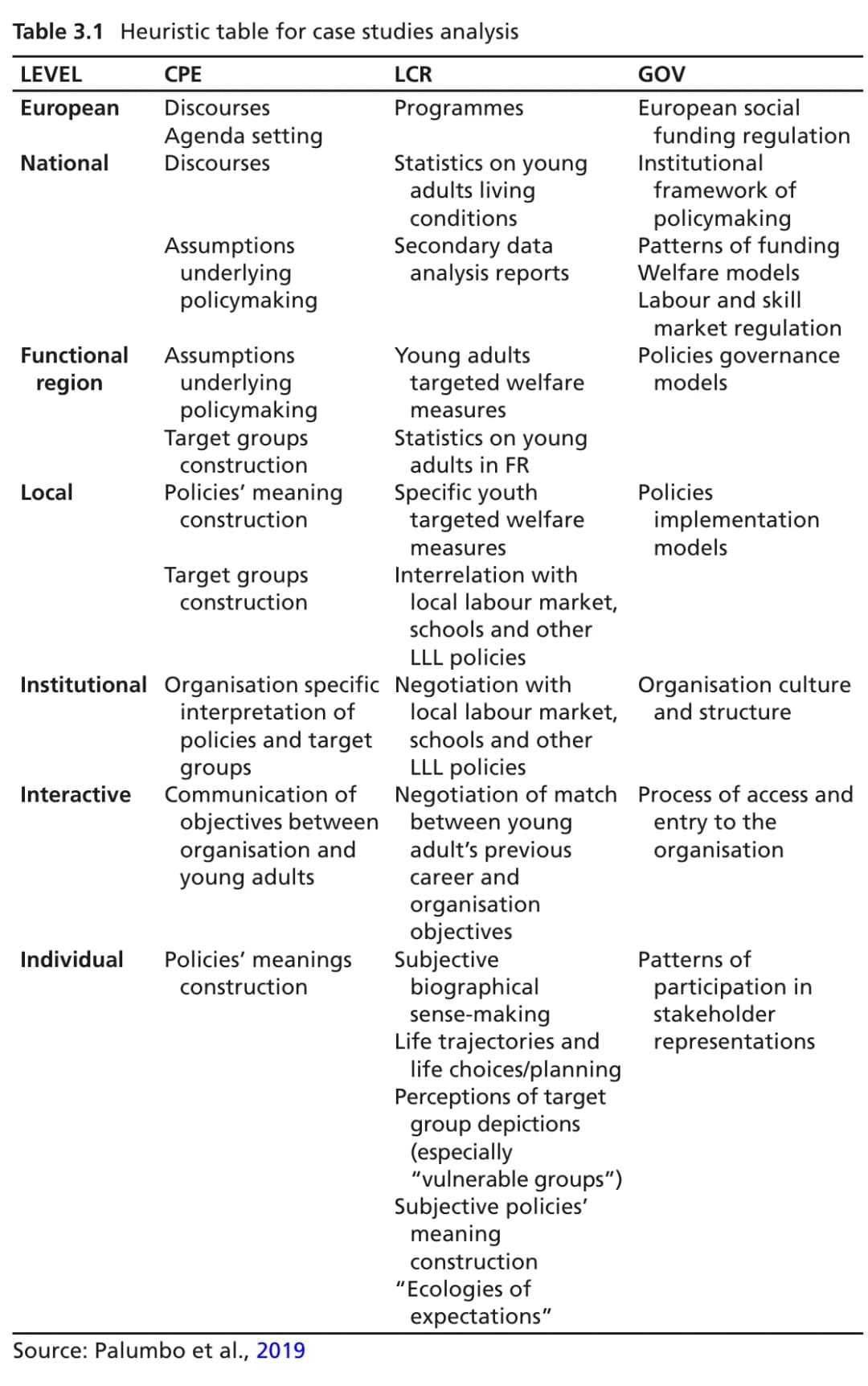
Table 3.1 in Parreira do Amaral's chapter (2022), crediting Palumbo et al. (2019). CC BY 4.0. Full table cropped from the PDF and converted to WebP.
The table has seven levels: European, national, functional region, local, institutional, interactive and individual. Its columns are CPE (cultural political economy), LCR (life course research) and GOV (governance).
At the European level, the governance column names social funding regulation. At the interactive level, it names access and entry to an organisation. The individual row includes a person's sense-making and life choices in the life course column.
These entries concern different parts of a case. A funding rule does not establish how one person understood a policy. Keep the level and source of each claim clear when you compare them.
The chapter explains the role of context and the need for a shared frame. For your own question, choose the levels and aspects that matter. Show what a source would need to establish before you fill a cell.
Build a case-dimension-context matrix
Suppose you ask how two campus support programmes make first contact with students. Cases A and B and all report passages below are fictional. This is a teaching example with invented counts and pages, rather than a study of real services.
Report A, page 2, describes a desk open to all students. Page 4 records 120 visits in the autumn term, including repeat visits. Page 6 gives staff accounts of students finding the room hard to locate.
Report B, page 3, describes a referral service for students who meet its entry rules. Page 5 records 45 distinct students during a six-week pilot. Page 7 gives student accounts of waiting for a referral. Neither report measures unmet need on a shared basis.
The four rows address the same access question. Each keeps the source location and the facts that limit a claim. You can see which aspects are clear enough to compare and which need more evidence.
| Dimension | Case A and source | Case B and source | Context and comparison limit |
|---|---|---|---|
| Entry route | A, p. 2: open desk | B, p. 3: entry rules and referral | The routes differ; the groups able to enter differ too |
| Recorded use | A, p. 4: 120 visits, repeats included, autumn term | B, p. 5: 45 distinct students, six-week pilot | Units and time spans differ; these totals cannot rank reach |
| Access barrier | A, p. 6: staff accounts of finding the room | B, p. 7: student accounts of referral waits | Sources give distinct views; neither measures how common the barrier is |
| Unmet need | No shared measure reported | No shared measure reported | The extent of unmet need remains open |
Table 1: A draft says A reached nearly three times as many students. The source check rejects that claim. Visits are not distinct students, and the time spans differ. The note can still compare entry routes and the kinds of barriers the reports describe.
A second draft says B's referral rule caused its lower reach. The reports do not settle that claim. The group served, length of the pilot, service capacity and choice of measure could also affect the totals. A smaller count does not tell you which account is right.
The checked note says A has open entry while B uses a referral route. It keeps the units and time spans beside the counts and states who described each barrier. The gap in unmet-need data gives the next reader a clear reason to seek more evidence.
Test the comparison before drawing a conclusion
Read each case as a whole before relying on a cell. A short entry may hide an exception. If a rule changed halfway through the case, keep that date in the note so the reader knows which part of the account it affects.
The SAGE methods reference describes close study of each case and comparison of themes and explanations. Keep those fuller case accounts available to readers who want to challenge a short row.
For each claimed contrast, ask how the source was made. An interview, a visit log and a written rule tell you distinct things. A rule states how a service should work. It does not show that staff followed it each day.
Goodrick's brief calls for testing causal claims and other explanations in impact evaluation. Use that caution when moving from what differs to why it differs. Ask which further sources could challenge the account you prefer.
The qualitative research design guide helps with the wider choice of methods and access. This matrix has a narrower task: linking each cross-case claim to selected sources and showing where the claim stops.
Compare the cited case passages in Atlas
Keep the approved reports and any appendices that explain their counts together. A research paper organizer helps you track versions. An old rule should not silently become a claim about how the service works now.
- Add the approved files and wait for processing. Mention Reports A and B with @ in the chat.
- Ask: “Compare entry routes, counts of use and reported barriers. Cite each passage. Keep the units, time span and who gave the account. Mark gaps and avoid ranking reach where the counts mean different things.”
- Open each citation and read the text around it. Check what visits and distinct students mean in that report.
- Correct the matrix, create a note with New and Note, and wait for Saved.
In the fictional case, an answer might treat 120 visits as 120 students. Page 4 includes repeat visits, so the note must keep the visit unit. An answer might also claim that B bars students from all support. Its source only states who enters this referral service.
Atlas helps compare supplied passages and save a checked note. Researchers choose the cases and decide what the sources support. Citations give you text to inspect. They do not assure full coverage, equal measures or a sound claim about causes.
Report the differences and their limits together
End with the question, case boundaries and main supported contrast. Keep the source location and relevant context beside it. Leave a row open when the source does not give you what you need to fill it.
Bartlett and Vavrus show why links across levels and time can matter. A newly found rule or earlier report may change your reading of a case. Revise the affected row and state what the new text adds.
The final note should let a reader retrace your work. For the campus cases, that means comparing entry routes while keeping distinct counts, time spans and views clear. The table earns its place when it helps someone check those limits.
Keep each case in context
Compare the cited passages while retaining boundaries, measures and periods.