

The CONSORT checklist helps authors report randomized trials so readers can see what was done and found. CONSORT 2025 is the current version, with 30 numbered items, some with subitems, and a participant flow diagram.
Start with the CONSORT resources and expanded checklist. For a draft report, make a map from each item that applies to the text that addresses it. Keep open questions for the authors beside the passages you find.
That map shows what the reviewed text supports. It does not prove that the trial was well designed or that an unreported step never took place.

Check the passages behind your coverage map
Compare your trial report with selected reporting requirements.
Choose the current checklist
Use CONSORT 2025 for a new trial report. The 2025 statement replaces CONSORT 2010. Older forms still appear in search results, so check the version before copying item numbers or page fields into your map.
Keep the checklist, expanded guide, and explanation and elaboration document together. The current resource hub links them. Use the checklist's own wording to check each item; a short guide can help you find your way, but may leave out parts of a requirement.
Check the extensions for your trial design and the journal's author instructions. The EQUATOR catalog links specialist guidance. If a journal form still names 2010, ask the editorial office how to proceed rather than mixing old and new identifiers.
Keep reporting and appraisal separate
CONSORT sets out what to report. Trial quality needs a separate appraisal. A report can describe a weakness; completing that item does not remove the weakness. If a trial step is unclear, ask the authors what happened and where they can report it. Judging the design or results needs a separate review with its own questions and sources.
Build an item-to-passage map
Choose a fixed report version before recording page numbers. Keep the main text, figures, tables, supporting files, protocol, and statistical analysis plan distinct. A protocol says what the team planned; it does not by itself show what the team did.
For each item or subitem that applies, record:
- The current number and the detail you are checking.
- The document version, page or section, and passage.
- What the passage supports and what remains unclear.
- The question or edit needed, with an owner.
Use working labels to sort the review. Located means you found text to inspect. Partial means it covers only part of the item. Not located means you found no support in the files reviewed. Applicability unresolved means an author must decide whether the item applies and explain why.
These labels describe your review decisions. CONSORT does not assign them. They should help the next reader find the text and choose a next step. Do not turn them into a score that seems to measure trial quality.
Check the whole requirement
Read all parts of the item in the expanded checklist before accepting a word match. The word randomized does not explain every detail about how the sequence was made or concealed. An outcome table may still lack the counts or estimates the item asks for.
Search to find possible passages, then read their context and table notes. Does the text describe the right group, stage, procedure, or result? If it points to a supporting file, open that file and check its version. Keep an access query open when you cannot inspect it; an unseen file is not proof that the item is covered.
Worked CONSORT coverage example
Suppose you are reviewing a fictional two-group trial report. The title calls it randomized, the methods mention sealed envelopes, and the results give a p-value without a full outcome estimate. The example's report text is invented to show review actions.
This five-row map uses current item numbers checked against the expanded guide. It shows what the text supports and what the authors still need to explain.
| Item and focus | Fictional report text or location | Working label | Question or next step |
|---|---|---|---|
| 1a: trial identification | Title identifies a randomized trial | Located | Check that the final title keeps this description |
| 3: access to protocol and analysis plan | Methods links the protocol but not the analysis plan | Partial | Provide or explain access to the full statistical analysis plan |
| 18: allocation concealment | Methods says assignments were kept in sealed envelopes | Partial | Describe the actual mechanism and safeguards before assignment |
| 21c: handling missing data | No relevant passage found in methods or supporting files | Not located | Ask the analyst what was done and where to report it |
| 26: outcome reporting | Results gives a p-value for the primary outcome | Partial | Check group results, relevant participant counts, effect estimate, and precision |
Table 1: Fictional coverage map: each row asks for a fact to verify with the trial team. None fills a gap with a plausible detail.
For the envelope passage, do not add safeguards because they sound like good practice. Ask what mechanism the team used and which records support the account. The authors can then revise the report from those facts. If the facts remain unclear, keep that query open.
For missing data, ask for the account of what was done rather than choosing a new method while editing. A proposed change to the analysis needs the right statistical review and a clear explanation. Record the need for that review and leave the choice to the trial team.
For the outcome, compare the actual table and notes with the item. Name the missing details without deriving estimates from incomplete text. After an edit, update the location and keep the resolved query in the history so a coauthor can trace what changed and why.
Check participant flow separately
The blank flow diagram tracks people through enrollment, allocation, follow-up, and analysis. It separates those assessed before randomization from those assigned to each group, then shows later losses and exclusions. Use it alongside the text map to check how people moved through the trial.
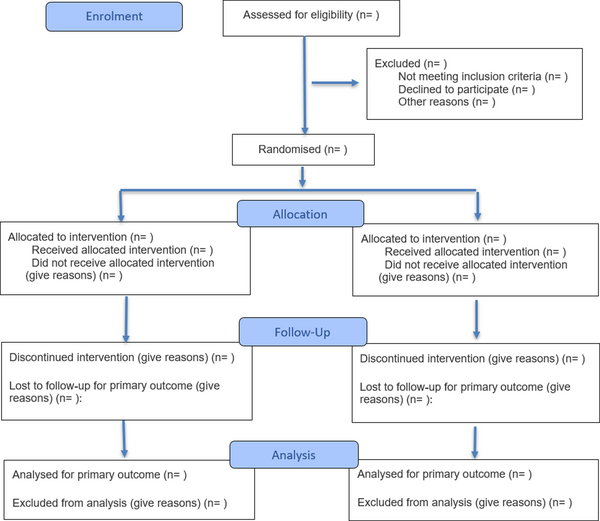
Figure 1 by Hopewell and colleagues, PLOS Medicine, 2025, reproduced under CC BY 4.0 without changes. Its branches show where counts need to be supplied.
Compare the completed figure with the report and outcome tables, matching the same group, stage, and analysis population. Counts assigned and counts analyzed may differ for a stated reason. Ask whether all parts of the report explain that difference in the same way.
When two locations disagree, record both and ask the author to resolve the mismatch. Do not choose a count because the figure looks more polished. Check reasons for losses and exclusions, and keep the data available for each outcome distinct from the number assigned to a group.
The image is a blank template. Fill a submission figure only from checked trial records.
Compare selected items in Atlas
Atlas can compare supplied documents and help draft a coverage note with citations. Work on a bounded set of items, then inspect both the requirement and report text before accepting a match. The research-paper analysis workflow helps with reading a report; this review also needs the current guideline.
For the fictional item 18 query:
- Create a project and add permitted versions of the report and expanded checklist. Add any supporting files you may use and check that the source text is ready to inspect.
- In chat, type
@to select the report and checklist. Ask for candidate passages for CONSORT 2025 item 18, citations to both sources, and author queries for details the report does not supply. - Open the checklist citation to check the current item, then open the report citation and read its methods context.
- Correct any match that adds a fact the report does not state. The envelope phrase alone does not prove that all safeguards were documented.
- Save a checked note with the item number, report version and location, supported wording, open query, and owner. Wait for the saved state before closing it.
A missing match means you still need to look or ask. A cited match gives you a passage whose coverage you must assess. If the answer merges a protocol's planned steps with the report's actual steps, separate them and check the right source for each claim.
Try a small set of items before expanding the comparison. Check whether it keeps the guideline, report, and supporting files distinct. The paper-analyzer guide covers source inspection more broadly; authors and reviewers retain the item-level judgment.
Resolve queries before submission
Give each open row an owner who can supply the facts. A writer may correct a location or wording, while an investigator or analyst must verify a trial detail. Track these roles so a question does not vanish when the report is formatted.
Before submitting, check that:
- The checklist and extensions have the right version.
- Each location opens in the submitted report or supporting file.
- Each item has been read in full and checked against its cited passage.
- Edited text and figure counts agree with checked trial records.
- Open questions have answers or remain explicit for the authors to resolve.
Check the abstract against the final body and update page numbers after layout changes. Keep the checked report, completed checklist, figure, and query record together so a coauthor can retrace the review.
CONSORT concerns one randomized trial. A systematic review or meta-analysis combines work across studies and has different reporting needs. Choose the guideline for the work being reported, and keep any judgment of evidence strength as a separate task.
For observational cohort, case-control, or cross-sectional studies, start with the STROBE checklist. Its items address observational reporting rather than randomized-trial reporting.
Check the passages behind your coverage map
Compare your trial report with selected reporting requirements.