

ICMJE authorship criteria are four linked conditions: substantial work, drafting or critical review, final approval, and accountability. They apply together. A record that shows one condition does not by itself show that a person meets all four.
Match each condition with a record the person has confirmed, and keep open questions visible. A missing approval note is a gap to resolve. It does not prove that someone falls short of the rules.

Check authorship records with your team
Compare each criterion with records and flag the confirmations still needed.
All 4 conditions belong together
The current ICMJE rules link the four conditions with AND. Substantial work is one part. Review of the paper, approval, and the duty to address concerns also need to be checked.
This is not a points system. A long list of tasks cannot offset missing final approval. Nor should the group deny a person who meets the first condition the chance to take part in review and approval.
Accountability means agreeing to help address questions about whether any part of the work is accurate and sound. It goes beyond credit for one's own task. Check the exact current wording when applying the rules to your team.
Match each criterion to a confirmed record
Gather work records and ask people to confirm what they did. Keep the draft versions clear: a review of an early draft is not approval of the text to be published. The table below helps you review the records; it is not a score.
| Condition, paraphrased | Possible record to inspect | Human confirmation to seek |
|---|---|---|
| 1. Substantial work on conception, design, or data acquisition, analysis, or interpretation | Contributor-confirmed work description and study records | What was the substantial contribution? |
| 2. Drafting or critical review of important intellectual content | Draft history or a substantive review record | What intellectual content did the person draft or review? |
| 3. Approval of the final version for publication | Version-specific approval note | Which final version did the person approve? |
| 4. Agreement to address accuracy and integrity questions across the work | Contributor-confirmed accountability statement | Has the person agreed to that responsibility? |
Table 1: Four conditions, four evidence questions: the table preserves missing human confirmation rather than deciding eligibility.
Keep the records clear. A file name such as “final” can refer to a draft that later changed. The group needs to know which text the person saw and approved.
If the record says “reviewed,” ask what kind of review took place. A review of the core argument differs from a spelling check. The ICMJE explanation of its 2023 wording change helps clarify that distinction.
For a journal's own process, JMIR describes the form its authors sign. A private worksheet is not that form. Check which record your target journal needs.
A worked case with approval still pending
In this fictional teaching example, Mira helped design a study of library search tasks and analyze the data. The team has records of that work. She also reviewed the core argument critically and confirmed that it matched the analysis.
The sources contain Mira's work account and review note. They lack her approval of the last revised draft and her agreement to the fourth condition. A draft note says: “Mira qualifies because she designed and reviewed the study.”
That note jumps from two areas of work to an all-four claim. A corrected note reads: “The records describe Mira's substantial design and analysis work and critical review. We still need to confirm her final approval and agreement to the fourth condition.”
The note should not say that Mira failed those conditions. She may have approved the version elsewhere, or she may still need to review it. The group needs her answer and the records that support it.
If the group has not sent her the revised draft, the next task is clear: give her access and an opportunity to review it. Missing approval caused by exclusion is not a fair route to a negative conclusion.
When drafting the author contribution statement, preserve what Mira did. That statement describes her work. The team still needs to check all four conditions before settling the authorship question.
Roles and silence do not settle eligibility
CRediT's official resource hub describes fourteen work roles. The labels help describe what people did. They do not supply a person's approval of the final paper or agreement to address concerns across the work.
A role list can point you toward the right records. “Formal analysis,” for example, suggests asking about that work. It does not award authorship on its own. Check both the work account and the other conditions.
Critical review also does not require making changes just to leave a visible edit. ICMJE changed “revising” to “reviewing” because the older term could imply that needless changes were required. What matters is review of important intellectual content.
If a person agrees with the argument after that review, no change may be needed. Record what they reviewed rather than count tracked edits. Checking spelling is a different task from checking the study's reasoning.
Taylor & Francis explains work roles and author duties. Its guide also covers changes after a paper is sent in. Check your target journal early; these process rules may vary.
The group also needs to review interests that must be disclosed. The conflict of interest statement guide compares the records with the paper's text. That is one more task to check, distinct from authorship.
Byline order is another decision. The person with the most listed roles need not come first under these criteria. Review who meets the conditions, then address the group's order as its own question.
Compare the confirmation sources in Atlas
Put the current rules and records you have permission to use in one project. Include any notes of approval or agreement, with clear titles. A person's own answer is not the same as someone else's account of their work.
- Use @ to select those sources. Ask: “Compare this contributor's confirmed records with each ICMJE condition. Identify the supporting passage and any missing human confirmation. Do not infer approval or agreement from silence.”
- Open each citation. Check the person, task, manuscript version, and type of confirmation. A work-role citation cannot establish approval of a later draft.
- Correct an answer that labels Mira eligible or ineligible from incomplete records. Ask which source establishes the two pending conditions, then replace the verdict with the specific questions still open.
- Select New → Note. Save the four conditions, source records, checked support, and pending human answers with their citations. Wait for Saved before leaving.
Atlas can help compare the sources and save the gap table. The team makes the authorship decision. These steps do not prove consent, award credit, or settle a dispute.
For a broader research paper analysis, use the same source rule: report what the records show and retain what they leave open. A citation is a route to the source, not proof that the source set is complete.
The Atlas view below shows a cited answer beside its source. Use that source panel to check who confirmed a contribution and which manuscript version they approved. The pictured paper is unrelated to Mira's fictional records and provides no contributor confirmations.
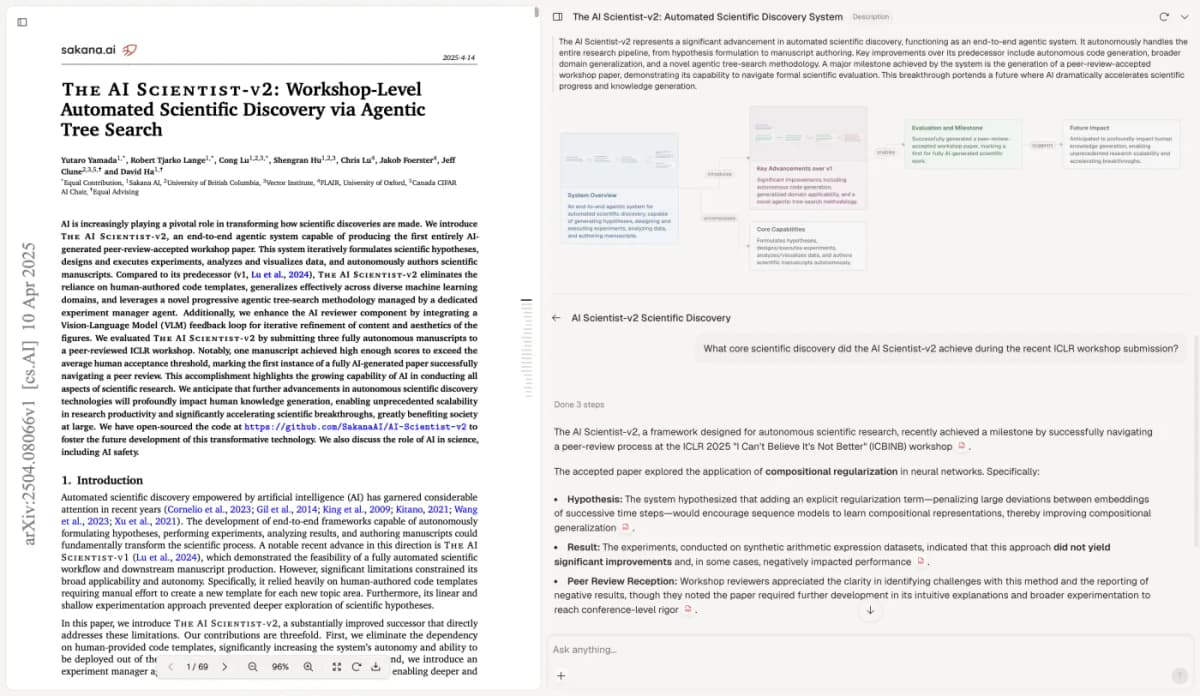
Inspect the record before treating an answer as evidence of a person's agreement.
The visible paper is Yamada et al. (2025), licensed under CC BY 4.0. It appears within the unchanged Atlas capture.
Take open questions back to the team
Return the gap table to the team. Ask for the answer still needed, with the draft version under review. Do not replace a pending answer with a guess just to keep the paper moving.
ICMJE assigns the review to the author group. If the group cannot agree who qualifies, its guidance points to the institutions where the work took place. A reading note cannot settle that dispute.
JMIR's guide likewise describes author responsibility for disagreements. Follow the journal's process when a change affects a submitted paper. Keep the records and group decisions consistent across the manuscript and submission cover letter.
Check authorship records with your team
Compare each criterion with records and flag the confirmations still needed.