
Outcome Mapping: Track Change in Your Partners
Learn outcome mapping with a worked community-center example. Define boundary partners, set progress markers, and keep a useful dated outcome journal.
- Byline

Summary
Outcome mapping is a method for checking dated source records for changes in the actions and relationships of a program's direct partners.
Use boundary partners and progress markers to track what you expect, like, and love to see. Check each marker against a partner record.
Record partner change, program strategy, and context over time; the program can influence partners but cannot control their choices or claim distant impact by itself.
Outcome mapping is a way to plan for change and keep track of it among the people or groups a program works with directly. It asks what those partners begin to do, how their ties change, and what the program did to support them.
A community center may begin referring adults to digital-skills classes after meeting with a nonprofit. The referral is a partner action the team can record. Better digital access across a city is a more distant goal with many possible causes.
The original IDRC Outcome Mapping manual keeps the method focused on the program's direct sphere of influence. Atlas can compare selected partner notes with citations. People decide what each action means.

Atlas

Review partner records in Atlas
Compare selected notes, inspect cited passages, and save a checked journal.
What outcome mapping means
Outcome mapping is a participatory method for planning, tracking, and evaluating changes in the behavior and relationships of a program's direct partners. Those people, groups, or organizations are called boundary partners. The program works with them and may influence them. It does not control their choices.
The IDRC manual centers change among those partners. A partner might adopt a new practice, coordinate with another group, or revise a policy. The team records those acts and the support it offered. It keeps wider social goals in view while limiting the claim it makes about its own reach.
The World Bank methods guide describes outcome mapping as a method for planning, monitoring, and evaluation. It starts with desired partner changes. Its nearby method, outcome harvesting, starts from changes people have already observed. The two may inform each other, but their starting tasks differ.
Design around boundary partners
The method has three stages: intentional design, outcome and performance monitoring, and evaluation planning. The EU CAP Network guide lays out these stages, their evidence needs, and practical tools.
In intentional design, name a long-term vision and the boundary partners the program can work with directly. Describe the desired change in each partner's actions or relationships. Then choose strategies that may help and agree on signs of progress.
In monitoring, gather dated accounts of partner actions, program strategies, and the team's own practices. In evaluation planning, choose what needs a deeper inquiry and who will use the result.
Then decide which sources or methods fit that question. The IDRC manual treats the stages as connected, with choices made by the program and its partners.
Pick a partner within reach
A boundary partner is more specific than “the community.” It could be a network of centers that meets with the nonprofit and may choose to share class referrals. The centers can act in ways the nonprofit hopes to encourage. Residents' later jobs or income lie farther away, beyond what a referral log can establish.
Invite partner input when shaping the goal. A center may say that staff time or language access matters more than the nonprofit's planned flyer. That view can change the strategy before the team begins to count referrals.
Write progress markers you can observe
An outcome challenge describes the broad partner change the program hopes to see. For the centers, it might be: “Staff help interested adults find suitable classes and share feedback with the course team.”
The centers would need to agree that this goal fits their work.
Progress markers turn that challenge into signs a team can notice. The EU CAP Network guide groups them as expect to see, like to see, and love to see.
They show deepening change over time. The labels guide observation; they are not an impact score.
- Expect to see: Center staff ask for a current class list and name a contact for referrals.
- Like to see: Staff use the list with visitors, record referrals they may share, and tell the nonprofit where the handoff fails.
- Love to see: Centers sustain the practice, adapt it for local needs, and share what they learned with peer centers.
Each marker names an action by the partner. “The nonprofit prints 500 flyers” is a program output. “Citywide digital exclusion falls” is a distant result. Neither is a marker of what center staff chose to do.
The IDRC manual says markers can be revised as the program learns. Decide in advance how to record a sign, but leave room for partner behavior you did not predict.
Work an outcome mapping example
The centers, people, dates, IDs, and events below are fictional. A nonprofit works with three neighborhood centers. Its vision is better access to digital-skills classes. Its direct boundary partners are the center teams, whose referral practice it may support.
The work note below records partner actions over four months. In a real program, each source ID would lead to a dated meeting note, referral log, or partner-approved record. The marker label is the team's interpretation and should be checked with the partner.
| Fictional date and source | Partner action in the record | Marker read | What remains open |
|---|---|---|---|
| Jan 12, OM-01 meeting note | Center A asked for class times in two languages. | Expect to see | Request alone does not show that staff referred anyone. |
| Feb 7, OM-02 staff email | Center A added a named referral contact. | Expect to see | Confirm the contact can keep the list up to date. |
| Mar 19, OM-03 shared log | Center B recorded six referrals it had permission to share. | Like to see | Check whether entries reflect real handoffs and who was missed. |
| Apr 28, OM-04 partner note | Center B asked to adjust evening class times and offered a peer briefing. | Love to see candidate | A proposed briefing has not yet happened; ask the partner how it sees the change. |
Table 1: The last row shows why a dated journal matters. The offer to brief peers is a partner action. Calling it a sustained peer practice would go beyond the note. A later record may show whether the briefing occurred and whether other centers used it.
No row proves that adults gained digital skills or that the nonprofit caused the centers' choices. A school, city campaign, or center leader may have shaped them too. The journal keeps the visible partner change and the larger goal separate.
Keep journals and revise strategies
The IDRC manual describes three linked records. An outcome journal follows partner progress markers.
A strategy journal follows what the program tried to support the partners. A performance journal helps the team reflect on its own practices.
Use a small set of fields that serves a real decision: partner, date, action, source, marker, context, and a question to check.
The EU CAP Network guide describes the journals as tools for learning and adjustment. The team can start with the fields it will use.
In the fictional case, OM-01 suggests a strategy change: provide class times in the languages staff asked for. OM-04 suggests a new test: ask whether a peer briefing would help other centers. Record what the nonprofit offered and what the partner later chose to do.
Ask what else may explain change
Partner actions happen in a setting. A city grant, a new manager, or changing visitor needs may explain part of a referral shift. Note those factors beside the program's own steps.
Our program theory guide shows how to write broader causal assumptions. Contribution analysis shows how to test a bounded claim against rival causes.
The World Bank guide notes the value of partner learning and the limits of the approach for wider outcomes. If a decision needs a claim about end users, plan other measures and an evaluation fit for that question.
Review selected records in Atlas
Add partner-approved meeting notes, plans, and logs to one Atlas project. In chat, mention the selected items with @. Ask: “Show each dated partner action that bears on these progress markers. Cite the passage and list what the files do not show.”
Open each cited passage. Check who took the action, whether it happened or was only proposed, and whether the partner agrees with your reading.
The Atlas synthesis guide explains selected-source comparison. The citation-checking guide shows how to inspect a passage before relying on it.
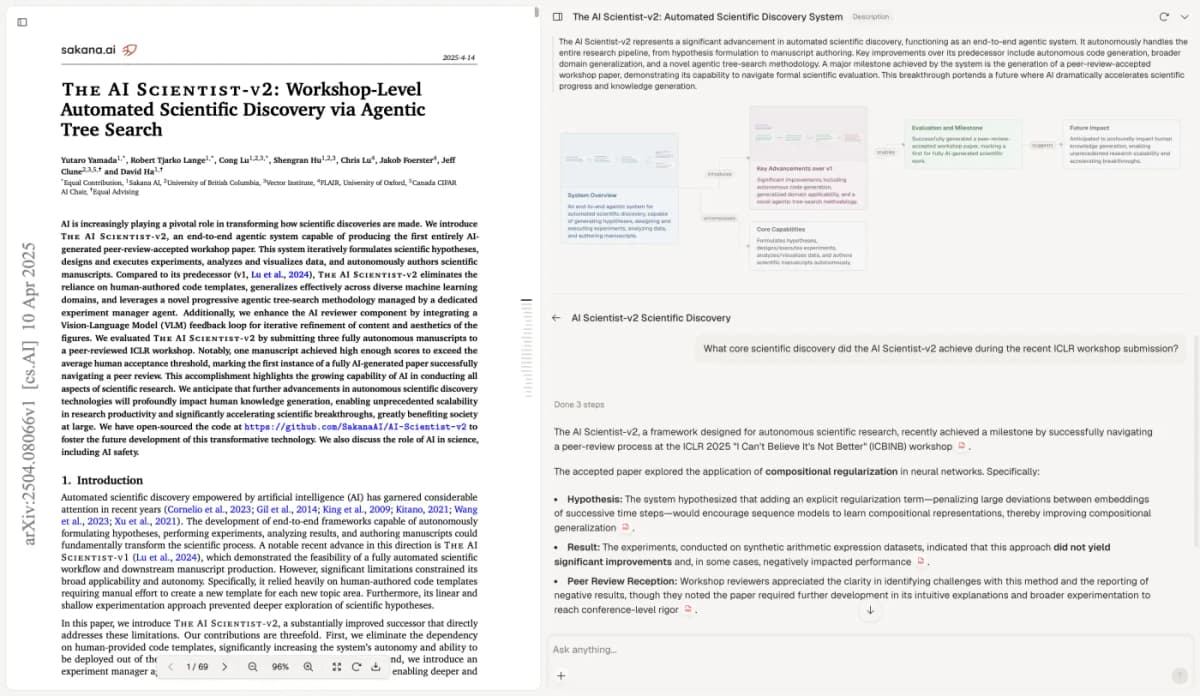
Save a corrected journal note with dates, source IDs, marker reads, program strategies, and open questions. Atlas can compare text in the files you supply. It cannot see unrecorded behavior, ask partners for permission, or decide whether the program influenced them.
State the reach of the finding
A sound finding may say that Center A asked for a multilingual class list and named a referral contact. Center B logged referrals and proposed a peer briefing.
The fictional records support those observations. They do not show that the briefing occurred or that residents later gained skills.
The IDRC manual asks teams to learn from changes within their sphere of influence. The World Bank chapter distinguishes this planned marker work from finding unexpected outcomes after the fact. Choose the method that matches the decision, and keep wider claims tied to wider evidence.
Outcome mapping is most useful when the people doing the work can review the markers and the records together. The journal should make the next question clear: what did the partner actually do, what support did the program offer, and what evidence would change the team's reading?
Atlas
Review partner records in Atlas
Compare selected notes, inspect cited passages, and save a checked journal.
Frequently Asked Questions
It is a participatory planning, monitoring, and evaluation method centered on changes in the actions and relationships of people or groups a program works with directly.