
After Action Review: Questions, Evidence, and Worked Example
Run an after action review with four focused questions, a planned-versus-actual evidence log, and clear next steps your team has agreed to test again.
- Byline

Summary
An after action review is a guided team discussion of what was planned, what happened, why, and what to change or repeat next time.
Bring the original plan and event records. Keep observations, explanations, and agreed actions separate in the final note.
Ask people who did the work to check the account; a generated summary cannot stand in for their agreement.
An after action review (AAR) is a team discussion after an event or a stretch of work. The people who did the work compare the plan with what took place. They ask why there was a gap and what to keep or change next time.
Suppose a workshop plan calls for guests to check in within ten minutes. A time log shows the queue lasted much longer. The gap is worth a close look. The log alone cannot tell the team why it formed, or which fix people will support.
Atlas can help compare a permitted plan and event records with citations you can open. The meeting, the account of what happened, and the final choice belong to the team.
Atlas

Compare your plan with what happened
Review selected event records, open citations, and save checked lessons.
What an after action review does
The US Army's 2025 AAR circular defines a review as a guided look at how a group performed, with the aim of doing better next time. It includes a leader of the discussion, people who took part, and others who watched the event. The people involved should help work out what happened and why.
An AAR is not a lecture from a manager or a search for one person to blame. The same Army guide calls for an open talk tied to goals and standards. AHRQ's team debrief guide also asks teams to name what went well and avoid placing fault on an individual.
You can use the method after a success, a hard event, or work still in progress. The Army guide allows both formal and informal reviews. A fast team check may need little setup; a large review may need a plan, records, and a skilled facilitator. WHO's AAR toolkits offer several formats for public health work, and say teams can adapt them to local needs.
The output should be more than a list of feelings. Keep a record of the goal, what people saw, what they think explains it, what remains in dispute, and what the team agreed to try. That record can help the next event team check whether the change worked.
Prepare the evidence and the room
Bring the goal and the event trail
Start with the plan as it stood before the event. Mark the goal, key steps, who owned each step, and what would count as success. Then gather time logs, count sheets, messages, work products, and notes from people who were there.
A Wharton AAR guide recommends bringing facts and figures into the discussion. Its questions start with intent before actual work.
The Army circular likewise ties the review to the task goal and records what observers saw.
Give each item a date and source. “The line was slow” is a view; “the check-in sheet shows the last guest entered at 09:27” is a record. Both may matter, but they answer different questions. If a record is missing, mark that gap instead of filling it from memory.
Invite the people who know the work
The people who did the task can explain what the plan did not show. Choose a facilitator who can keep the talk on the work and make space for quiet voices. Ask who has first-hand knowledge, who saw a different part of the event, and who can approve a later change.
Set a clear scope: which event, which time, and which goals are in view? Tell the group how notes will be used. Some logs may contain private staff or client details.
Share only material each person may see, and agree on what leaves the room. WHO's toolkits include roles and follow-up steps for several review formats. Each team can fit the format to its setting.
Name the tone before you begin. AHRQ asks teams to treat mistakes as chances to learn and to avoid blame.
A no-blame talk still needs an accurate account of a missed step. Ask what in the plan, tools, setting, or handoff shaped the choice at the time.
Ask the core questions in order
The method uses evidence from the event, then asks the people who took part to interpret it. A log is one source of evidence; the discussion tests what that log can and cannot show.
The Wharton guide uses 4 core questions: what the team meant to do, what it did, why there was a difference, and what to adapt or repeat.
The order helps. It stops the group from picking a fix before it agrees on the event.
What did we intend to do?
Read the goal and the plan as they stood. Ask what the team expected to see. If the goal was vague, note that. Do not give it a precise target after the fact and then score the team against that new target.
What took place?
Build a short timeline from records and the people who were there. Name what went well as well as what did not. AHRQ's debrief checklist calls for a fair recap of key events and strengths.
If two accounts differ, keep both until the group can check the source or say why it cannot.
Why might there be a gap?
Ask an open question, then let people who did the work speak. A log may show a queue but not the reason for it. It could reflect a slow tool, unclear signs, a late start, or more guests than planned.
Check each proposed cause against the timeline. The Army guide favors open questions and active input over a one-way critique.
What will we keep or change?
Choose a small set of steps that follow from the talk. Keep a good practice as well as a fix. Say who can own each step, when it will be tried, and what would show whether it helped.
If the group has not agreed, mark the idea as open. Wharton treats the last question as a way to repeat success or improve a weak step. AHRQ calls for a way to change the plan.
Read a fictional review record
This example is fictional. The event, people, times, and log IDs below are made up. They do not describe a real review or an Atlas result.
A community group runs a two-hour workshop at a library. It plans to open check-in at 09:00 and have all 24 registered guests seated by 09:10. Three tablets are listed in the setup plan.
The sign-in sheet shows the last guest seated at 09:27. A setup log says only two tablets were ready at 09:00. One volunteer says the signs were hard to see; another says some guests had not filled in a form.
The team has a clear gap, but not one proven cause. In its meeting, it checks each record and keeps the volunteers' accounts separate from the timed observations.
| Review question | Fictional source and account | Team's checked note |
|---|---|---|
| Intended work | Plan A, page 2: three tablets ready at 08:50; 24 guests seated by 09:10. | Keep the original goal. The plan did not say who would test the tablets. |
| Actual work | Sign-in sheet S1, rows 1–24: last guest seated 09:27. Setup log L2, 08:58: two tablets ready. | The target was missed. Two tablets were ready, but the records do not show how much each issue added to the queue. |
| Possible reasons | Volunteer V1 recalls poor signs. V2 recalls forms being filled at the desk. Neither account has a time stamp. | Record both explanations as open. Do not label one person or one cause as the answer. |
| Next test | At the debrief, all four attendees agree to test a tablet check and paper fallback at the next workshop. Sign placement remains open. | Assign the lead volunteer to test the setup by 08:50. Count wait time at the next event, then review the result. |
Table 1: The table condenses the meeting. The group should keep full notes in the place its policy allows. The source column shows what a record or person said. The last column shows what the fictional team agreed to keep, test, or leave open.
The team might later find that the third tablet had little effect and that form design mattered more. That result would teach them more about the gap. The point is to make a test they can check at the next workshop. A guide to research paper analysis uses a similar source-check habit when the records are studies rather than event logs.
Capture agreed actions and open points
Write the note while the team can still check it. A long report is not always needed. The Army circular's follow-up chapter covers using the result to change training and share lessons.
WHO's toolkit page includes forms for planning, running, and following up on a review.
A short note can use this order:
- Scope and goal: Event, date, people in the room, and the plan or standard used.
- What happened: A short timeline with links or IDs for records and accounts.
- What worked: A practice to keep, with the basis for that choice.
- What did not match the plan: The gap, possible reasons, and any dispute still open.
- Agreed next step: Action, owner, due date, and the measure to check next time.
- Open point: A question the group did not settle or a record still to find.
A note should say who approved it and who may read it. Do not turn “one person suggested a new sign” into “the team agreed to replace all signs.” The words suggested, agreed, and assigned describe different states. A literature review process also keeps source claims distinct; the same care helps with event records.
At the next event, check the chosen measure. In the fictional case, compare the time the last guest is seated with the new setup log. If it improves, ask whether the tablet test, the paper backup, or another factor may explain the shift. Do not claim the change caused the gain from one run.
When several reviews accumulate, a lessons learned register can compare their evidence and exceptions across projects before a future team adopts an action.
Compare alternatives for the debrief
These options serve different aims. Choose by the risk, number of people, and duty to report. The table is a starting point; use your organization's rules to make the final choice.
| Format | Good fit | Keep as an output |
|---|---|---|
| Quick huddle | One small, low-risk task with the same team. | A short note on what to keep and test. |
| Informal AAR | Routine work with a clear goal and people still on site. | Plan, event facts, open causes, and next step. |
| Planned AAR | Large or repeated work with several roles and records. | Checked timeline and team-approved follow-up. |
| Formal incident inquiry | Harm or a reporting duty triggers a required process. | The report and action record required by that process. |
Table 2: A quick huddle may be enough after a small, low-risk task. The team can ask what worked and what it will try next, then keep a brief note. AHRQ's debrief guide describes short team debriefs tied to a goal.
A full AAR fits a wider event with several roles, records, or disputed causes. It gives the group time to compare plan and outcome and to record the next test. The Army circular distinguishes formal and informal AARs by the planning and resources they need. WHO offers debrief, working-group, interview, and mixed forms for health response work.
A formal incident inquiry serves a different duty. If harm must be reported or a law or policy calls for an investigation, follow that process. An AAR can still help a team learn within its allowed scope, but it cannot replace the required inquiry or decide liability. The AHRQ debrief guidance is about team learning and plan changes.
Choose the right review format
For a routine team event, start with a short AAR soon after the work while details are fresh. Use the four questions, invite people who did the task, and record one or two tests. Keep the note small enough for the next team to use.
For a large response or a gap that spans several teams, plan a fuller review. Choose a facilitator, gather records before the session, and agree on access rules. WHO's AAR toolkits show why a debrief, working group, or interview may fit different settings. If reportable harm is involved, use the required incident route as well.
Check source records in Atlas
After the meeting, Atlas can help compare permitted records. Add the original plan, the setup log, and the debrief note to one project. Mention the named items in a chat question. Ask for a row for each planned step with the source passage, what the event record shows, and any gap. Ask Atlas to keep volunteer accounts apart from timed logs.
Open the citations. Check the plan and log in full context. If the answer blends two voices or invents an agreed action, fix the note yourself. Save only what the team has checked and approved. Atlas's public source-comparison, grounded-question, and first-note guides describe the selected-source, citation, and note steps. The AHRQ debrief guide keeps the learning and plan change with the team.
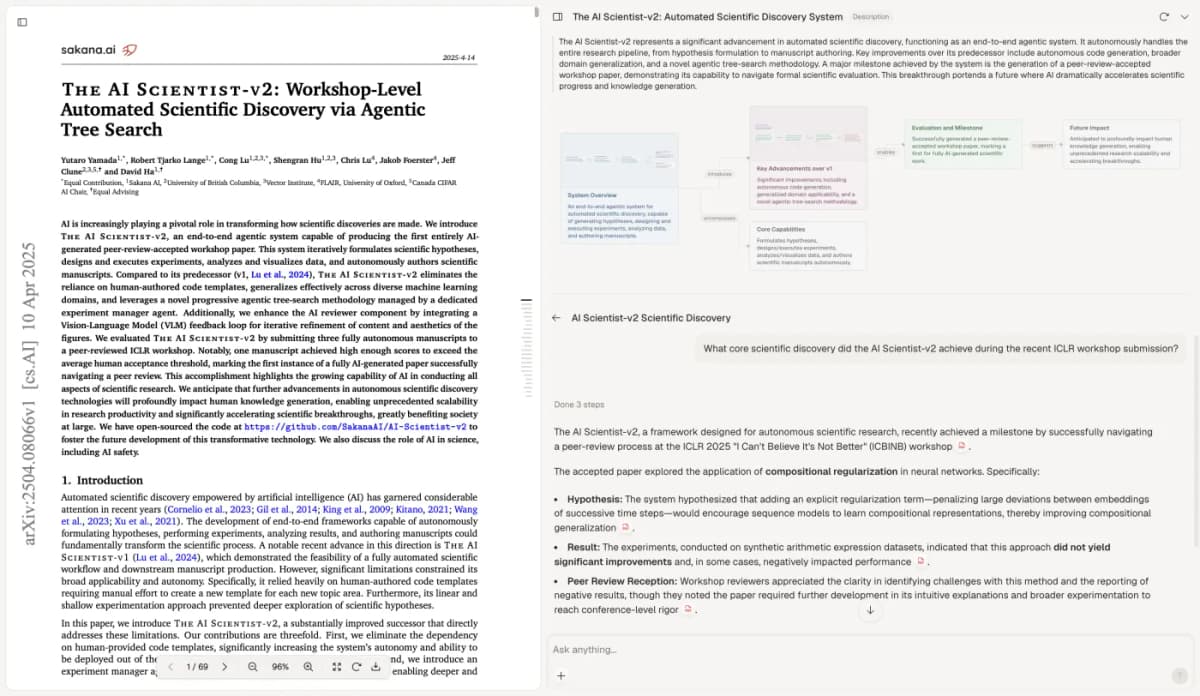
This first-party Atlas image shows where a cited source can be opened beside an answer. The visible paper is about AI science. It is not a workshop log and does not show Atlas running an AAR.
A source-linked comparison can help the group synthesize several records. It cannot replace the talk with people who did the work, decide which account is right, or infer that silence means agreement. Keep private event records within the access rules that apply to them.
Strengths and limitations of an AAR
Do not let the method turn into a hunt for fault. AHRQ says to reinforce what went well and avoid blame. The Army circular also calls for candid talk that helps participants learn. A leader may still have a separate duty to report harm or follow a formal incident process. Do not use an AAR to hide that duty.
Check who can see the records. A transcript, shift note, or client message may carry private detail even after names are removed. Decide in advance what may be copied to a shared note, who can review it, and how long it should be kept. WHO's public health AAR formats are tailored to context; a small project team must also follow its own access rules.
Do not force one story when sources clash. “The log says two tablets were ready” can be settled from the record. “The line was caused by tablet setup” may stay open. Keep that split in the note. If the team cannot agree on a reason, it can still agree on a low-risk test.
The four questions guide the talk. A good review also needs people who know the work, a fair way to hear them, records that can be checked, and time to see whether the next change helps. Save the lesson with enough detail for the next team to test it.
Atlas
Compare your plan with what happened
Review selected event records, open citations, and save checked lessons.
Frequently Asked Questions
It is a guided discussion in which people who took part compare intended and actual events, explain differences, and decide what to sustain or change next time.