
Member Checking in Qualitative Research: Handle Feedback
Member checking in qualitative research invites participant feedback. Learn what to return, how to resolve disagreement, and what feedback can establish.
- Byline

Summary
Member checking invites participants to review interview records or interpretations and respond to how their accounts are represented.
Decide the purpose first. Transcript correction and discussion of an emerging finding call for different material and questions.
Keep each response linked to the original excerpt and record what changed, what did not, and why. Participant agreement alone does not certify a study.
Member checking in qualitative research asks people to review their interview record, a summary, or a draft reading of what they said. The researcher then decides what the reply changes and records why.
A returned transcript can catch a wrong name. It cannot, by itself, show that the study's main claim is sound.
Consider a fictional interview about a new clinic schedule. The researcher writes that a nurse opposed the change. The nurse replies, “I opposed the first draft, but I supported the later schedule.”
The researcher reopens the account, corrects the time frame, and checks whether the wider claim still holds. That feedback trail shows more than a box marked “participant agreed.”

Atlas

Check source notes in Atlas
Compare permitted records, inspect citations, and keep a decision note.
What member checking means
Member checking is also called participant or respondent validation. Researchers return part of the record or analysis to people who took part, then invite comment. Peer debriefing instead brings a colleague into a challenge of the researcher’s assumptions and interpretation; the two feedback routes answer different questions. The aim may be to fix an error, add context, or discuss a draft finding. The Birt and colleagues author record describes both data and results being returned.
The word validation can mislead. A person knows their own experience. The researcher may be making a claim across several accounts. A reply can reveal a mistake or a second view, but one person's agreement does not prove a whole study. Lloyd, Hyett, and Kenny ask researchers to state their purpose before choosing this method.
Member checking also creates new data. The reply may come much later, after views have changed. It may answer a question the first interview never raised. Keep the first record and the later reply distinct so readers can see both.
McKim's approach uses questions that draw out feedback beyond a transcript approval mark.
Decide what the participant will review
There are two common jobs. Transcript review asks whether the record reflects what was said. Interpretation review asks how a person responds to the researcher's account of meaning.
Lloyd and colleagues separate raw data from analyzed material. A project may return either, both, or neither, based on its aims and its pledge to participants. Qualitative data analysis covers the wider task of building findings from source material.
A transcript or a short summary
If the aim is accuracy, return the part the person can check. Ask a narrow question: “Is this a fair record of what you said? Are any names, events, or words wrong?”
They may fix a date, explain a term, or ask for a change within the study's agreed process. A practitioner method guide lists transcript return among common formats. The reply still needs a source check.
A full transcript may be long or hard to read. It may also contain sensitive talk about other people. A short account can be easier to review, but it reflects the researcher's choice of what to include.
Birt and colleagues describe a synthesized approach. It lets people respond to interview content and a draft reading. Choose the return material based on your study's consent plan, burden, and purpose.
A draft interpretation
If the aim is to test a reading, give the person enough context to know the claim. Use common words. For example: “We read this part as concern about who made the decision. Does that fit your account? What have we missed?” An invitation to disagree matters as much as an invitation to agree.
The person may accept the quote yet dispute the researcher's label. Record that response and test the label against the text. A recent open methods reflection notes that feedback on raw and analyzed material has different aims. It also warns that assent may reflect how the researcher framed the request.
Plan a review participants can answer
Choose the purpose, material, timing, and response route before sending anything. The study's approved plan and the participant's choices set the bounds. Do not assume that an earlier interview invitation also covers every later use or return of a transcript. Follow your own study's consent and ethics process.
Set the question and invitation
Write down what a reply could change. A date correction may change a source record. A comment on a draft theme may change its name, reach, or case set. If no possible reply could change the report, reconsider why you are asking.
McKim's full method paper makes the case for planned questions and analysis rather than a nominal transcript return. That choice is part of the study's evidence plan.
Invite a response in a form the person can use. State what you are sharing, why, how they can comment, and what happens if they do not reply. Keep the language free of a demand to approve your work. Lloyd and colleagues weigh the time burden, power between researcher and participant, and possible distress from seeing past words again.
Record the response route
Plan how you will log who was invited, what each person received, and whether they replied. Do not code silence as agreement. A reply may come by written comment or a later talk, and a later talk can add more data to study. The Lloyd study describes several forms of response and the need to report what was done.
Protect the person and the record. A draft report may reveal another participant's story, even when names are removed. A transcript can contain details a person did not expect to read again. The method review of burdens and risks treats these risks as part of study design. Use the return route and scope approved for your study.
Reconcile feedback with the source record
Set the original excerpt, the draft claim, and the new reply side by side. Then ask what kind of change the reply calls for.
Birt and colleagues argue that returning a synthesized account can open a deeper exchange than asking for a simple approval mark. The analyst still has to show how that exchange affected the work.
- Check a factual correction. Open the first record. If a date, role, or word is wrong, fix it in the relevant account and note the source of the change.
- Add context. A person may explain a shift over time or an event that happened after the first interview. Keep the later feedback dated rather than rewriting it as if it had been said earlier.
- Test a disputed reading. Compare the claim with the quote, the nearby text, and other cases. You may revise, narrow, or retain the claim with a reason. Do not erase a challenge just because it complicates the report.
- Mark what you cannot settle. A reply may leave two sound readings. Report the split if it matters to the finding. If someone did not respond, mark the check as unanswered.
Keep a decision trail for each key reply. A tally of yes votes hides what the feedback changed.
Lloyd and colleagues ask how dissenting voices will be handled and how the check will affect the final report. Answer that question where you discuss each major point of dispute.
A worked disagreement and decision note
The nurse, the clinic, and all excerpts below are fictional teaching material. They are not participant quotes, Atlas outputs, or findings from a real study. Codes such as I1 and F1 stand for source locations a real team would keep in its own permitted record.
The first reading and the reply
In the invented interview, a nurse says the first schedule “left the late shift short” (I1). She later says a second version added cover and “made the week workable” (I2). The draft report had compressed both lines into “staff opposed the new schedule.”
The nurse's later feedback says she opposed only the first version (F1). She also says she still doubts that the final schedule will work in winter (F2).
These replies do two jobs. F1 exposes a broad claim that needs correction. F2 adds a new limit that was not in the first interview. The researcher should keep the first record and the later feedback in their own order.
The table is a made-up decision log for teaching. In a real study, replace the labels with exact, permitted source locations and the team's written reason for each choice.
| Original record and draft claim | Participant reply | Checked decision |
|---|---|---|
| I1 and I2 describe two versions. Draft says “staff opposed the new schedule.” | F1 says opposition was to the first version. | Narrow the claim to the first version; keep I1, I2, and F1 linked. |
| I2 calls the week workable. Draft says the final version solved the problem. | F2 says winter staffing is still in doubt. | Keep the reported improvement, add the later doubt, and do not claim the problem was solved. |
Table 1: This small table separates correction from new context. It also shows why a reply carries more than an approval score. McKim's paper asks researchers to analyze the exchange and report its effect.
Keep an open decision visible
Suppose a second, still fictional participant says the first version was never put into practice. That would challenge how the report names the “first schedule.”
The team should check the new claim against the source set and note which point remains open. It should not silently replace the nurse's account with the later speaker's view.
A decision note could read: We changed “staff opposed the schedule” to “one nurse objected to the first draft.” I1, I2, and F1 support the narrower claim. F2 records a later concern about winter cover. We could not establish whether the first draft was used, so the report does not claim it was.
The note preserves the feedback and the reason for the edit. Lloyd and colleagues place that effect on findings at the center of good reporting.
Check records and save the note
Atlas can help with the source check once you have material you are allowed to add. Put the interview record, your draft note, and any feedback note in one project. In chat, mention the files you want to compare. Ask: “For each claim in this draft note, show the interview line and the feedback line that supports or challenges it. Keep the dates separate and cite the source.”
Inspect the cited lines
Open each key citation and read the lines around it. Check that the answer has not mixed a later reply into the first interview. Ask a narrower question if the two sources were merged. Atlas can compare named sources and open citations, but it does not know what the participant meant beyond the supplied text. The AI source-checking guide explains why a nearby passage matters when an answer sounds plausible.
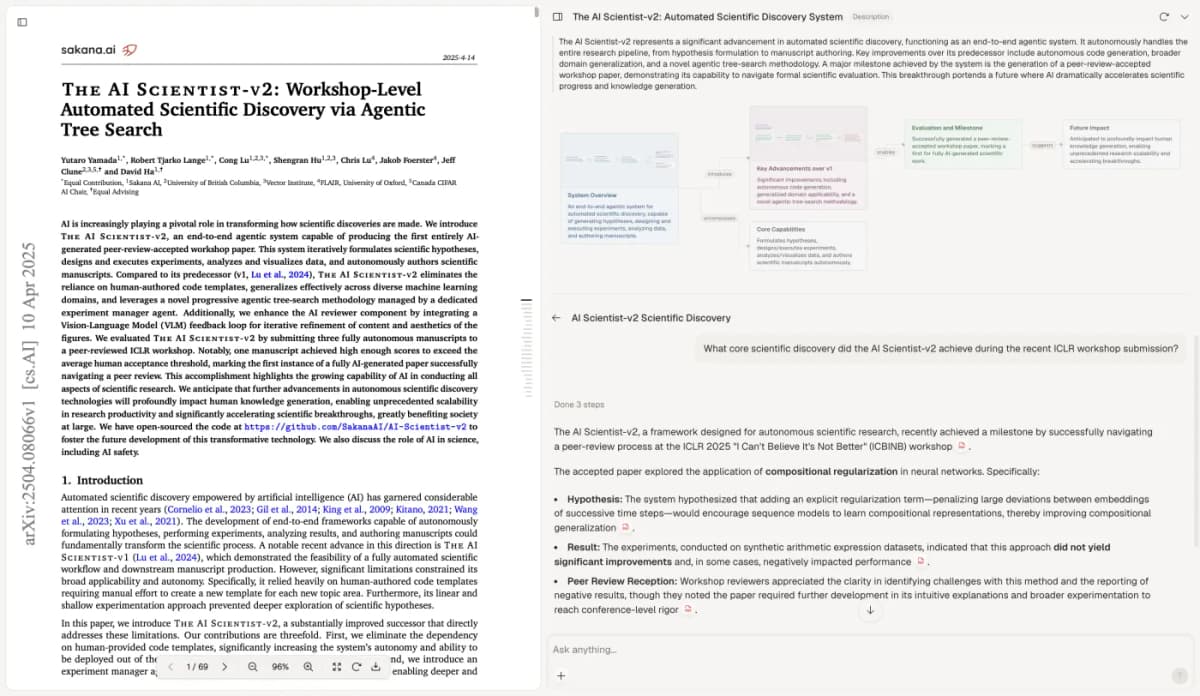
The screenshot below shows an Atlas source beside an answer. The visible paper is unrelated to the fictional clinic case. It shows where a user can inspect text. The participant exchange and research decision are separate steps.
Write the decision yourself
After you check the sources, save your own note with the original line, later feedback, action taken, and reason. The research-note guide can help you keep the decision easy to find. Review the tool response against the sources, then write the team's judgment yourself.
The participant exchange happens outside Atlas. The researcher chooses what to return, follows the study's permission and ethics plan, receives the reply, and decides how it affects the report. Atlas helps compare the text the researcher supplies. It does not contact participants or run the check on their behalf.
Report feedback and its effect
In the final methods account, state who was invited, what material they saw, when they saw it, and how they could reply. Report who responded and how the replies were reviewed.
Where feedback changed a claim, show the kind of change. Where you kept a reading despite dissent, explain why and show the disagreement if it matters. Lloyd and colleagues found that these design and reporting choices matter more than merely naming the technique.
Do not describe nonresponse as assent. Some people may lack time, may find the material hard to revisit, or may not want another exchange. A request can also create pressure to agree with a researcher.
Lloyd's review of benefits and burdens treats low response, power, and possible distress as live limits. State them when they affect what you can infer.
Member checking is a tool to learn from participants, correct the record, and test a draft account. It does not turn every reply into a vote on truth.
Birt and colleagues warn against a token mention of the method, while McKim asks for a more meaningful exchange.
A source-linked decision record lets readers see what that exchange actually changed.
Atlas
Check source notes in Atlas
Compare permitted records, inspect citations, and keep a decision note.
Frequently Asked Questions
It is a process in which researchers invite participants to comment on their interview record, a summary, or an emerging interpretation and then examine what that response changes.