
The SIFT method helps you check online information through four moves: Stop, Investigate the source, Find better coverage, and Trace claims, quotes, and media to their original context.
Mike Caulfield developed the framework to help readers recover the context that a post, headline, or short clip may leave out.
When a claim catches your attention, leave the first page long enough to check who is behind it and what other sources say.
Then follow the evidence back to the original passage or image record. A useful result is a source-linked note that explains what you can support, what needs revising, and what remains unknown.

Compare the sources behind a claim
Keep the claim and selected source text together, then inspect cited passages.
Stop and define the claim
Pause before you share or build on a claim. Write down what it actually says, including words that change its meaning. “A camera photographed the Great Wall from Earth orbit” and “people can see the Great Wall from the Moon” are different claims. Evidence for one does not establish the other.
Decide what you need the information for. A casual reading choice calls for less work than a claim you plan to cite in a paper. In his original SIFT explanation, Caulfield ties the depth of a check to the reader's purpose. Stop also means returning to that purpose when a search becomes a string of unrelated tabs.
Ask a focused question; SPICE helps frame service research. Instead of asking whether a whole website is “trustworthy,” ask whether a named report supports its headline. For a quotation, keep the exact words and the person said to have spoken them. For a photograph, keep the caption and the page where you found it.
Save the starting link before you move on. If a post gives no source, record that gap. You can still investigate its claim, but you should not later describe a similar page you found as the post's proven origin.
Investigate the source laterally
Find out who produced the material and what qualifies them to address the claim. Search outside the page for the author, publisher, or organization. For example, search the publisher's name with terms such as its subject area, ownership, or funding. Read useful results rather than taking a search snippet as the answer.
This is lateral reading: stepping away from a page to learn about it from other sources. The Introduction to College Research chapter contrasts this with staying inside the page you are trying to judge.
An About page can tell you how an organization presents itself; other sources can help you check that account.
Look for expertise that fits the question. A person may know a great deal about one subject and little about another. A relevant affiliation helps you choose what to inspect, but the specific claim still needs evidence.
Keep the publisher and the underlying source distinct. A news story might describe a study conducted elsewhere. In your notes, record both who wrote the story and who produced the research. That distinction becomes useful when you trace the headline back to the paper.
The CRAAP test organizes questions about Currency, Relevance, Authority, Accuracy, and Purpose. Use those criteria to assess how a source fits your research use. SIFT emphasizes leaving the first page to check outside coverage and trace the claim's original context.
The Marist library teaching guide emphasizes knowing a source's expertise and agenda. Use that context to read a claim more carefully. Funding or a stated goal can matter without making every claim from that source false.
Find better coverage
Search for the claim using the key object, action, and qualification from your question. A search for “Great Wall visible from Moon” is more useful for that claim than searching only for the account that posted it.
Choose coverage that addresses the point you need to check. Original records can establish what was reported or observed. Expert explanation can help you understand what those records mean. Reporting may show how a claim has changed or why people disagree about it.
Read far enough to find the basis for each account. Three articles might all repeat one press release. Those are three pages, but their shared assertion still rests on one source.
Note who conducted the work, supplied the quotation, or took the photograph.
Caulfield and Sam Wineburg's Learning to Verify centers source checks on the context needed to understand information. For your own check, ask whether a new result adds evidence or only repeats a conclusion you already have.
Seek a source that could challenge your current view. If all your searches include “debunked,” try a neutral version of the question. If the sources disagree, keep the disagreement visible while checking whether they discuss the same place, time, population, or viewing conditions.
Trace the original context
Follow a report's citation or link to the material behind it. Read the passage that supports the claim, along with enough nearby text to retain its limits. A short quote might leave out a qualification.
A headline might turn a small study into a broad claim.
For media, find the original record or fuller version. Check who made it, when and where it was made, and what its source caption says. A genuine image can be given a misleading caption; proving that the image exists does not prove the claim attached to it.
Keep the source's meaning intact when you summarize it. If an account says a feature was photographed with a long lens from Earth orbit, retain those details. Do not silently turn that into an unaided-eye view from the Moon.
When you cannot open the original, mark that limitation in your note. You may be able to support a narrower statement from reliable coverage, but a citation to an inaccessible source does not mean you inspected it. If the missing passage would decide your conclusion, leave that conclusion open or seek an accessible record.
SIFT method worked example
Imagine a post pairing an orbital photograph with the claim, “You can see the Great Wall of China from the Moon.” The starting post is hypothetical. The NASA and ESA pages used for this check are real sources you can inspect.
Start by separating the image claim from the viewing claim. Does the photograph show a view from the Moon? Was it made with a camera? Does its original caption say that a person could see the wall unaided?
NASA's Great Wall image article attributes the photograph below to Expedition 10 Commander Leroy Chiao aboard the International Space Station. NASA states that the wall is not visible from the Moon and discusses the high-powered lenses used for the image. The photograph therefore does not establish the hypothetical post's lunar-view claim.
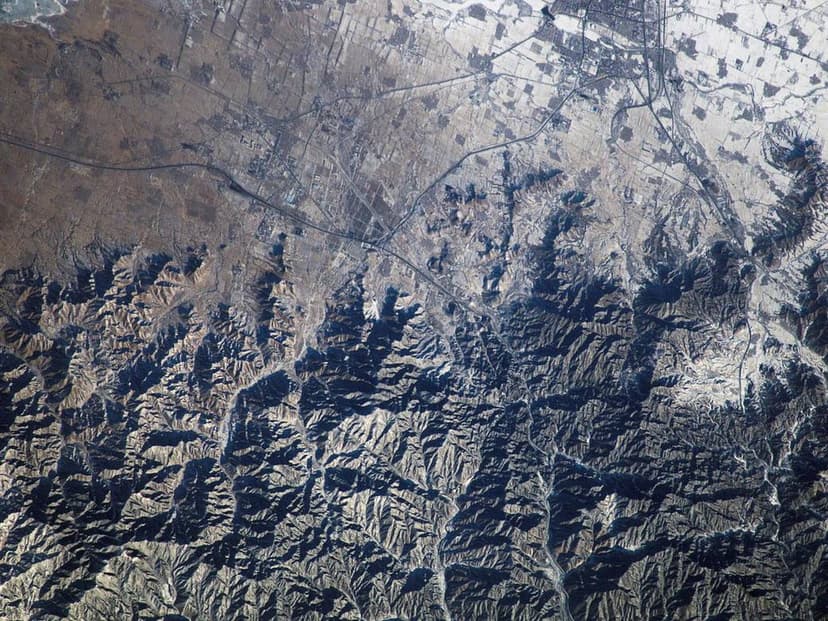
The original NASA caption places this photograph aboard the International Space Station. Image credit: NASA.
Now look for separate coverage with relevant source detail. ESA's 2018 Great Wall photograph records Alexander Gerst's image from the ISS and his use of an 800 mm lens. It describes another astronaut's photograph, rather than reposting Chiao's image. It adds context about camera-assisted viewing from Earth orbit; it is not a separate observation from the Moon.
These findings can become a short claim-trace note. Each row records the question, the source you checked, and the limit of its support.
| Check | Source and location | Finding | Limit or next action |
|---|---|---|---|
| Exact starting claim | Hypothetical post | Unaided visibility from the Moon | No actual post or repost history examined |
| Photograph context | NASA Great Wall article, caption | Chiao took it from the ISS | Do not label it a lunar view |
| Separate observation | ESA Great Wall page, description | Gerst used an 800 mm lens from the ISS | Camera evidence does not establish an unaided lunar view |
| Revised statement | NASA and ESA source descriptions | These records describe ISS photographs | Retain the viewing location and lens context |
Table 1: The note separates what each source says from the broader claim the post asks you to believe.
A checked conclusion would say that the selected records do not support the claim about seeing the wall from the Moon, and that NASA explicitly rejects that myth. The revised description of the image should identify its actual viewpoint. You do not need to infer that every possible view from every orbital height is the same.
Decide when to stop checking
For this teaching question, the viewing location and lens context resolve the main mismatch. A different question about what the human eye can discern at a given altitude would need more specific evidence. Define that new question before extending the search.
If you were examining an actual repost, also keep its URL and date, and check whether it used this exact image. This walkthrough has not established the history of any real social post. The claim-trace note preserves that boundary instead of filling it with a guessed origin.
Keep a checked note in Atlas
Atlas can help compare selected source text and keep the findings in a note. First choose the pages you want to compare. For this example, use NASA's image article, ESA's image description, and a note containing the exact claim you are checking.
- Import the source pages. Open Add a source and use Add a URL for each page.
- Check the imported text. After processing finishes, open each source and check that the caption or description you need is present. Website imports use retrieved page text. Inspect the photograph and its surrounding context on the original image page yourself.
- Ask for a cited comparison. Start a chat. In Ask a question, type @ and select the two sources and your claim note. Use a bounded prompt such as the one below, then select Send.
Compare this claim with the selected NASA and ESA text. For each source, state the viewing location, any camera or lens detail, and what the passage supports. Include citations and keep missing details visible. Does either passage support an unaided view from the Moon?
- Open and check the citations. Check that each numbered citation leads to the intended source and supports the answer's wording. If an answer treats Gerst's ISS photograph as evidence of a lunar view, ask it to retain the ISS location and revise the conclusion.
- Save the checked note. Choose New, then Note. Add the exact claim, source links, source conditions, revised statement, and any remaining question. Wait for Saved before closing it. Organize your research notes so a later source can be compared with the checked record rather than a remembered verdict.
For choosing tools that help with cited research, see AI source checker workflows. When your task grows from one claim to several papers, research synthesis methods can help organize the next stage.
Keep the original framework distinct
Caulfield has also proposed a draft SIFT rebuild for AI-mediated information. He describes it as a parallel track and explicitly distinguishes it from an official reworking of SIFT. The four moves taught here remain the original framework.
You can use an AI answer to organize a source-comparison task, then open the sources and check what they say. Your judgment still depends on the evidence, its independence, and its limits. A consequential claim may need more subject expertise than this first check provides.
Compare the sources behind a claim
Keep the claim and selected source text together, then inspect cited passages.