
Archival Research: Trace Records Back to Their Context
Learn archival research with a worked record table. Check finding aids, creators, dates, gaps, and conflicting accounts before writing a sourced history.
- Byline

Summary
Archival research uses records preserved by an archive to answer a question about past people, events, or institutions.
A finding aid and collection context help identify a record's creator, date, purpose, and place in a larger group of records.
Keep item IDs, source passages, gaps, and conflicting accounts together before turning records into a historical claim.
Archival research uses records kept by an archive to answer a question about the past. The hard part begins after you find a document. You need to know who made it, when, why, and where it sits in the collection.
A letter and a meeting minute may describe the same event from different positions. The Society of American Archivists guide starts with finding the right archive and learning how its records are arranged and used.
Atlas can compare text from digitized records you supply. It can cite the passages it uses, which lets you check a draft chronology. You still need the collection guide, item IDs, and your own judgment about gaps. The fictional table below shows a record trail you could keep in a research note.

Atlas

Compare selected records in Atlas
Check cited passages across your records and save a source note.
What archival research means
Archival research studies preserved records to answer a question about past people, events, or institutions. Records might be letters, minutes, photos, maps, or files made in the course of work and life.
The source gains meaning from its context. A page by itself may hide why it was made or how it reached the archive.
The SAA guide to using archives explains how repositories differ in scope and access. A research question may need records from more than one collection.
The records that survive reflect what people created, kept, and later saved. A surviving file does not give a full account of everything that happened.
Start with the question and finding aid
The first step is a narrow research question. “How did a town decide to fund a new waterworks in 1912?” points to minutes, letters, budgets, and local reports. That question tells you which evidence to seek. Set the people, place, and years you need before searching.
Next, look for an archive that may hold those records. The Penn Kislak research guide shows why the route matters: it uses a catalog for some items, finding aids for archives, and a separate site for scans.
Each archive sets its own search and access rules. Ask staff when a guide is unclear.
Read the collection guide
A finding aid is a guide to an archival collection. The Library of Congress guide says it may describe the creator, history, scope, arrangement, and access terms. Note the collection title, date range, series, box or folder, and any item ID you can use again.
Check the access note before you plan a visit or cite a scan. Some material may be closed, unprocessed, or available only in the reading room.
Cornell's primary-sources guide says its online collections are growing selections of broader holdings. A search result for one scan does not show the full collection.
Record the context of each item
For every item, write down who made it, its date, its purpose if known, and its place in the collection. Keep the repository and identifier. If the date comes from the archive's description rather than the item itself, mark that distinction. A later copy may differ from the first version.
Archivists call a record's origin and custody its provenance. The SAA dictionary ties provenance to the work or person that created the records.
The group and order of records can help explain why a note sits beside another note. A scan may preserve words while hiding the folder order, paper marks, or a note on the back.
Keep a research log
Use one line per item: repository, collection, series, box or folder, item ID, creator, date, format, relevant passage, and a question to check. Link your own file name to the archive's ID. This helps when a later draft refers to “the letter” but a collection has dozens of letters.
If a field is unknown, write “unknown” or “not in the supplied record.” Do not guess a sender from a signature you cannot read. Do not infer that the absence of a budget means no money was spent. The log is a map of what you have seen, with gaps left open.
Work a small archival research example
All records in this example are fictional. Suppose a town archive has a “Waterworks Committee” collection. Its imagined finding aid lists a meeting-minute book, letters, and press clippings for 1912.
A researcher asks when the town decided to fund the project and whether residents objected.
The table keeps the archive ID, source voice, and claim in one place. The listed locations are fictional labels, not citations to a real repository. A real project would replace them with the archive's exact collection and box or item details.
| Fictional record and location | Creator and date | What the item says | Context, tension, or gap |
|---|---|---|---|
| WC-01, minute book p. 14 | Committee clerk, May 3 | Members voted to recommend a funding plan. | A recommendation is not proof of council approval or construction. |
| WC-02, letter folder item 6 | Resident, May 5 | The writer opposed a proposed rate rise. | One letter shows one voice. The folder may not represent all residents. |
| WC-03, clipping folder item 2 | Local paper, May 8 | The paper reported that the council had “approved” the plan. | The paper's claim needs a council record; its wording differs from WC-01. |
| WC-04, collection guide | Archivist's description, date not given | The guide lists minutes and letters for the year. | The guide gives scope, not a guarantee that every council file survives. |
Table 1: The safe chronology is short. A committee recommended a plan on May 3. One resident objected by May 5. A paper then reported an approval on May 8.
These records do not yet prove when the council formally approved funding. The researcher needs the council minute or another direct record and should keep the newspaper's claim labeled as a report.
This distinction is the point of the example. The record trail preserves what each item says, who said it, and what the collection guide can tell us. The later historical claim can be revised without losing the evidence behind it.
Compare records without filling the gaps
Read each record against the question and its original purpose. A committee minute records official proceedings. A resident letter argues for a position. A news report may compress events for readers. Their different voices are useful, but they are not interchangeable proof of the same act.
The SAA provenance entry explains why the creator and record group matter. If WC-03 says “approved,” check the council minutes or a later budget before adopting that verb. If they cannot be found, say the archive set does not settle the formal decision date.
Look for corroboration and silence
Compare a record with other primary items and relevant secondary history. Ask where accounts agree, where they clash, and whose voice is missing.
A source criticism guide can help keep one document's claim separate from the researcher's summary. A comparison guide shows a broader cross-source layout.
Silence has limits. A folder with one objection letter does not show that only one person opposed the plan. Nor does a digitized set show that every letter in the collection was scanned.
Cornell's guide makes the online-versus-onsite split visible. Check the finding aid and ask the archive what else is available.
Check selected records with Atlas
Add records you are allowed to use, plus the finding aid or collection description, to one Atlas project. In chat, type @ and select those items.
Ask: “For each selected item, give the creator, date, item ID, relevant claim, and source passage. Show agreement or tension across items. Mark missing details.” The Atlas synthesis guide describes a related cited comparison workflow.
Open each cited passage in its source. Check dates and names against the scan and the archive's own description. OCR can lose handwriting, columns, marginal notes, or stamps.
Atlas reads the text it receives; it cannot inspect a physical item that was never provided. The source-checking guide gives a way to test a cited claim.
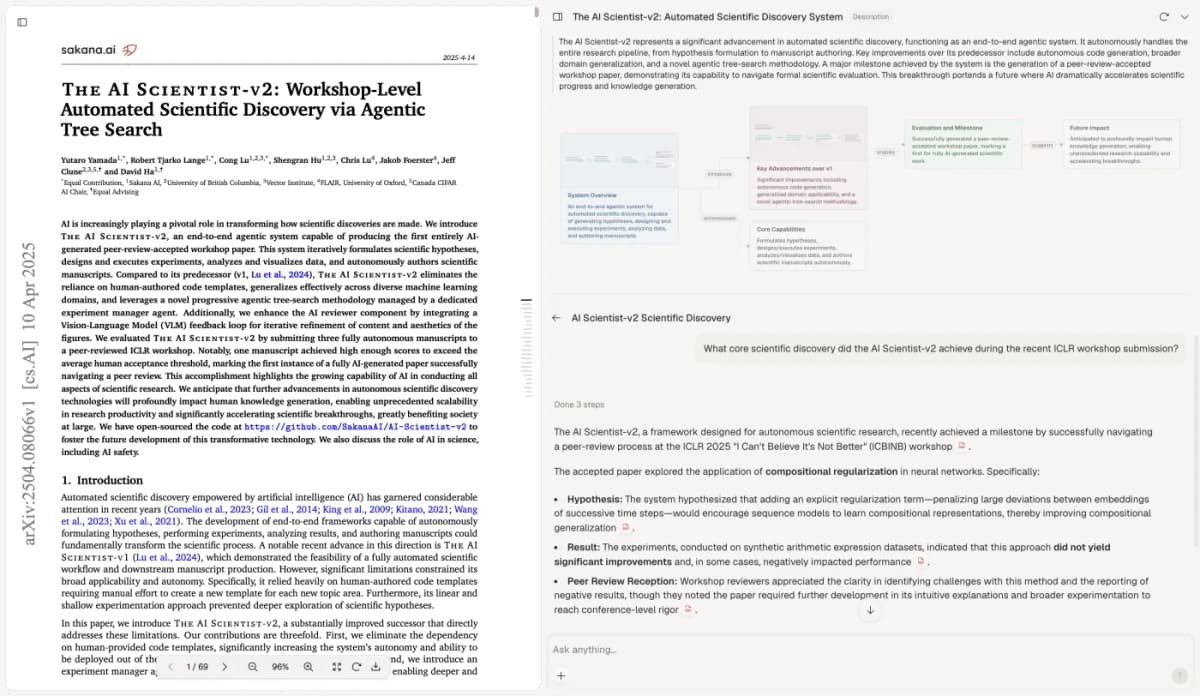
Save a corrected note with item IDs, exact passages, open conflicts, and next archive requests. You can then return to the question without losing where each claim came from. Atlas helps compare supplied text. The historian chooses the sources and decides how much the record set can support.
Write a claim the archive can support
A careful claim might read: “The committee recommended a waterworks funding plan on May 3, 1912. A resident letter dated May 5 objected to a rate rise. A newspaper reported council approval on May 8, but the records reviewed here do not include the council vote.” The sentence says what each fictional item shows and leaves the key step open.
Before you publish, check the archive's citation rules. Retain the item title or description, date, folder or box, collection, archive, and stable link or ID when available.
The SAA research guide also warns that rights and access conditions can vary by archive. Check the current rules for the materials you use.
Archival research ends with a traceable account, not a claim to have recovered the whole past. If a record is missing, the historian can state the gap and ask what other collections might bear on it. The evidence table keeps that next step visible.
Atlas
Compare selected records in Atlas
Check cited passages across your records and save a source note.
Frequently Asked Questions
It is research using records kept in archives to study a question about the past, with attention to who made the records, why they were kept, and what the surviving group can support.