

Maximum variation sampling is a purposive method: it chooses cases on purpose because they differ on traits that matter to a study. The aim is to learn from that range: what changes across cases, and what seems to recur despite their differences.
When reading a paper, trace the traits in the sampling plan to the cases actually studied. A plan to hear varied views is not proof that the study reached its full range. Keep the plan, the cases, and the scope of the findings distinct in your note.

Check the range behind a pattern
Compare the sampling plan with reported cases and source passages.
What maximum variation sampling seeks
A team studying adult learning might seek learners who completed a course and learners who left it. Their accounts may help explain why people stay or leave. The team seeks that contrast rather than a sample to count how many learners leave.
Curtin's research toolkit describes this purpose as seeking cases that differ on relevant traits. A long list of traits helps only when they bear on the study question.
The purposeful-sampling framework allows different goals; the range may include extremes, middle cases, different roles, or contrasting settings. Palinkas and colleagues describe both unique variations and important shared patterns. The word maximum does not mean a study must span all human traits.
Trace dimensions to actual cases
Curtin's maximum variation guidance gives the reason to start with why each dimension matters. A dimension is a trait along which cases can differ, such as course mode. Find why the team thought that trait would shape the accounts they wanted to hear.
Next, find how the study defined the range, using the purposeful selection logic to keep traits tied to the question. Online and in-person are groups; time in a course may span a range of months. Read the stated bounds rather than adding your own meaning of high or low use.
Then match the plan to the case list. A study can span both modes and both course outcomes without covering all four profiles. Methods and case notes may also use different labels for the same trait.
Keep uncertain matches visible. A case called remote may not fit the plan's narrow meaning of online access. Save the wording before deciding whether that case fills the gap. Qualitative research design provides the broader context for matching a question to cases.
Worked example with a missing combination
Imagine a fictional study of a community learning program. It plans to explore delivery mode and course completion. The researchers report learners from the following profiles; this table is an original teaching example, not a real interview dataset.
Read the two dimensions together to see why covering each trait can still leave a missing combination that matters to the question.
| Delivery mode | Completion status | Reported case coverage |
|---|---|---|
| In-person | Completed | Included |
| In-person | Left early | Included |
| Online | Completed | Included |
| Online | Left early | Not reported |
Table 1: Both modes and both statuses appear, but online learners who left early are missing from the reported cases.
Suppose the findings describe a shared concern about class times among the cases studied. That can be a shared theme across varied cases. It does not show that online learners who left early shared that concern; their accounts are absent.
A checked note would name the two traits and the missing profile. It would keep the timing theme as a finding within the reported cases. The reason online learners left would remain open.
The missing cell is not automatically a design failure. Palinkas and colleagues explain how case choices serve different study aims. A study may not aim to fill all cells, or access may limit the range. Ask whether the missing accounts affect the contrast or theme the authors claim.
Read shared patterns with their limits
A shared pattern is worth examining when it appears across cases with traits that matter. It may suggest a common process worth exploring. Its scope still depends on the cases and evidence described in the paper.
Keep three claims distinct: a theme recurred, a theme appeared in each studied profile, and a theme is common in the wider group.
The first two concern the study's accounts. The third needs evidence about how common the theme is; a chosen range of cases alone cannot show that.
A case that does not fit the pattern deserves attention too. The same methods paper discusses confirming and disconfirming cases as distinct sampling choices. It may reveal a different setting, a rival reason, or a limit to the theme. Do not erase it to make the variation note look complete.
For a contrast based on random draws within groups, see stratified vs cluster sampling. That task concerns who can enter a probability sample. Deliberately choosing diverse cases serves a different aim.
Build a checked note in Atlas
Add the methods, case list, and findings to one project. Use material you are permitted to share. If case details could identify people, remove identifying details while keeping what the study question needs.
Open a chat and use @ to mention those sources. Ask: “Which traits did this study deliberately vary? Match the reported cases to each trait and combination. Cite the passages, and separate planned coverage from reported range.” Choose Project only for new retrieval within your material.
For the fictional example, an answer might say all combinations were included. Open the numbered citation and read the case list. It contains no online learner who left early. Correct the answer before keeping it in your note.
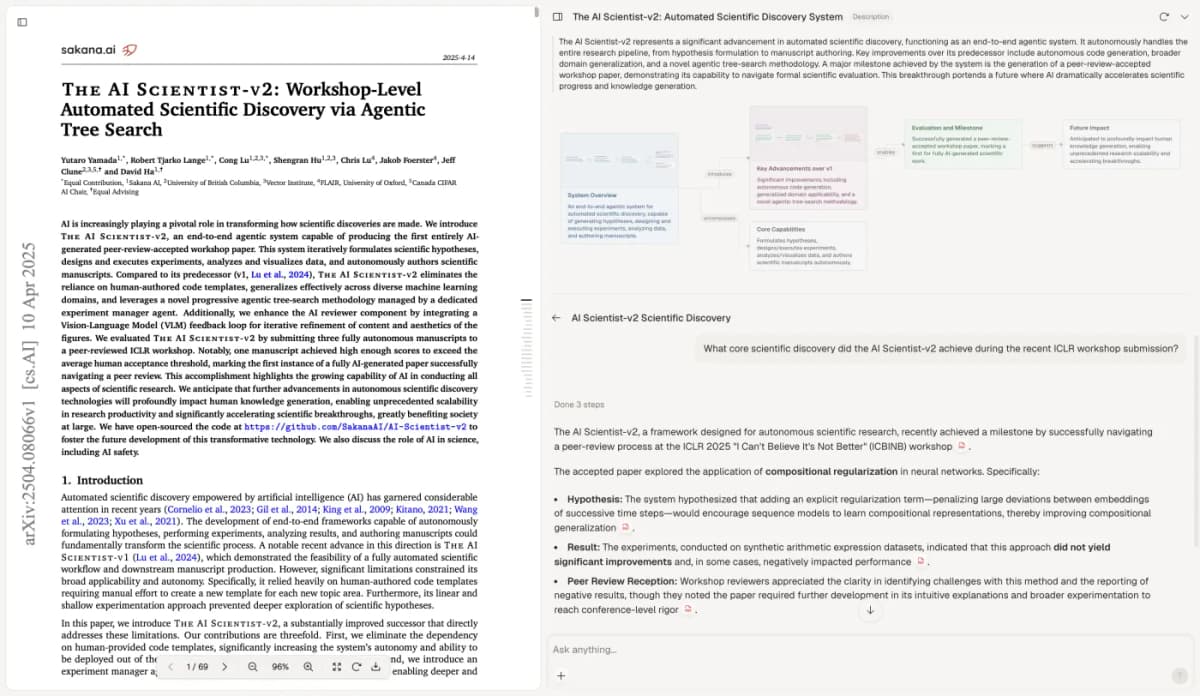
Open the cited source to check whether an answer includes cases the report never described.
The embedded paper is Yutaro Yamada et al. (2025), The AI Scientist-v2, licensed under CC BY 4.0. This screenshot is reused unchanged.
The image shows source checking on an unrelated paper. For the learning study, read the sampling passage and case list together. A source that shows both modes may not support a claim about all four profiles.
Create a note with New → Note. Record the two planned dimensions, the three reported profiles, and the missing online-withdrawal profile. Add the passage that supports the timing theme, then state that the theme concerns the cases studied.
Wait for Saved to appear before you close the note. If a later appendix adds the missing profile, revise that line and recheck the theme's scope. A broader research synthesis workflow can help when several studies span different ranges.
Keep the range and open question
Keep each trait and its purpose next to the evidence for the cases. The note will then show where the plan and the case list differ. A reader should know which line concerns choosing cases and which concerns reading their accounts.
A study may use an entry rule and then seek varied cases. The combined-strategy guidance describes combining sampling aims.
Check both steps. The rule decides which cases qualify; the range guides which contrasts to seek within that group. A common entry rule does not prove that the study reached its intended range.
Check the range behind a pattern
Compare the sampling plan with reported cases and source passages.