


The best QuillBot alternative depends on the writing step that is failing. Use Grammarly when you want broad grammar, tone, and rewrite help across apps. Use Wordtune when you want more sentence options. Use Paperpal when a school or research draft needs language and source checks.
Use LanguageTool when grammar and short rewrites matter more than a large writing suite. Use Atlas after the rewrite. It helps when the new paragraph must stay faithful to papers, PDFs, web sources, notes, or other source files.
That last distinction matters. A paraphraser can make a sentence smoother while changing the strength, scope, or support behind a claim. If the writing depends on sources, the rewrite is not finished until you can inspect the proof behind it. Many AI tools for academic research have the same tradeoff. Speed helps only when the source trail remains checkable.

Check rewritten claims against your sources
Bring back the original sources and check whether each rewritten claim holds.
Best QuillBot alternative by job
Choose the QuillBot alternative by the job that must improve next. Grammarly is the best default for grammar, tone, and rewrite help. Wordtune is better for sentence options. Paperpal fits school and research drafts. LanguageTool works when grammar and short rewrites matter most. Atlas is the right follow-up when a rewritten claim depends on sources you need to check.
Grammarly for broad writing help
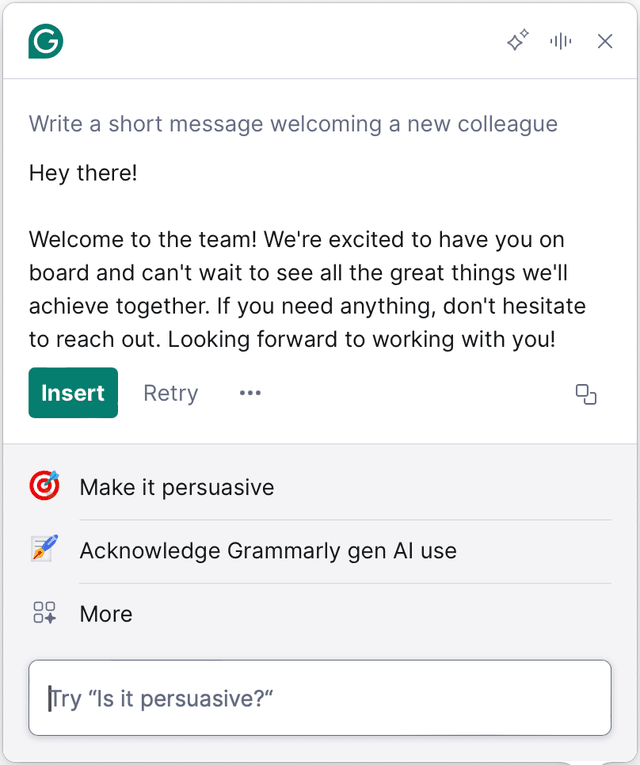
Grammarly’s support guide shows an AI writing panel with review controls. The screenshot documents the interface, not the quality of its suggestions or plan availability.
Grammarly is the safest default when grammar, tone, rewrites, plagiarism checks, and AI-text checks need to sit in one place.
Wordtune for sentence options
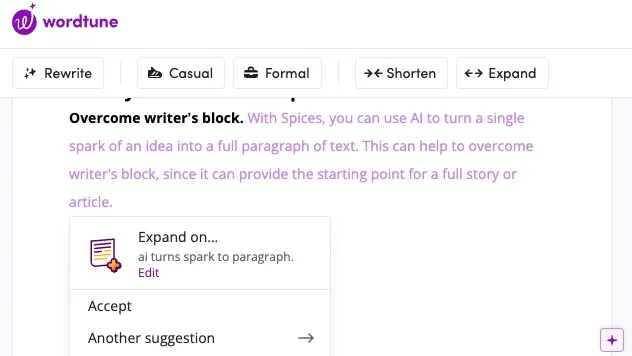
Wordtune’s Spices article shows the editor’s rewrite controls. This historical screenshot documents a product interface, not current availability or output quality.
Wordtune is stronger when you want several ways to rephrase, shorten, expand, or shift tone.
Paperpal for school papers
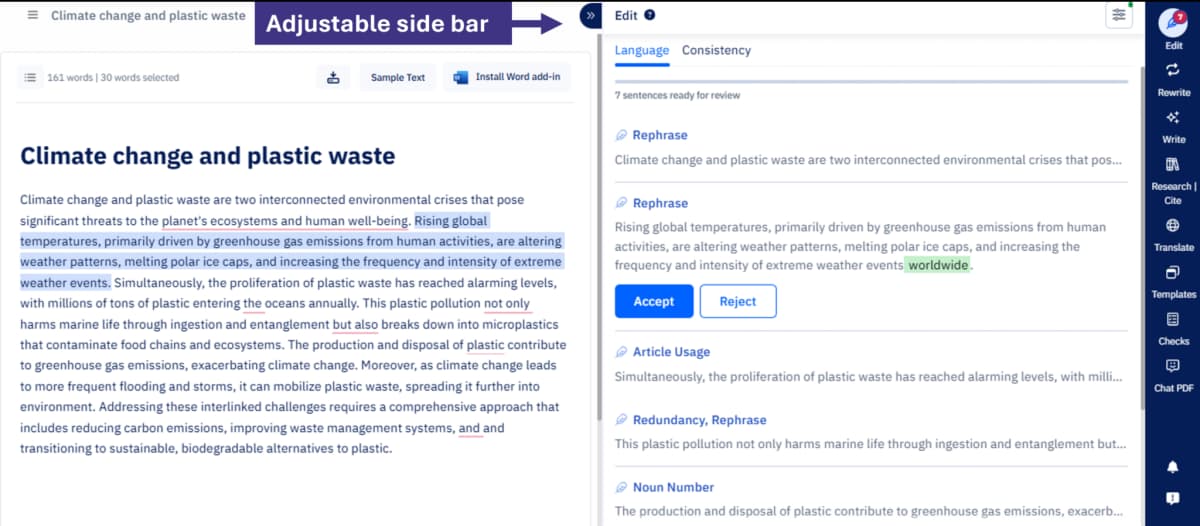 Paperpal fits when the draft is headed toward a paper, report, class task, or journal-style document.
LanguageTool for grammar cleanup
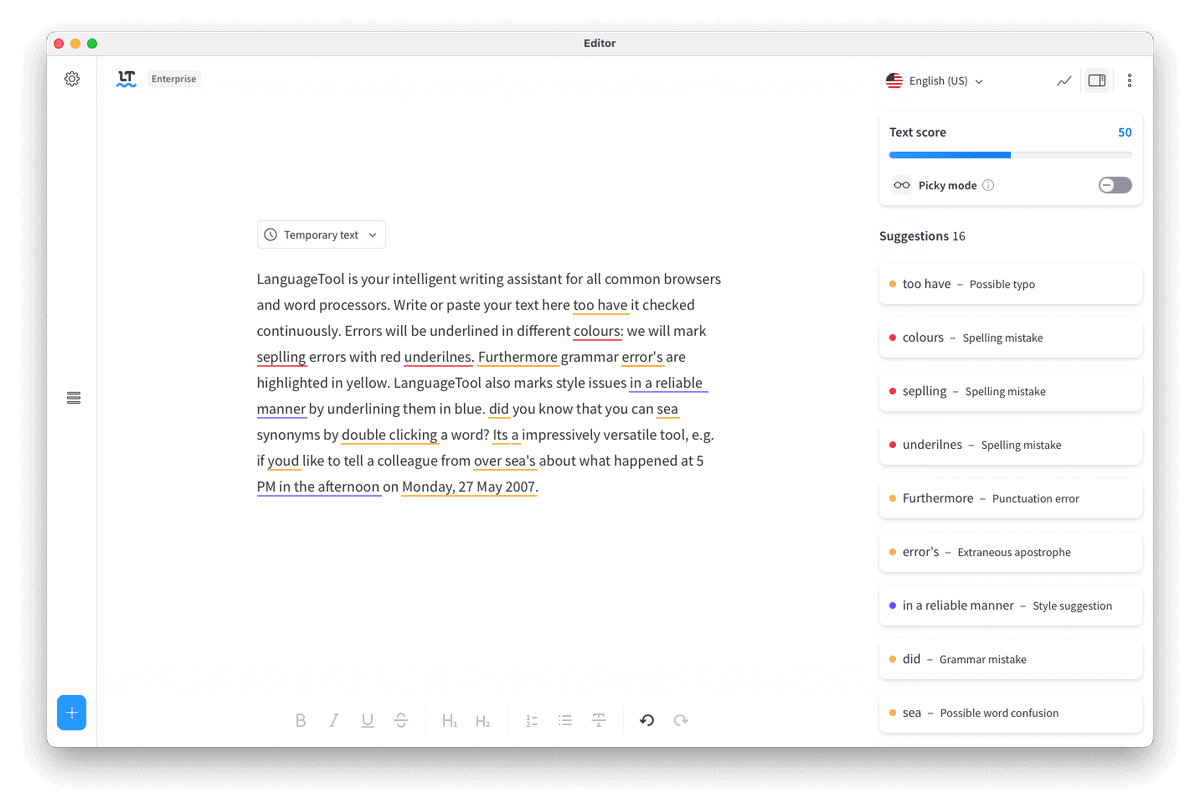
LanguageTool’s Editor article shows its correction categories in a side panel. The image is historical and does not establish the current interface or suggestion quality.
LanguageTool works when spelling, grammar, punctuation, and short rewrites are the main needs.
Phrasly for humanizer checks
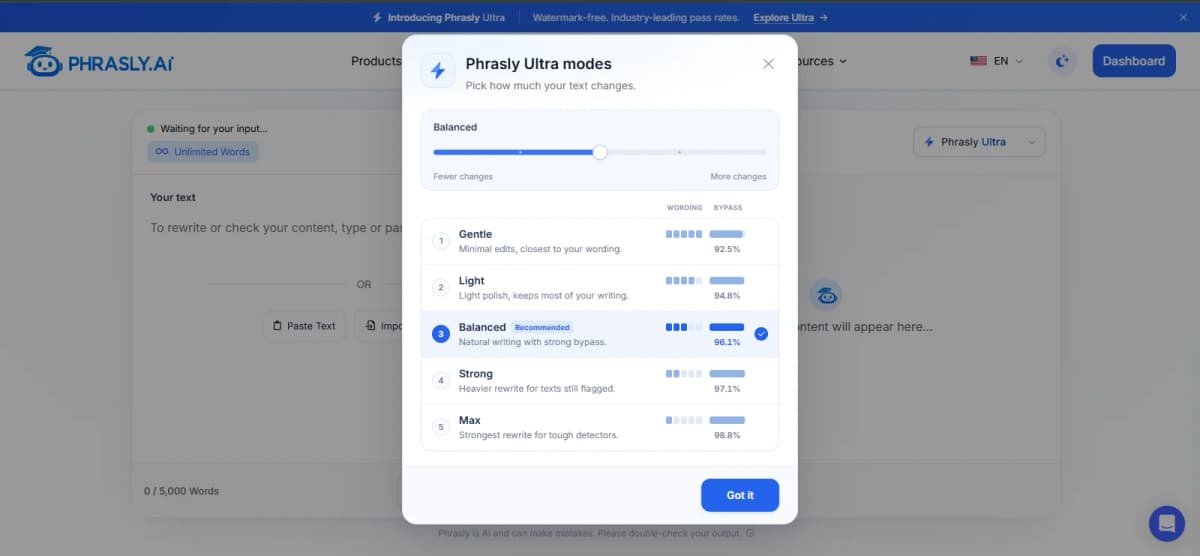
Phrasly’s September 2026 Humanizer guide shows its Ultra mode selector. The displayed bypass figures are vendor-reported and are not an independent comparison.
Tools such as Phrasly can help when the draft sounds machine-made. Treat detector claims with care unless you have fresh tests.
Atlas for source checks
Atlas fits when a rewrite must be checked against sources and nearby context.
QuillBot is still a strong fit when you want one writing suite. It can paraphrase, check grammar, scan for AI or plagiarism, summarize, make citations, and work with PDFs. Its product surface now looks less like a single rewrite tool and more like a broad AI writing workspace.
That works when you want one place to rewrite and polish. It works less well when the draft needs school-paper edits, deeper grammar feedback, or a source check after the rewrite.
Criteria for choosing a QuillBot alternative
Most searches for QuillBot alternatives are about a specific writing failure rather than a brand swap. Start with the break you need to fix:
- A paraphrase can sound fluent while weakening the original claim. This is risky in essays, research summaries, literature reviews, and client work where the source meaning matters.
- Some drafts need grammar and tone feedback before they need another rewrite. A rewrite tool changes wording. A writing helper can catch grammar, tone, flow, and style problems across a draft.
- School and research drafts have stricter rules than general rewrite tools usually handle. Claims need care. Terms need care. Source lists, journal rules, and class rules also matter.
- Some generated drafts still sound machine-made after the first pass. Making AI prose sound human is a different job from rewriting a paragraph someone wrote. Vendor humanizer pages can describe the category, but fresh tests are needed before trusting detector claims.
- Long reports, papers, and source-heavy drafts can outgrow quick rewriting. The writer needs to keep the sections, claims, citations, and evidence intact while improving the language.
- Source trails often get lost during rewriting. This is the break Atlas is built around. If a paragraph came from a paper, PDF, interview, article, or note set, check whether the rewritten claim still matches that source.
For rewrite quality itself, Scribbr's paraphrasing-tool comparison is useful because it checks meaning, grammar, length, ease, limits, and paid features. Use that kind of rubric before you trust a smoother sentence.
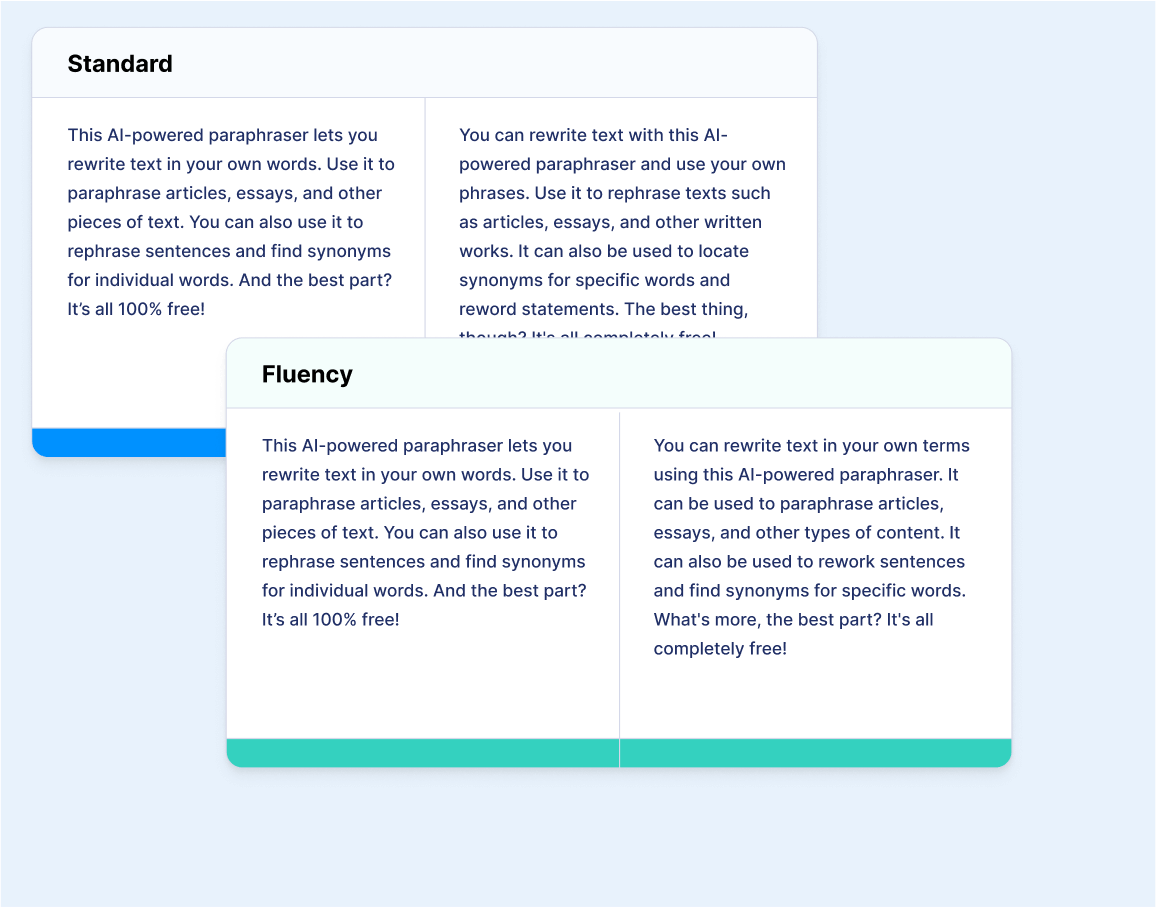
Official Scribbr mode illustration. It shows the two presented modes, not an independent test of paraphrase quality or current plan terms.
QuillBot alternatives compared by workflow
Use this table to choose by writing task. The best choice changes as the draft moves from a sentence rewrite to school edits, human-sounding prose, or source checking.
| Tool | Best fit | Avoid when | Source basis | Next step |
|---|---|---|---|---|
| Atlas | Checking whether a rewritten claim, summary, or comparison is supported by imported sources. | You need a one-click paraphraser, grammar checker, plagiarism detector, or AI detector. | Atlas supports PDFs, websites, YouTube transcripts, academic paper search, notes, and attachments. Grounded answers show citations for review. | Add the source, ask a focused question, inspect the citations, and save only the verified finding. |
| QuillBot | A broad AI writing suite with paraphrasing, grammar, AI checks, plagiarism checks, summaries, citations, chat, and PDF tools. | You need a school-paper editor, deeper grammar help, or a separate source-check workspace. | QuillBot's product page lists writing, originality, creation, PDF, citation, and extension tools. | Keep it when the suite covers the whole job. Pair it with source checks when claims matter. |
| Grammarly | Grammar, spelling, tone, rewrites, fluency, plagiarism checks, AI-text checks, and team writing support. | You mainly want a dedicated paraphraser with many rewrite modes and little else. | Grammarly's plans page lists writing correctness, rewrites, plagiarism, AI checks, and security features. | Use it when the draft needs polish across emails, essays, docs, or team work. |
| Wordtune | Sentence options, tone shifts, shortening, expansion, summaries, and context-based AI writing. | You need source-link review, school-paper source checks, or a research proof workspace. | Wordtune presents itself as an AI paraphrasing and writing assistant with rewrite, grammar, summary, and humanizer features. | Use it when the main job is choosing the better sentence. |
| Paperpal | School and research writing, rewriting, plagiarism checks, AI checks, citation support, paper checks, and research drafting. | You are writing marketing, email, or casual copy and do not need school-paper rules. | Paperpal's product page focuses on research, writing, citation, plagiarism, AI review, and paper workflows. | Use it when scholarly tone and submission readiness matter. |
| LanguageTool | Grammar, spelling, punctuation, style, many languages, and short AI rewrite modes. | You need a full research assistant or long-form source synthesis. | LanguageTool lists grammar, style, punctuation, spelling, add-ons, and AI paraphrasing. | Use it when correctness and clean phrasing are the priority. |
| Phrasly or another humanizer | Making AI-assisted drafts sound less machine-shaped. | You are trying to bypass school rules, plagiarism checks, or detector policies. | Humanizer pages in this SERP show that human-sounding prose is a separate job from paraphrasing. | Use cautiously, then check the revised draft against your school, publisher, or client rules. |
Table 1: The table routes each tool by the writing problem it solves. Rewrite tools come first. Source checking comes last because it only matters after a claim depends on a source.
Where Atlas fits after rewriting
Atlas is useful after the sentence has been rewritten. At that point the question is factual: does this revised claim still match the source? The broader method is source checking.
Any tool in this step should bring the original source back into view. It should also let you ask a focused question and inspect the proof behind the answer.
For source-dependent work, I would use this handoff:
- Rewrite the sentence or paragraph in QuillBot, Grammarly, Wordtune, Paperpal, or another editor.
- Bring the source back into the checking step: the PDF, article, paper, notes, or web page behind the claim.
- Ask a focused question. For example: "Does this revised sentence match the source's finding about retrieval and hallucination?"
- If several sources matter, compare where they agree, differ, and set limits.
- Open the citation badges for the important claims.
- Read the cited passage and surrounding context before copying the sentence into the final draft.
- Save the verified finding only if the citation supports the claim without overstating it.
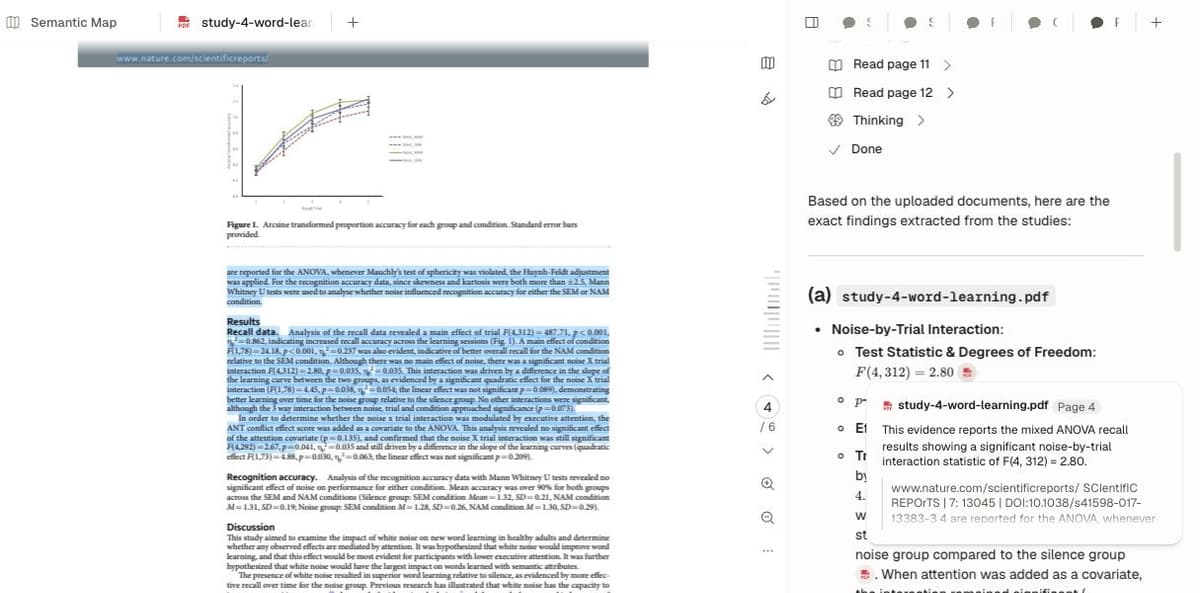
Atlas’s first-party capture shows how an answer can link back to a source passage. The visible psychology paper is unrelated to this article’s example; this is interface evidence, not an accuracy result.
Here, Atlas is the source-check example for PDFs, web pages, videos, papers, notes, or attachments inside a project. A rewrite tool can help with clarity. A grammar helper can improve tone and correctness. A school-paper editor can help the draft match scholarly norms.
The source check comes after those tools have done their part. The same source-first habit matters when you use an AI tool to summarize research papers. A smooth summary still needs cited support.
Atlas citations give you a path back to generated answers. For important work, open the citation and inspect the passage. Check whether nearby context weakens or limits the claim. That habit keeps a polished paragraph close to the source.
Which QuillBot alternative should you choose?
Choose based on the risk in the next step of your writing process:
- For awkward phrasing, use QuillBot or Wordtune. You need several sentence options before you need a larger research workspace.
- For grammar, tone, or clarity across many apps, use Grammarly or LanguageTool. They fit broad writing cleanup better than a single-purpose paraphrase step.
- For school tone or submission checks, use Paperpal. It is closer to papers, essays, citations, and scholarly drafts than a generic rewrite tool.
- For AI-sounding prose, separate voice work from detector evasion. Ask whether the draft sounds like a person with control over the argument. Avoid advice about bypassing a system.
- For source fidelity, use Atlas after the rewrite. Import the source and ask a grounded question. Compare proof when needed. Inspect citations before the new sentence goes into a paper, report, memo, or article.
For many writers, the right stack is a sequence. Rewrite for clarity, polish for tone, then verify against sources when the claim matters.
That takes longer than one-click paraphrasing, but it catches mistakes that make polished writing untrustworthy.
If the draft is for school, pair this decision with the broader ChatGPT alternatives guide. If the draft starts from PDFs, reports, or source files, the document AI tools comparison covers the source-handling side of checking and reuse.
Best QuillBot alternative for your next step
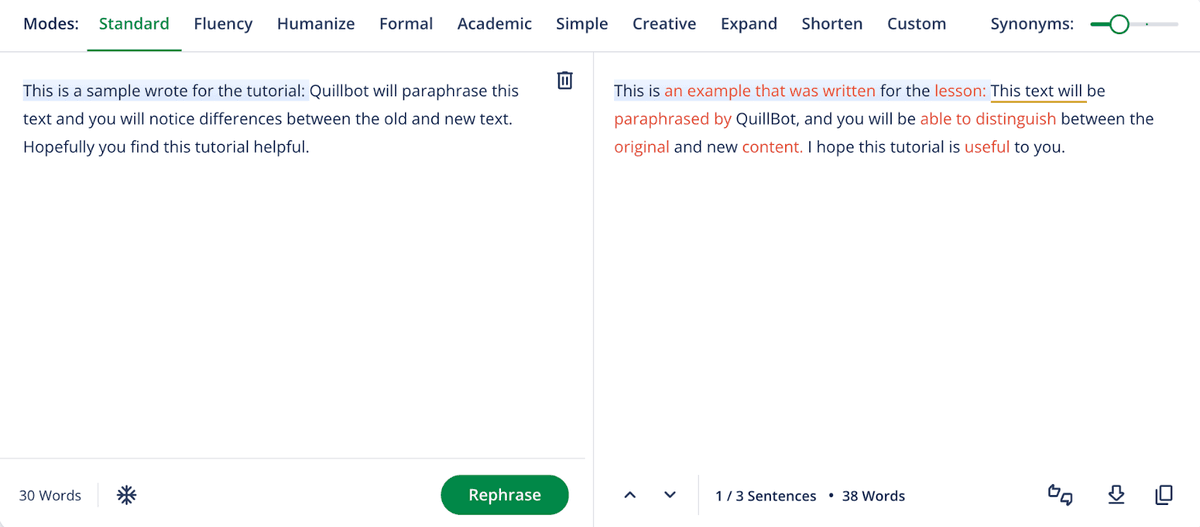
QuillBot’s June 2026 help guide shows its paraphraser interface. The text is a tutorial example, not an independent quality comparison.
The best QuillBot alternative is the one that fixes the specific break in your writing process. Grammarly is the safer default for broad writing polish. Wordtune is strong when you want sentence options. Paperpal is the better fit for school and research drafts.
LanguageTool works well when grammar and short rewrites are enough. Atlas belongs after any of them when the writing depends on sources and the final claim needs citations you can inspect.
- Choose Grammarly for broad grammar, tone, and rewrite help.
- Choose Wordtune for sentence-level rewrite options.
- Choose Paperpal for school and research drafting.
- Choose LanguageTool for grammar-first cleanup.
- Choose Atlas when the revised claim needs a source check before reuse.
For a broader research stack, compare this with our guide to the best AI research assistants.
Check rewritten claims against your sources
Bring back the original sources and check whether each rewritten claim holds.