
Theoretical Sampling: Choose the Next Contrast
Theoretical sampling uses emerging categories to decide what data to examine next. Follow a worked contrast, a category matrix, and limits on saturation claims.
- Byline

Summary
Theoretical sampling chooses the next source or case for what it can clarify about a developing category.
Compare supporting and nonfitting incidents before naming a purposeful next contrast.
Researchers choose and recruit cases and judge theoretical sufficiency; an AI source check cannot certify saturation.
Theoretical sampling means choosing what to study next based on an idea that is taking shape in grounded theory. The choice comes after early data have been read.
It may seek a new place, a case the team has missed, or an account that could challenge a first guess.
Imagine an invented study of how clinic staff handle late care requests. Early talks suggest a theme: “staff call someone they know when the request gets stuck.”
The team asks if that holds when the lead worker is away. That points to a new shift or role to study. It does not yet name a person to recruit.
Atlas can compare the talks already in a project. It can cite lines that support or challenge the theme. The team must pick the next source and check access, consent, and study scope.

Atlas

Compare selected cases in Atlas
Open cited excerpts and record the contrast your category still needs.
What theoretical sampling means
The word theoretical refers to the idea taking shape. The team uses that idea to ask what new case could show where it holds. The grounded-theory methods paper links such choices to ongoing study.
For example, “calling for help” may first mean that a worker calls a known peer when a request stalls. A second account may show that this route needs the lead worker to be there.
The next case could be a shift without the lead. It could show whether the route rests on a personal tie or an office rule. Write down why that gap matters. After the next data step, compare the new case with the old ones. Revise the idea if it no longer fits.
The clinic study on this page is made up. No quoted line comes from a real person or site.
Distinguish initial and theoretical choices
A study needs a way to find people or files at the start. Initial purposive sampling may use role, site, or past work as its first rules.
Those rules can be sound. Yet they do not come from a theme found in the data. The EBSCO method overview describes the later choice based on a new idea.
Theoretical sampling starts when the team uses what it has learned to choose the next source. It must say why. The key question is: Which new case could sharpen this idea?
That is more useful than “recruit more staff.” The City Research Online review links this choice with constant comparison in grounded theory.
Saturation or sufficiency is a later judgment about whether the ideas have enough depth and range. It does not pick the next person for you. A target of ten talks may help plan time, but it cannot tell you which new case you will need.
This distinction matters when describing the study. If all cases were chosen before analysis and no later choices changed in response to categories, say so.
Do not give a fixed plan a new name after the work is done. A study can start with clear rules for finding people and later add a new case because an idea needs a test.
Move from a category to a contrast
Start with a draft idea and the cases that led to it. Note what it covers. Keep the page or line numbers.
Include a case that strains the idea. A short label alone will not guide the next choice. It hides what you still need to learn.
Next, write two or more ways to read the gap. If staff skip the queue, they may rely on personal ties. An office rule may also allow it. The route may change at night. Each idea calls for a different case.
Choose a next source or setting for what it could distinguish. Note what evidence would change the working claim.
In the made-up study, a night shift without the lead could show if the route depends on that person. A written rule could show if staff are allowed to use it.
These sources answer different questions. Name the intended comparison before collecting either.
When new data come in, compare them with old cases and date the note. The constant comparative method guides that check; Glaser's original method paper explains the wider loop. Sampling asks where the next useful case may come from. Do not force that case into the old idea.
Work through a fictional category
This table uses made-up quotes and line labels. F-01 to F-03 mark three invented talks.
The draft theme is “calling for help when a care request stalls.” The last column gives a question that the team could take into its next sampling choice.
| Fictional source and excerpt | Relation to the category | What remains uncertain | Possible next contrast |
|---|---|---|---|
F-01, lines 18–20: “I called Mara when the queue did not move.” | Supports a person-to-person route in one case. | Was Mara the lead worker or a friend of the speaker? | Read the role description and another worker's account. |
F-02, lines 31–33: “I used the escalation form; Mara saw it later.” | Does not fit a claim that staff always call directly. | Did the form work because the coordinator was present? | Compare a shift without Mara. |
F-03, lines 8–10: “On nights we wait for the morning team.” | Contradicts an unrestricted “staff escalate informally” claim. | Was waiting a rule, a resource limit, or a local habit? | Seek a night-shift account and the written procedure. |
Table 1: The table leaves both views open. F-01 shows that one worker made a call. F-02 points to an office form. F-03 hints that night work may change the options.
A useful next question is: “What do staff do when the lead is away? What rule does the night team say it follows?”
The team could choose a night-shift talk, a written rule, or both if access and ethics allow. The table shows why.
It does not name a person, claim that one night shift speaks for all, or say that the theme is done. A negative-case analysis can help keep F-03 in view.
Record the next sampling decision
A short memo prevents the rationale from disappearing behind a final sample list. Write the category, current evidence, gap, next contrast, and who made the choice.
Note what would change the claim. Date the memo before the next data step when feasible.
For the invented study, a memo might read: “Our current category is informal escalation when a referral stalls. F-01 supports a direct call; F-02 uses a form; F-03 reports waiting overnight. We will seek an approved night-shift account and review the protocol to distinguish staffing constraints from an official rule. We will revise the category if the route changes by shift or role. The research lead will make the access and consent decision.”
That memo keeps another reading alive. A later interview may say that night staff can use a different phone number.
If so, compare that route with the earlier three cases and change the category's boundary. If the written rule conflicts with practice, record both instead of silently treating one as the truth.
An audit trail can preserve the earlier memo, the later evidence, and the reason for revision. The trail helps a reader understand why the sample changed, rather than presenting a tidy final list as if it were designed in advance.
Check the existing corpus with Atlas
Add permitted transcripts, notes, and relevant protocol text to an Atlas project. In chat, select the small source set with @ and name the current category.
Ask: “Compare the cited incidents about stalled referrals. Separate passages that support direct contact from passages that use a formal route or show no escalation. Cite each source and suggest questions the next contrast should answer.”
Open every cited passage. Read the nearby text and check who spoke, which shift it describes, and whether a written rule is being reported or guessed.
Atlas can align text across sources, but the categories and next case choice still belong to the team. If it misses a known countercase, add it to the memo rather than treating the output as a full search.
The Atlas multiple-source synthesis guide explains how to compare selected material with inspectable citations. For an early category, the open-coding guide can help organize provisional labels before sampling choices grow more specific.
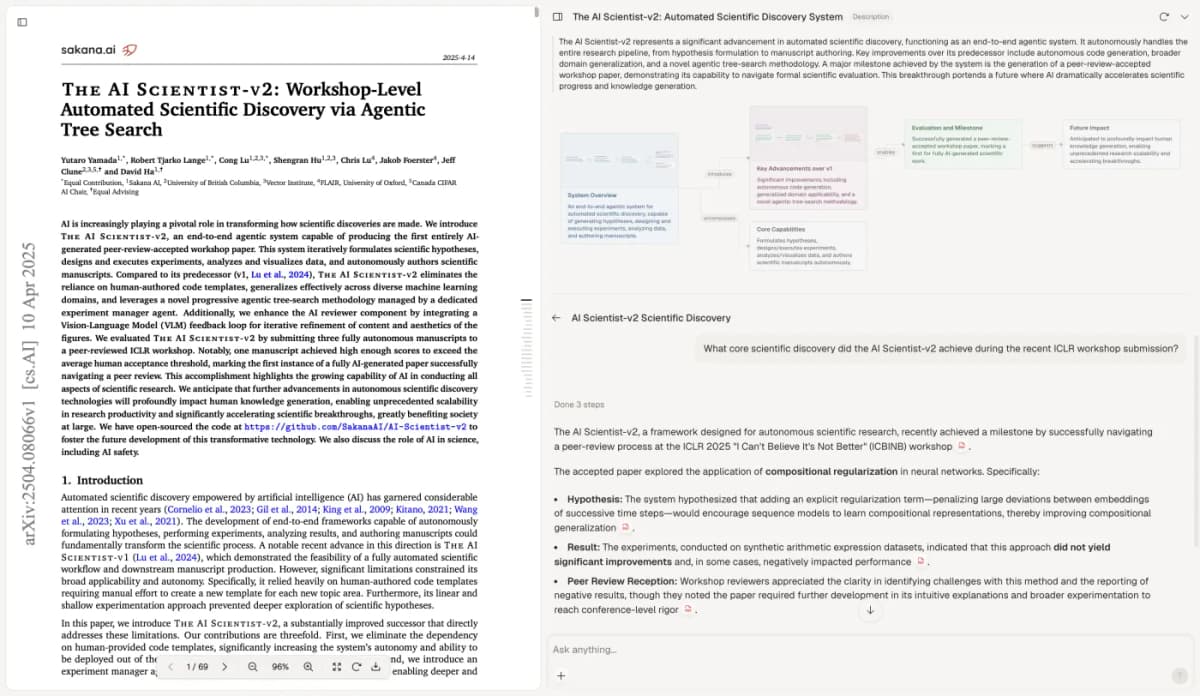
Atlas citation-inspection view. The visible paper is unrelated to the invented referral excerpts and does not support the fictional matrix.
Judge sufficiency in study context
Theoretical sampling does not promise that every possible case can be reached. Access, consent, study scope, and resources shape what the team can examine.
Record these limits alongside the reason for each choice. A missed contrast remains a limit even if earlier excerpts look alike.
“Saturation” is sometimes used as if it means a fixed interview count or the absence of new words in the last few transcripts. That shortcut cannot answer whether a category has enough depth, variation, and tested boundaries for this study. The qualitative sample-size review discusses how sufficiency depends on the design and analysis, rather than one universal number.
Ask whether important conditions and countercases have been considered, what still changes when new material arrives, and which claims the data cannot bear. A dated memo can state those open points without pretending to certify a theory.
Atlas can cite supplied passages; it cannot determine theoretical sufficiency, validate a category, or certify saturation.
A tidy comparison table lets the team review its reasons. The team still has to decide when the sample can stop growing. The Grounded Theory Review discussion offers further method context.
Carry the question into fieldwork
Before the next data step, leave the team with one clear sentence: “We need a case or document that can distinguish explanation A from explanation B.”
Name the current evidence, proposed contrast, and access limits. The team then chooses the source, secures permission, reads it, and returns to the comparison memo.
If the new case changes the category, revise both the claim and the next question. That is how sampling remains tied to developing analysis rather than becoming a sequence of larger but unexplained sample counts.
Atlas
Compare selected cases in Atlas
Open cited excerpts and record the contrast your category still needs.
Frequently Asked Questions
It is an iterative choice about what data to collect or examine next, guided by a developing theoretical category and the comparison that category still needs.