
Thick Description: Keep Context With the Evidence
Write thick description from fieldnotes and interviews. Keep observation, context, interpretation, and the source passage supporting each claim distinct.
- Byline

Summary
Thick description is an account of an action in its social and cultural setting, including what it may mean to the people there.
Record what happened, the setting, participant language, the researcher's interpretation, and evidence that could complicate that interpretation.
Atlas can compare supplied notes and transcripts with citations; the researcher remains responsible for observation and meaning.
Thick description explains an action in its setting and asks what it meant to people there. A thin note might say, “The chairs were moved.” A thicker account would ask who moved them, when, and what people said about the change.
The MIRACLE methods paper puts the setting and people's views beside the researcher's own reading.
In a fictional meeting, a host moves chairs from rows into a circle. An invented interview summary says one person could see others more easily. A second invented note says someone stayed near the door.
The circle might have helped some people take part. Those notes do not reveal why everyone sat where they did. More vivid prose would not settle that gap.
Atlas can help compare the fieldnotes and interviews you supply, with citations you can open. The researcher checks the passages and writes the case description. Atlas cannot observe an unwritten event or decide what the seating meant to participants.
Atlas

Compare case evidence in Atlas
Add your fieldnotes, check cited interpretations, and save a case memo.
What makes description thick?
A thin account names an action. A thick one places it in a social setting and explains a possible meaning. It can show what people said, what happened first, and how the researcher reached a reading. The original Geertz essay shows why a visible motion alone may not reveal an action's meaning.
Thickness depends on relevant context, not word count. A long list of sounds and colors may help readers picture a room yet leave the action unexplained. The MIRACLE authors link setting, people's views, relationships, and the analyst's reading. Their proposed elements do not fit every study in the same way.
This lets readers check an account. Show what you recorded, what a person said, and what you inferred. Name another reading when the source leaves one open. Useful detail helps readers judge the case in its own setting and think about other settings.
The term grew from ethnographic work. The same question can arise in interviews and other studies: which context bears on the claim? The methods paper treats its own writing scheme as one that must fit the study aim.
Record the scene and context
Capture what was available to observe
Make fieldnotes as close to the event as your study permits. Record the place and time, who was present, what happened first, and the words you heard. Note what you could see and what changed in the room.
OpenStax's fieldnote exercise asks writers to attend to the surroundings and record what they can sense.
Put a source label on each note. A locator such as F1, meeting start helps you find the passage again. If you write a later memory of the event, mark it as later. Do not turn a memory into a same-day observation or fill a gap with a plausible gesture.
Ask what the record leaves out
Fieldnotes also have a point of view. Where were you sitting? Whose speech could you hear? Did you miss part of the talk? Those facts limit what the note can support.
The MIRACLE paper includes the researcher's role in its account of context-rich writing.
An interview can add a person's account of the scene, but it is a different source from your observation. Keep the speaker's account, the fieldnote, and your own reading separate. If no one explained an action, leave its meaning open. A rich account can state a limit clearly instead of hiding it under confident prose.
Separate observation from interpretation
Turn a thin note into context
Here is a before-and-after pair for the fictional meeting. Thin: “The host moved the chairs.”
Thicker: “Before the talk began, the host moved chairs from rows into a circle (F1). One attendee later said the new layout made it easier to see others (I1).” Both sentences are invented teaching text.
The thicker pair adds sequence, sources, and one person's account. It does not say the host meant to make people equal or that everyone felt included.
The original discussion explains why meaning needs a social frame beyond visible motion. The MIRACLE paper also keeps people's views and the analyst's reading in view.
Mark each claim by its source
Use plain labels while drafting: seen in F1, reported in I1, my reading, or still unknown. They help stop a quiet slide from “a chair moved” to “people felt welcome.” That second claim needs its own source.
Ask what might count against your first reading. In the invented case, F2 says one attendee stayed by the door. That does not prove they disliked the circle. It does warn against treating the room change as a shared experience. A good description can hold both pieces of evidence without forcing a single motive.
If you are building broader patterns across cases, the thematic analysis guide covers that separate task. The framework analysis guide shows a matrix-based way to compare case material. Thick description here stays with one situated account and its source trail.
Build a traceable case description
The table below is entirely invented. F1 and F2 stand for made-up fieldnotes; I1 is an invented interview summary. The labels show what a reader would check in real material. None of the rows reports a real meeting.
| Claim element | Invented source locator | What the record says | Researcher reading | Contrary cue or next question |
|---|---|---|---|---|
| Action and sequence | F1, meeting start | Chairs changed from rows to a circle before discussion. | The room layout changed before people spoke. | Who asked for the change? F1 does not say. |
| Participant account | I1, interview summary | One attendee said seeing other faces was easier. | The layout may have helped this person follow the talk. | Does anyone else describe the change differently? |
| Different response | F2, later fieldnote | One attendee remained by the door. | The circle did not place everyone in the same position. | The note gives no reason for that choice. |
Table 1: This fictional case table separates each recorded source from the analyst's reading and an unresolved question.
Write the case paragraph from the rows
A source-faithful draft could read this way:
In this invented meeting, the chairs were moved into a circle before the talk (F1). One person later linked the layout to seeing other faces (I1). A later note places another person by the door (F2). The room change may have mattered, but the notes do not show a shared meaning or the host's intent.
The paragraph keeps the event, one person's report, and the analyst's reading apart. It also lets a reader check each sentence.
The MIRACLE methods paper links rich context to a reader's ability to judge whether findings might fit elsewhere. This invented paragraph is only a teaching example, so no such claim follows from it.
Suppose a new interview later explains why the person stayed by the door. Add the source and revise the reading. Keep the earlier draft so the change can be traced.
The qualitative data analysis guide covers wider comparison across sources. This case memo records how one account changed as new material arrived.
Next steps for case checks in Atlas
Put permitted fieldnotes, interviews, and context files in one project. Use @ in Atlas chat to select the sources for this case.
Ask for a table that separates recorded actions, people's accounts, setting details, possible readings, and missing facts. Request a citation for every source claim.
Open the cited passages. Check the nearby words and any source limits before you keep a row. If an answer assigns a motive that no source states, remove it or mark it as a question. Save the checked case description and open questions in a note. Atlas's public guidance supports selecting sources, opening citations, and saving a note; the researcher remains the author of the interpretation.
The screenshot shows a paper open next to an Atlas answer with citations. Its visible paper is unrelated to the invented meeting. It shows where to inspect a passage while checking a draft.
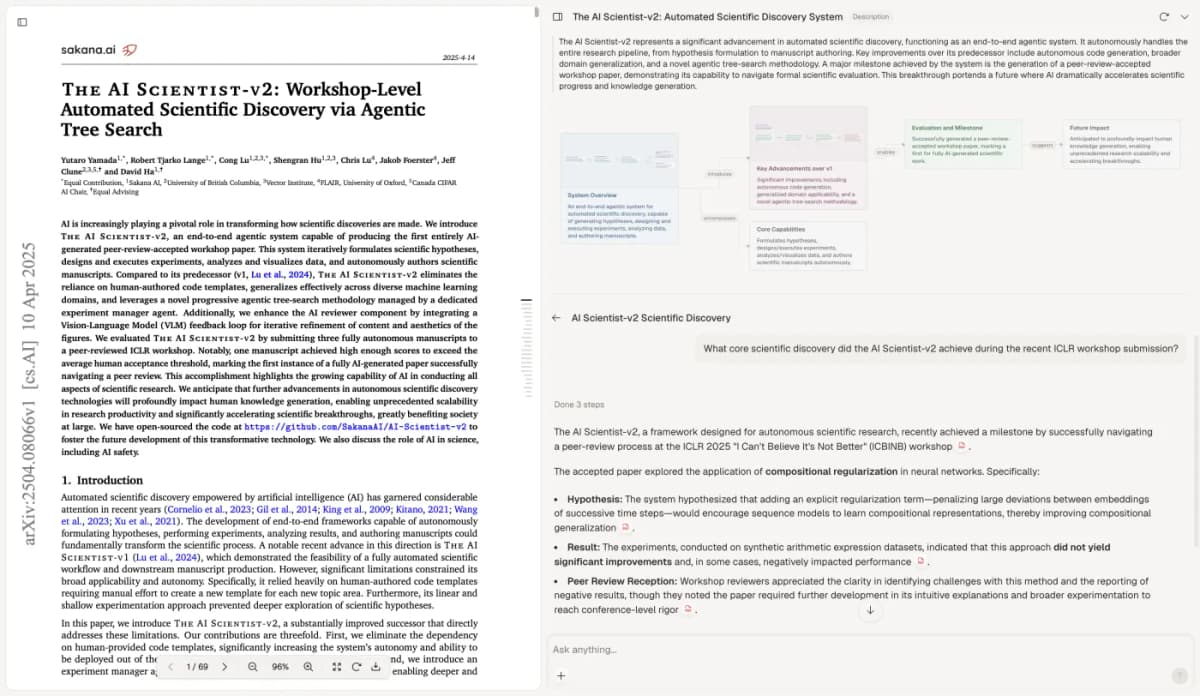
Atlas has no access to a room you did not record. It cannot infer tone, gesture, cultural meaning, or participant intent from missing material. It cannot certify that enough fieldwork was done. Its useful role here is a cited comparison of supplied text that you verify.
Keep interpretive limits visible
A case account should say where your record ends and your reading begins. If only one person gave a view, write “one person.” If a note lacks the setting or a part of the talk was missed, name the gap. More text cannot recover what was never recorded.
Your role in the setting matters too. Note what you could see, what your question may have prompted, and where your first reading changed.
The MIRACLE authors include context and the analyst's reading while warning that their proposed elements vary by study. The reflexivity guide follows the related task of examining your influence on a choice.
Detail can also expose people or places. Follow your study's access and reporting rules before putting notes in a tool or publishing a scene. Replace or omit details that are not needed for the analytic point when they would identify someone. A vivid detail is not automatically a useful or ethical one.
Thick description helps readers judge transferability: whether a finding might matter in another setting. It does not prove that it will transfer.
The MIRACLE paper presents context-rich reporting as a way to assess this fit. State the setting and limits so readers can judge with care.
Atlas
Compare case evidence in Atlas
Add your fieldnotes, check cited interpretations, and save a case memo.
Frequently Asked Questions
Thick description records an action alongside the setting and meanings needed to interpret it. It makes the researcher's inference visible so readers can judge how the interpretation follows from the evidence.