
Framework Analysis: Build a Case-by-Theme Matrix
Learn the five stages of framework analysis, build a case-by-theme matrix, and check every summary against its source transcript before drawing conclusions.
- Byline

Summary
Framework analysis is a structured qualitative method that compares cases through a matrix of themes.
Researchers familiarize themselves with the data, define and apply a thematic framework, chart case-level summaries, and interpret patterns.
Each matrix cell needs a trace back to the source; the researcher owns coding, exceptions, and the final interpretation.
Framework analysis compares interviews while keeping each person's account visible. Put cases in rows and themes in columns. Each cell has a short summary and source location. Check it against the transcript before drawing a pattern.
Suppose three interviewees describe why they use a campus support service. A draft matrix might suggest that access is easy for two and hard for one. The analyst must read each cited passage, note the exception, and leave any unsupported cell open.
Atlas can help compare the chosen transcripts and open cited material for that check. The researcher still defines the themes and makes the call.

Atlas

Compare selected transcripts in Atlas
Compare selected transcripts, inspect citations, and save checked notes.
What framework analysis produces
Framework analysis is a way to sort and compare qualitative data with a shared set of themes. A case is one interviewee, group, or other unit of analysis you chose to study. A theme is a question or idea you track across cases. A matrix cell summarizes what one case says about one theme.
The five-stage account in a peer-reviewed methods guide moves from reading the data to building a framework, indexing passages, charting summaries, and interpreting patterns. You may revisit earlier steps when a case challenges the framework.
The matrix is the key output. Read across a row to see one case, then down a column to compare cases. Gale and colleagues describe its use in team-based health research led by a skilled analyst.
A cell is a compact account, so it can hide nuance if you discard the source passage. Keep an interview ID and passage location with each summary. A blank cell calls for a source check. It cannot, on its own, prove that the theme was absent.
When the matrix method fits
Choose a framework matrix for a clear applied question and several cases with shared themes. You might ask how people reach a service, what blocks use, and what they think changed. The matrix shows these answers across interviews.
For a time-bound project that needs brief case summaries early, rapid qualitative analysis uses a case-by-domain matrix with explicit gaps and a shorter turnaround. The choice depends on the question, records, and time available.
This structure is useful when a team needs to review how a claim arose. It gives each member the same theme labels and a path back to the source. It also helps preserve exceptions.
The Oxford methods guide presents the steps as connected. New data can send you back to revise a theme. An exit-interview analysis is one applied setting where cases must stay distinct while shared reasons are compared.
How it differs from thematic analysis
Both approaches look for patterns in qualitative data. Framework analysis centers a case-by-theme chart with links to raw accounts. Thematic analysis is broader; its steps and treatment of cases depend on the chosen approach. If you need to decide among broad approaches, start with the thematic-analysis guide. If your task is to keep each participant visible while you compare common questions, the framework matrix is a sound starting form.
The matrix alone does not make a study rigorous. Your sampling, coding, reflection, and claims still need care.
Familiarize and define the thematic framework
Read the interviews before you settle on column names. Write a short note for each case: the main account, terms the person uses, strong contrasts, and points you do not yet understand. Revisit audio or field notes when a transcript line lacks context.
The framework can start with the research question, the data, or both. The Oxford guide describes this mix of planned and data-led work.
The analyst decides which labels fit the question and the material. An inductive thematic analysis starts more fully from patterns in the data, while the framework here can also use planned themes.
Draft a small codebook
For each theme, write a plain definition, a rule for what belongs, a rule for what does not, and one example. A theme called access might include travel time and appointment hours. If a participant's own phrase matters, in vivo coding shows how to preserve it as a code candidate.
It might exclude a complaint about the quality of a session after the person arrived. That rule helps two analysts apply the label in a similar way.
Start the codebook with a small sample of transcripts. If an account crosses the access and trust themes, note the overlap. Revise the rules when the data warrant it. Date the change and list the cases that need a second pass.
Do not force every excerpt into a neat column. Add a provisional theme or leave an unresolved memo when a passage resists the first scheme. The method's value lies in being able to show those choices later.
Index each transcript by case and theme
Indexing means applying your theme labels to relevant passages. Keep a stable case ID, a passage marker, the theme used, and a short reason for a hard call. A marker can be a transcript line range or a timestamp that still works when you return to the file.
Work through each case
Read the full answer around a candidate excerpt. Label the passage using the codebook. If it fits two themes, retain both with a note.
If two coders differ, compare the source and rule, then record the decision. Do not let the first label or an AI suggestion settle the dispute. For a broader comparison of analysts' perspectives, see researcher triangulation. The Oxford guide's indexing stage keeps the source location available for later review.
The qualitative audit trail guide shows how to keep that decision, its reason, and the earlier version in a dated record.
For a small project, a spreadsheet and linked notes may be enough. A larger team may need a dedicated coding system to manage coded segments. Qualitative coding tools address that software choice.
Atlas can help check selected-source summaries after coding. It does not keep a coded excerpt database.
Keep a route back
Write Case B, lines 84–96 beside the indexed passage, for example. In a real study, use the actual file and locator. If you redact identifying text, keep the secure source map under the study's data rules. The shared chart should not expose details beyond the participant's consent.
Chart a case-by-theme matrix
The table below is wholly hypothetical. There were no real participants or transcripts. The sample locators show how to point back to a passage in your own chart. Each cell gives a short account, a source marker, and a point to check. This follows the Framework Method's matrix form.
| Hypothetical case | Access to service | Trust in staff | Perceived change |
|---|---|---|---|
| Case A | Says evening hours made visits possible. A:42–48. Check whether travel was also a barrier. | Describes a helpful first meeting. A:73–81. Check whether this applied to all staff. | Reports feeling more able to plan study time. A:111–119. No claim about grades. |
| Case B | Could reach the site but found booking hard. B:31–39. Access has two parts here. | Counterexample: says a staff change made follow-up harder. B:66–75. Keep this beside the praise from A. | Describes a clearer study plan. B:92–100. Ask whether the plan was used. |
| Case C | Says online booking was easy. C:25–33. Check whether this covered an in-person visit. | Unsupported cell: no checked passage yet. Return to the full transcript before treating this as silence. | Says advice felt too general to use. C:80–88. This challenges a simple benefit claim. |
Table 1: The access column needs a more exact rule. In the first draft, access meant ease of booking and travel as one idea. Case B shows that a person may reach the site yet struggle to book.
The hypothetical revision memo would split access into booking and travel on 2026-09-25. It would call for a second pass of A, B, and C before any cross-case claim.
Read Case B's row as one account. It has a booking problem, a poor follow-up, and a plan that may or may not have been used. Reading only the “perceived change” column would miss that context.
Then read down the trust column. A and B point in different directions, while C remains unverified.
Use Atlas for a draft comparison
In one project, add the consented transcripts and type @ in Atlas chat to select the intended sources. Ask for a structured comparison with citations. Use one narrow question, such as:
Compare Cases A, B, and C for the researcher-defined themes access, trust, and perceived change. Give one row per case. For each cell, cite the supporting passage. Mark a cell “needs source check” if you cannot locate support. Keep disagreements and qualifications visible.
That answer is a reading aid. It is not the coded matrix. A plausible cell can still omit a passage, merge speakers, or lose a qualification. Atlas has no tested guarantee of full excerpt retrieval for this method.
Check every cell before saving it
Open each cited passage and read the text around it. Check what the source supports. If a cell blends several cases, ask Atlas to separate them. Compare the answer with your indexed excerpts and codebook. Correct the cell, or leave it unresolved.
Save the checked cells, source markers, and open questions in an Atlas note. Keep the working matrix in the format your study uses. Atlas does not create or maintain a coded framework database for you.
Compare cases and check the limits
Read across rows first to protect each person's account. Then read down columns to see where cases agree, differ, or cannot be compared. Ask whether a theme means the same thing in each interview. Return to the full transcript before turning a short cell into a claim about a person.
Keep the negative case
Case B's trust account challenges a claim that staff were trusted across all cases. Case C's change account challenges a claim of broad benefit. These cases may point to a useful distinction, such as first contact versus follow-up. The negative case analysis guide shows how to test a pattern against such exceptions.
They may also show that the framework needs a new label. Check the source and write down the reason for any change.
An unsupported cell is a work item. Search the relevant transcript and notes, then mark what you found. If the topic was not discussed, say so only after that check. Silence in an AI answer cannot stand in for a review of the source.
State what the matrix cannot show
The chart cannot show how common an experience is beyond these cases or why a person felt that way. A short cell may hide tone or a shift within one interview.
Quote or paraphrase from the checked passage when that context matters, and keep the study's consent terms in view. Thick description explains how to retain enough setting and context for a reader to understand a qualitative interpretation. The Gale method paper treats the matrix as a tool for analysis led by an experienced researcher.
The researcher owns the theme definitions, coding choices, and final account. Atlas can help compare chosen texts and expose citations for review.
It cannot certify the method, score agreement between coders, or decide whether a theme is valid. For more on those limits, see the qualitative data analysis guide.
Next step: check a small matrix
Start with three consented cases and two or three themes. Make a draft row for each case, then check every cell against its source. Record one exception and one unresolved cell. This small trial will tell you whether the theme rules are clear enough to use on the rest of the data.
The screenshot shows a paper open beside a cited Atlas answer. The paper is unrelated to the hypothetical interviews. The view illustrates the source check you should make before a summary enters your chart.
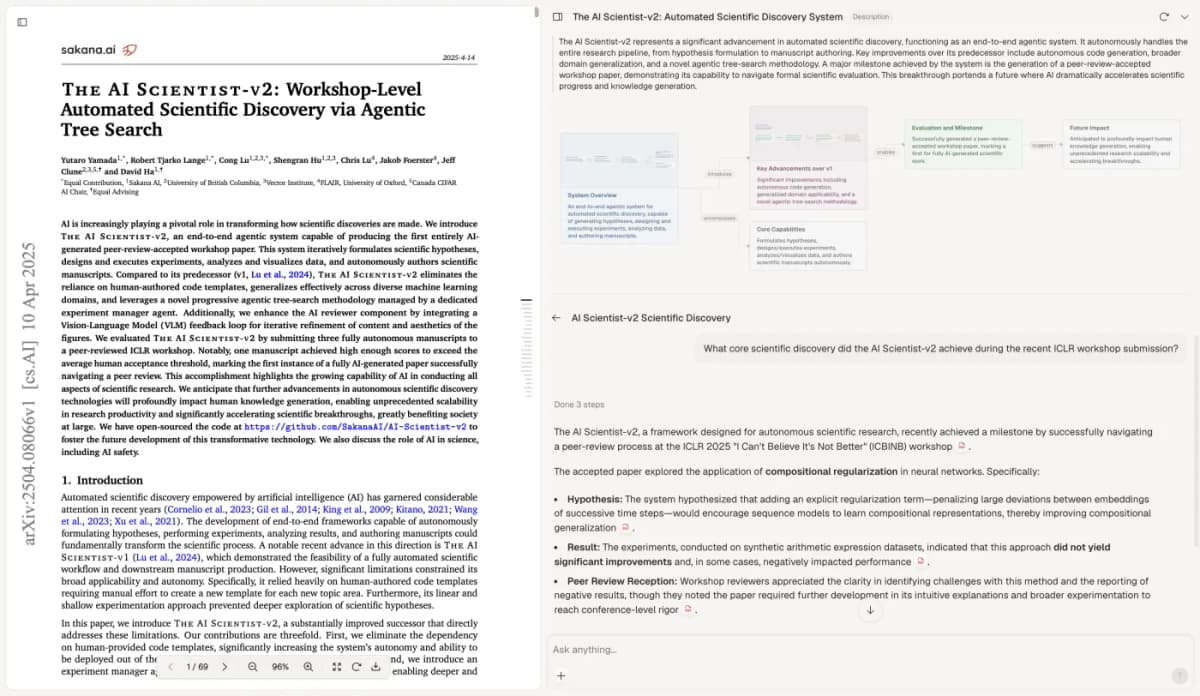
After the source check, save the chart and a short memo on any revised theme. Keep the original passage marker with each cell. Then you can test whether the pattern survives the cases that first seemed to contradict it.
Atlas
Compare selected transcripts in Atlas
Compare selected transcripts, inspect citations, and save checked notes.
Frequently Asked Questions
It is a structured qualitative approach that organizes source data in a matrix of cases and themes so researchers can compare within and across cases while retaining a path back to the original material.