
Researcher Triangulation: Compare Independent Readings
Researcher triangulation brings several analysts to the same qualitative material. Learn to compare their readings, trace disagreements, and report limits.
- Byline

Summary
Researcher triangulation uses more than one real researcher to examine the same study material or interpretation.
Record each researcher's reading before discussion, then compare the passages and assumptions behind agreements and disputes.
Disagreement can reveal a gap in the claim. It does not require forced consensus or a single reliability score.
Researcher triangulation means that more than one real researcher examines the same study material or finding. They compare their own readings, check the text behind each claim, and record what they learned from points of agreement and dispute. The method is also called investigator triangulation.
Suppose two analysts read the same fictional interview. One calls a missed appointment a schedule barrier. The other thinks the speaker was unsure which form to use. Both may have a point. Their notes need the source lines and the assumptions behind each reading before the team can revise its claim.
Atlas can put separately written notes beside selected source text and cite passages for review. It does not act as another investigator or decide which analyst is right. The example below uses invented interview text.
Atlas

Check research notes against sources in Atlas
Compare selected notes, open cited excerpts, and save a checked question.
What researcher triangulation means
Triangulation brings more than one angle to a study question. In the researcher form, the angles come from people on the research team. They examine a common source or result and bring their readings into conversation. The Rutgers-hosted qualitative research guide lists the researcher among the dimensions a study can vary.
The point is to reveal assumptions and test claims against the material. It is not a promise that every analyst will reach one answer. The published triangulation overview places investigator triangulation among several designs that may deepen understanding of a phenomenon.
Two researchers can read independently first, then discuss. If they agree, ask whether both relied on the same narrow excerpt. If they differ, ask what each saw and what in the source would change either view. Keep the early notes so the final report does not hide the route to its conclusion.
Separate researchers from sources and methods
Researcher triangulation varies who reads the text. Data triangulation brings in more sources, people, places, or times. Method triangulation uses more than one way to gather or study data. Theory triangulation tests more than one lens.
The Rutgers guide describes these four routes and their limits. Name the route you used so readers know what changed between the two views.
A team may use several forms at once. Two analysts reviewing two interview groups still need to say which difference comes from analysts and which comes from the groups. Merely asking one AI system for two summaries does not add a second researcher.
A peer debriefing session lets a colleague challenge a draft reading. Here, team members first write their own views of the same text. Reflexivity asks how each person's role shaped what they saw.
These practices can work together. Tell readers what each person did and when the team compared notes.
A coder agreement score may help when a study uses a fixed code list. A score alone cannot settle the meaning of a passage. Name your study's method and tell readers how the team handled gaps.
The mental-health methods article names researcher triangulation alongside reflexivity in qualitative work. Both call for a clear account of the researcher's role.
Prepare independent readings and evidence
Choose the material and question before the team compares notes. Give each researcher the same permitted source set, a clear scope, and a way to cite lines or pages. Allow each person to record their own initial reading before group discussion makes one view feel safer to repeat.
An independent note can hold the source locator, a short claim, the passage behind it, the researcher's reason, and a question that might change the claim. A word such as “barrier” is too broad until the note says what barrier and whose account supports it.
Reading alone first does not mean setting context aside. Team members may bring different skills and roles. Record those when they shape a view.
The credibility review treats study quality as a wider issue of method, researcher view, and audience. A second reader is one check within that work.
Before the meeting, keep the first notes intact. Later revisions should say what changed and why. An audit trail can preserve these decisions if the study needs a fuller record.
Compare interpretations in a worked table
The following fictional interview material describes a clinic appointment request. I-01 is a made-up transcript label. Researchers A and B are invented too. Their readings teach the comparison; they are not empirical findings.
| Fictional source and question | Researcher A's first reading | Researcher B's first reading | Source check and next question |
|---|---|---|---|
I-01, lines 10–12: “I tried the online form after work. The office was closed when I called.” What blocked the request? | Opening hours made the call hard. | The form may have been hard to use. | Both may matter. The text says the office was closed; it does not say the form failed. Ask what happened after the form attempt. |
I-01, lines 18–19: “I thought I had to wait for someone to approve it.” Why the delay? | An approval step held the request. | The speaker may have misunderstood the process. | The line reports a belief. Check whether the source shows an actual approval rule. |
I-02, lines 7–9: “I used the form at lunch and got the slot.” Does every case face the same barrier? | This case may not involve an after-work constraint. | A working form challenges a general form-failure claim. | Compare the cases' timing and form versions before generalizing. |
Table 1: The first row has a clear reported closure and an unclear form outcome. A claim that the form failed would outrun the text. The second row shows a belief about approval, not a confirmed rule. The third case challenges any claim that all people met the same block.
A useful team note might say: “We narrowed the first claim to after-hours call access. We left form difficulty as a question and will read the next part of I-01 before deciding. I-02 shows that the form can work in one context; it does not prove it always works.”
The note names the changed claim and the text still missing. It gives the team a place to return when the next source arrives.
For a broader source-to-claim design, comparative analysis explains how to choose common dimensions. A negative-case analysis gives the team a way to test a claim against an account that does not fit.
Discuss disagreement without forcing consensus
Put the original notes side by side and ask each researcher to explain what source line supports the reading. Restate the other's view before testing it. A difference may reflect an overlooked line, a different use of a term, or a real gap in the evidence.
The team can revise a claim, keep two readings with reasons, seek more source context, or leave an issue open. Record who took part, which passages were checked, and why the decision was made. A vote alone does not show why a claim fits the material.
In the fictional case, B's form-failure reading may change when the group sees no failure in the quoted line. A's hours reading can remain, but it should be limited to the call. If later text says the form rejected the entry, the group can update both notes. This is a visible revision, not a contest to win.
A member-checking guide covers a different feedback route: what happens when a participant comments on part of the record or analysis. A peer or participant reply can add context, but it does not replace the team's source check.
Report the team decision and its limits
A report should say how many researchers read the material, what they read, whether their first notes were separate, how differences were discussed, and where unresolved claims remain. Give readers enough source context to see the basis for a key decision.
Do not say “triangulated” as a badge of validity. Describe the work. The peer-reviewed credibility overview places triangulation among several ways to examine quality; it does not remove the need to show the data and the team's reasoning.
Be clear about limits. Two analysts with the same training may miss the same assumption. A team can disagree because the passage is thin, because its question is vague, or because the source points to more than one process. A single quote cannot stand in for the full corpus.
Keep the initial reading, revised claim, cited passage, and reason together. This makes a later review possible when a new interview or colleague raises a question.
Check selected notes with Atlas
Add permitted interview text and each person's separately written notes to one Atlas project. Type @ in chat and select the small source set.
Ask: “Compare A's and B's notes about after-hours access. Name the note behind each view. Cite the interview text, show where the views match or clash, and flag a claim the excerpt cannot settle.”
Open the citations. Check that Atlas has not treated a researcher's note as participant speech or merged two interviews. Read before and after each passage. If the answer overstates the source, correct it and record that change in your team log.
Atlas's source-synthesis guide describes selected-source comparison with citations. A saved note can help the team revisit checked questions as material grows. The independent analysis and final decision happen among researchers; Atlas is a source-check aid.
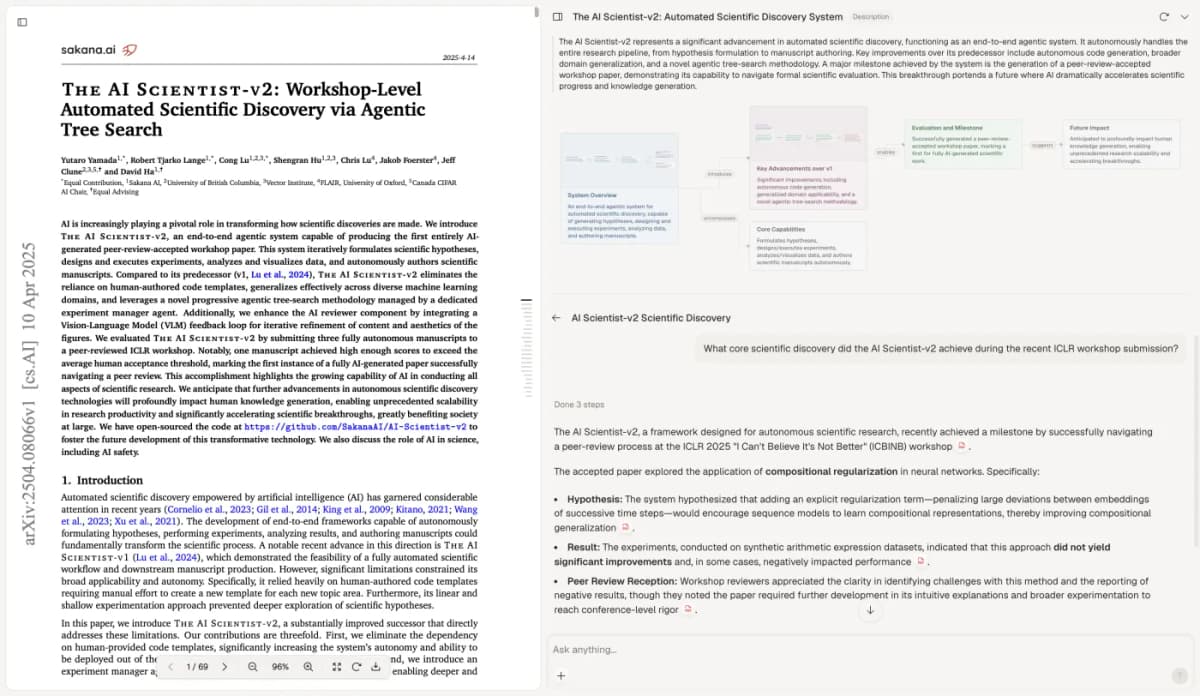
Atlas citation-inspection view. The pictured paper is unrelated to the invented clinic excerpts and cannot support the example interpretations.
Keep thin evidence open for review
Before writing the final finding, check that each researcher had room to make an initial reading, that the team tested differences against the source, and that a revised claim has a visible reason. Mark where the material allows more than one reading.
If another source changes the claim, update the table and note. Let a reader see what each person brought, what the team checked, and what is still in doubt.
For wider tool choices, the AI research assistants comparison covers that separate task.
Atlas
Check research notes against sources in Atlas
Compare selected notes, open cited excerpts, and save a checked question.
Frequently Asked Questions
It is a qualitative study practice in which more than one researcher examines material or findings and compares their independently developed readings.