
Unit of Analysis: Identify What a Study Can Claim
Define the unit of analysis, distinguish it from the unit of observation, and use a study-level checklist to keep conclusions at the right level in research.
- Byline

Summary
The unit of analysis is the person, group, organization, event, or other entity that a study aims to describe, compare, or explain.
The unit of observation is where the study collects information; it can differ from the entity the research question and conclusions concern.
Read the question, sample, measures, analysis, and conclusion together; flag an uncertain or shifting level rather than assigning one by guesswork.
The unit of analysis is the person, group, event, document, or other thing a study aims to describe or compare. You can often find it by asking: Who or what is the final claim about?
The BCcampus research methods text ties that answer to the research question.
Imagine a study that asks whether schools with smaller classes have higher average test scores. It measures students, but compares schools. The students supply data; the school is the unit the claim describes.
A second study could use the same student records to ask which students score higher. Then the claim is about students.
The number of rows in a spreadsheet does not settle the level. Read the question, how the data were grouped, and the conclusion. If those parts point to different levels, keep the unit marked as uncertain until you check the methods.
Atlas can help compare selected papers and open the cited passages behind an answer. The researcher still decides what each paper's design and claim support.

Atlas

Compare study units in Atlas
Add papers, check cited methods, and save a study-level matrix.
What is the unit of analysis?
It is the entity a study draws conclusions about. In a study of voting by states, the state may be the unit. In a study of whether income relates to a person's vote, the person may be the unit.
The American Political Science Association's methods lesson uses this change in the question to explain the difference.
The unit could also be a household, firm, country, policy, interaction, or text. The label matters because it sets the reach of the result. A claim about schools cannot be read as a claim about every student in those schools without further evidence.
Start with the question and finish with the conclusion. The sample, measures, and model help check whether the paper kept to that level. An author may study several levels at once, so some papers need more than one entry.
Unit of analysis vs unit of observation
The unit of observation is what the researcher measures, reads, interviews, or records. It can be the same as the unit of analysis, or it can supply facts about a larger unit.
Sheppard's open methods text makes this distinction through different questions asked of similar source material.
The school example shows why the two labels help. A survey answer from one student is an observation. If the team combines answers by school and compares school averages, the school is the target of the main claim. If it compares students, the person may be the target. The question and the actual comparison decide.
Once the intended unit is clear, the operationalization guide helps specify the indicator, recording rule, and level at which a value is interpreted. A student response used to build a school average needs both decisions documented.
| Ask about | Unit of analysis | Unit of observation | What the result can describe |
|---|---|---|---|
| Which students report more study time? | Student | Student survey response | Differences among students in the sample |
| Which schools have higher average study time? | School | Student responses grouped by school | Differences among schools in the sample |
| How do schools set phone rules? | School | School policy documents | Differences in school rules, as recorded in the documents |
Table 1: Before treating each row as a new unit, ask how those rows were made:
- Students in schools: Many survey replies do not become many independent schools. The school count still bounds a school-level claim.
- Measures from one source: The statistics text by Dunn shows that many hair strands from two people still represent two people.
- Who received a program: The unit of assignment is what received a treatment or condition. If whole schools got a program while students were measured, assignment happened by school. Check how the analysis handled students within each school.
Examples at different levels
People and groups
“Which students miss class most often?” is a person-level question. A student record may also be the observed source. “Which schools have more missed days?” is a school-level question, even if the counts came from student records.
A study of households may ask how families share care work. It may interview one or more people per home. Their accounts are the observed material; the household may be the focus if the paper compares homes.
If the conclusion describes the interviewed adults, the person may be a unit as well. Look for the paper's stated claim before choosing a label.
Organizations and events
A firm-level study might compare how companies set remote-work rules. It may read policy files and talk to managers. The files and interviews provide observations about firms.
An event-level study might instead compare meetings: who spoke, what decision was made, and how long each meeting ran. In that case, the meeting may be the unit.
The BCcampus examples include both organizations and social events. Their lesson is that the same kind of source can help answer questions at different levels.
Documents and repeated measures
A paper can treat each policy document as a unit when it asks how the texts differ. Another paper can read those same documents to compare the schools that issued them. Do not assign the unit from the file format alone.
If the documents themselves are the cases, define shared questions for the comparative analysis and keep each answer tied to its text. If the schools are the cases, the documents are evidence about those schools.
Repeated measures need the same care. Ten visits from each person give ten observed records per person. They do not automatically give ten independent people. Dunn's nested-measure examples show why the common source of those measures matters.
Find the unit in a research paper
Trace the paper's claim
Read five places in order. First, copy the research question. Next, note who or what was sampled. Then record what was measured or read. Check what the tables or model compare. Last, read the conclusion and mark who or what it describes. If you are designing a new study, research objectives should make that intended claim and unit explicit before you choose measures.
Do not stop at a single phrase in the abstract. A paper may say it studied “students” while its main result compares schools built from student data.
A political-science teaching text walks through cases where the unit takes close reading. For a broader way to inspect a paper's claims and methods, see the research paper analysis guide.
Build a source-cited matrix
The three papers below are fictional. P1, P2, and P3 are made-up IDs. The bracketed locators show where a real reviewer would place checked page, table, or section links. They are not citations to real studies.
| Paper and question | Observed material | Entity compared | Claimed level | Passage to check | Status |
|---|---|---|---|---|---|
| P1: Which students study longer? | One survey response per student | Students | Person | [P1, question and methods] | Stated in the example |
| P2: Which schools have longer average study time? | Student responses grouped by school | Schools | School | [P2, methods table and conclusion] | Stated in the example |
| P3: Does a phone policy change study time? | School policies and student logs | Unclear from the short description | School or student | [P3, assignment, model, and conclusion] | Unresolved; read the full method |
Table 2: P1 and P2 can use similar survey rows yet answer different questions. P3 needs more reading. If the policy was assigned to schools, student logs are nested within them. If the author studies change in each student's time, the paper may have a person-level outcome in a school-level design. The short question alone cannot settle the analysis.
For real papers, replace each bracketed locator with a source passage you opened. Keep “stated,” “inferred,” and “unresolved” apart. A guess made from a title should not sit in the same column as an explicit methods statement.
For the broader task of turning several source notes into one account, see the research paper synthesis guide. This matrix answers the narrower question of what each paper can claim.
Check the level of the conclusion
Ask three linked questions: What was observed? What was compared? Who or what does the conclusion describe? If the last two answers differ, read the full design before using the claim. A report can have sound reasons to use more than one level, but it must show how it handled the link between them.
That check matters in a convergent mixed methods design: a team must know whether its survey result and interview account describe comparable people, groups, or time periods before merging them.
Suppose schools with more libraries have higher average scores. That is a school-level link. It does not show that the students who used a library scored higher than their peers. Inferring a person-level link from grouped data is the risk called an ecological fallacy. An original methods guide on ecological studies explains the limit and why group-level work can still answer group-level questions.
The reverse question also matters. A student-level link may not tell us how schools differ. Keep the exact claim near its level rather than moving it to a larger or smaller unit by habit.
The APSA lesson asks readers to match variables to the chosen unit. If a school is the unit, school size and the share of students with a given trait are school measures. A student's own trait is a person measure. This check often reveals a hidden jump in a draft sentence.
Do not diagnose a published paper from a summary or one table. A model may account for students nested in schools, or it may study school and student levels on purpose. Mark the issue and inspect the full methods and results.
Next steps to compare units in Atlas
Put the selected full texts in one Atlas project. In chat, type @ and choose the papers you want to compare. The Atlas source-comparison guide covers the wider synthesis task; here, make the request about each paper's level.
Ask: “For each paper, quote or locate its research question, sample, measured material, main comparison, and conclusion. Give a separate row for the unit observed and the unit the claim describes. Add citations. Mark a level unclear if the text does not state it.”
Open the cited question, methods, table, and conclusion for each row. Read nearby text. If an answer fills P3's gap by guesswork, change that cell to unresolved and note which passage is still needed. Save the checked matrix and your own reading in an Atlas note.
Atlas can surface passages from the papers you selected and show citations to open. It does not reanalyze the data or certify that a cross-level claim is valid. The researcher owns the method judgment, including whether an unstated unit can be inferred at all.
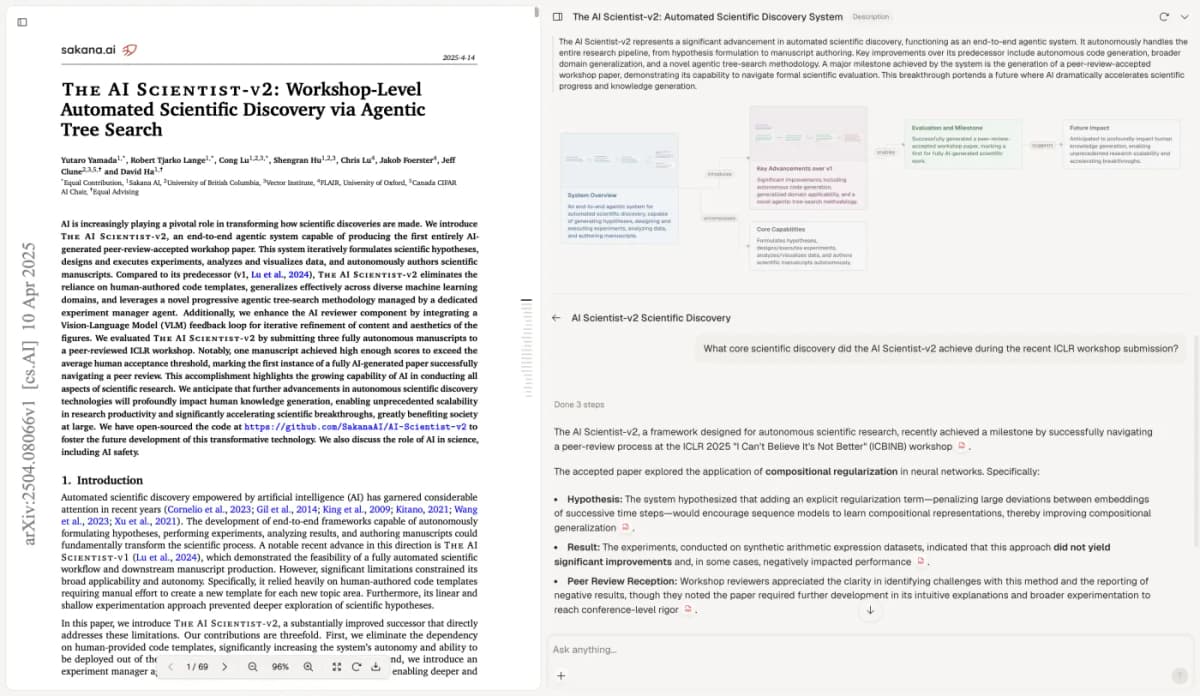
The image shows a paper open beside a cited answer in Atlas. The visible paper is about AI science, separate from the fictional school studies. It illustrates where to inspect a source while checking an extracted claim.
Record ambiguity and design limits
Some papers state the unit in the methods. Others require you to infer it from the question, the comparison, and the final claim. Record which case you have. If those parts disagree, keep the row open until a methods reader can resolve it.
A paper may also have more than one legitimate unit. It might compare schools and test a link among students within schools. Record both levels and the role each plays. A single forced label would hide the design.
When you use the paper in a review, state the level of the finding. “Schools with higher average study time had higher average scores” stays at the school level. A sentence about what a specific student would gain needs person-level support.
The external validity guide addresses a further question: whether a finding at its stated level may apply to another population or setting. First establish what the original study claimed.
If the sentence also implies cause and effect, check the study's potential confounding variables and its own limits before repeating that claim.
The practical goal is a traceable note: question, observed material, comparison, claim, cited passage, and uncertainty. That note keeps a literature review from mixing unlike findings just because their topics sound alike. The literature review process shows how to carry checked notes into a wider argument. If a level remains unclear after reading the full paper, say so in the synthesis.
Atlas
Compare study units in Atlas
Add papers, check cited methods, and save a study-level matrix.
Frequently Asked Questions
It is the entity the study aims to make claims about, such as a person, school, organization, interaction, event, or document.