

Typical case sampling is a purposive method: it chooses a case judged normal in a stated setting. The aim is to show readers what an event or experience looks like there. A typical-case profile helps explain an experience; it does not, by itself, show the average for a whole group.
When a paper calls a case typical, ask whose case it reflects, which traits were checked, and what evidence was used. A site can have a normal class size and extra staff support. The label needs to match the traits that matter to the study question.

Check why a case is called typical
Compare the case profile with the study's evidence for ordinary conditions.
What typical case sampling illustrates
Imagine a report showing how a community course runs. A chosen site can help readers picture its classes and learner experience. The team chooses that site because it fits normal program conditions, rather than a rare success or failure.
Palinkas and colleagues describe typical-case sampling as a way to show a setting to readers who do not know it. The aim differs from making broad claims about all people who take part.
The NIHR qualitative research guide also explains choosing cases to fit stated typical traits. Typical is a judgment tied to a setting; it does not follow from being near one average.
Find the basis for typicality
First, find the group the case is meant to reflect. A site could be normal among small rural branches but unusual among city branches. Region, course type, time, and resources can all affect what normal means.
Next, find the traits the authors used. If the question concerns staff support, class size alone cannot settle the claim. Look for the traits that shape the experience the case is meant to show.
Then find the basis for calling those traits normal. It might be records, prior research, or a judgment from people who know the setting. Save what each source shows; different forms of evidence may support different parts of the claim.
The primary purposeful-sampling paper ties the choice to its purpose. Keep that link in your note: the case was chosen to show some conditions, and the sources may support only those traits.
Finally, look for traits that depart from the normal profile. A difference may matter little for one question and a great deal for another. Keep it visible so readers can judge whether the case fits their own setting.
Worked example with unusual staff support
Consider a fictional community course report. It chooses Site A as a normal example of small rural branches. The site and baseline descriptions give the facts below. These are original teaching cases, not measured program data.
Compare each trait with the stated group before treating the whole site or learner experience as typical.
| Trait | Fictional reference basis | Site A and reading limit |
|---|---|---|
| Class size | Small branches usually run one small class | Site A matches the stated profile |
| Schedule | Branches meet one evening each week | Site A matches that schedule |
| Staffing | Other branches describe one tutor | Site A has a tutor and an extra support worker |
| Learner background | Reference description gives no profile | No basis for judging this trait |
Table 1: Site A fits the class and schedule profile. Staffing differs, and there is no baseline for learner background.
Suppose the report describes learners getting help between lessons. That account may be valuable. It does not show that learners at normal staffing levels get the same help, because Site A has an extra worker.
A checked note would narrow the claim: Site A shows a small rural evening class with extra support. It would keep the normal class and schedule features and name the staffing difference. It would leave the learner-background claim open.
The case can still help readers. Someone considering a one-tutor branch needs to know whether the extra support shaped the learners' experience. The staffing detail tells them what to compare with their own site.
The NIHR discussion of typical characteristics shows why the profile needs a set of traits, rather than one number near the average.
Keep illustration within its context
A normal case can show depth and detail that a table of averages cannot. Keep that value while checking what the case supports. The method definition concerns showing a setting. Claims about how common an experience is need their own evidence.
One site profile does not show how many sites share its experience. A learner chosen on purpose does not show the mean outcome for all learners. A claim about a whole group needs more than a convincing story.
A typical case does not prove that a program caused an outcome. That claim needs a design and evidence that can address other reasons for the result. Qualitative research design helps link case accounts to a broader question and method.
If the authors seek a range of different cases on purpose, the purpose may instead be maximum variation sampling. If a stated rule decides which cases qualify, criterion sampling explains that step. Studies can combine purposes; name each one the report supports.
Check the case rationale in Atlas
Add the case-choice passage, site profile, and baseline descriptions to one project. Use sources you have permission to share, with identifying details removed where needed.
Trace why the selected case is presented as ordinary. Compare the stated normal conditions with the evidence for this case.
Open a chat and use @ to mention those sources. Ask: “Why is Site A called typical? For each relevant trait, cite the reference basis and the site description. Separate supported matches, departures, and missing evidence.” Choose Project only for new retrieval within your material.
An answer might say Site A shows normal staff support because its class size is normal. Open that claim's citation. If the passage supports class size but not staffing, correct the note and add the passage about the extra worker.
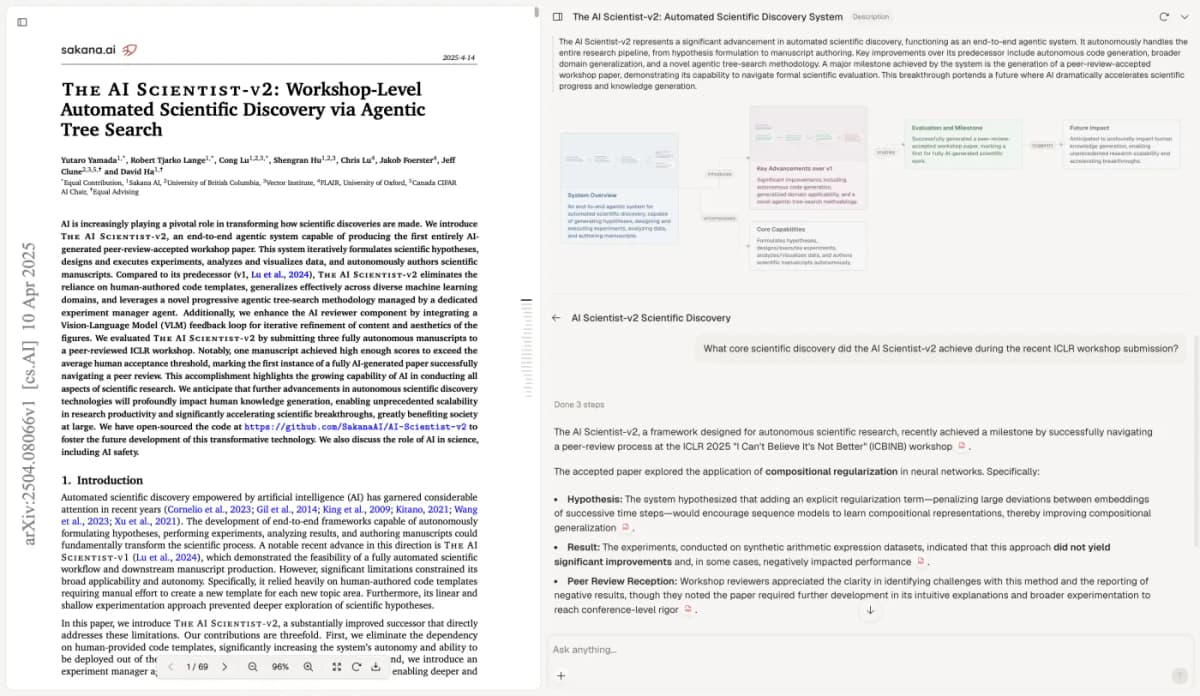
Read the source context to check which trait a typical-case claim covers.
The embedded paper is Yutaro Yamada et al. (2025), The AI Scientist-v2, licensed under CC BY 4.0. This screenshot is reused unchanged.
The image shows source review on an unrelated paper. In the site example, compare the two staffing passages. A source for class size cannot stand for the whole profile; it may support one normal trait while leaving another uncertain.
Create a note with New → Note. Record the stated group, each supported match, the extra worker, and the missing learner profile. Add the scoped case description, then wait for Saved to appear before closing the note.
If a new appendix shows that extra workers were standard at those branches, revisit the staffing line. If it describes a different region, keep that boundary. The research synthesis workflow can help compare context across several reports.
Save what typical means here
Keep the purpose of the case example beside its setting. Show the group being described, the traits checked, and where the case differs. A bare typical label would hide the staffing detail a reader needs.
Return to the NIHR case-choice guidance when a new source changes the profile. Revise the trait and its scope; keep claims about other groups or outcomes tied to their own evidence.
Check why a case is called typical
Compare the case profile with the study's evidence for ordinary conditions.