


Updated in July 2026, this comparison treats Consensus and Elicit as tools for different research stages. Use Consensus first when you want a fast paper-backed answer or a ranked set of papers around a claim.
Use Elicit when the job becomes a review. Screen papers, extract fields, and build a report or evidence table.
Let the next research step drive the choice. A student checking a claim needs a different flow from a reviewer building a protocol.
After either tool helps you find papers, the next step is verifiable AI research. Compare the sources you kept, ask cited questions, and open the passages behind the answer before reusing the claim.

Compare selected research sources in Atlas
Compare the papers you keep, then inspect citations and source passages.
Quick verdict
Use Consensus when the research starts as a claim:
- You want a fast answer grounded in papers.
- You are asking a yes-or-no claim and want to see whether the top papers lean yes, no, mixed, or possibly.
- You need ranked paper search with date, cite, and journal signals.
- You want a quick sum-up before choosing which papers need closer reading.
Use Elicit when the research has turned into review work:
- You need to search academic papers and clinical trials, then screen the result set.
- You want table columns for sample, method, outcome, limits, or other review fields.
- You need a report or table you can shape around kept papers.
- You are planning a formal review or a review-like workflow.
Use both when the stakes justify it. Consensus can give the first read on a claim. Elicit can turn the paper set into a review table. After that, verify the papers you keep with cited answers that lead back to source passages.
Selection criteria
The fastest way to choose between Consensus and Elicit is to start with the research job. The same feature can serve a different stage in each product.
Consensus describes itself as an AI search engine for research papers. Its search flow scans more than 220 million papers, reranks results, and uses AI after search to sum up papers. Consensus also says its paper set is updated weekly, and full text can vary.
Elicit positions itself for research flows from quick answers through full reviews. Its product page says it searches over 138 million papers and 545,000 clinical trials. Elicit says its review flow can plan the review, gather sources, screen papers, pull data, and cite the final synthesis.
Research job matrix
For most researchers, the practical split looks like this:
| Research job | Consensus fit | Elicit fit | What to verify |
|---|---|---|---|
| Fast evidence answer | Strong fit. Consensus is built for paper-backed answers and quick synthesis from search results. | Useful when you want a report-style answer. Elicit also extends into deeper review work. | Open the cited papers and check whether the summary matches the study details. |
| Yes-or-no claim check | Strong fit. The Consensus Meter is designed for yes-or-no questions and classifies top relevant papers as yes, no, possibly, or mixed. | Weaker fit if the main need is a directional verdict. Stronger fit if you later need a table of included studies. | Check which papers contributed to the stance and whether the question wording changed the meaning. |
| Broad academic search | Strong fit for large paper search with ranking signals. | Strong fit for semantic search across papers and clinical trials. | Compare recall, filters, and whether full text is available for the papers you need. |
| Systematic screening | Limited fit unless your flow is still early search and sorting. | Strong fit. Elicit's review workflow covers screening and source selection. | Keep human inclusion and exclusion rules explicit, especially for PRISMA-style review, clinical, or policy work. |
| Extraction table | Limited fit for lightweight paper lists. | Strong fit when the review depends on columns such as population, method, outcome, or limits. | Spot-check extracted cells against the paper text before using the table in a draft. |
| Cited synthesis or report | Useful for high-level synthesis from top search results and saved papers. | Strong fit for customizable research reports and cited evidence synthesis. | Confirm that each citation supports the exact sentence and the specific claim being made. |
| Source verification after selection | Helpful for opening and reading papers found through Consensus. | Helpful for checking evidence behind screened and extracted rows. | Move the papers or notes you keep into a source workspace and inspect the passages behind important claims. |
Table 1: That table also helps avoid a false winner. The 2 tools overlap on search and summaries, but their centers differ. Consensus is more natural when the reader wants a literature signal. Elicit is more natural when the reader needs a review flow with structured evidence.
Consensus vs Elicit compared
Consensus for quick claim checks
Consensus is strongest when the first question is still uncertain. A researcher might ask, "Does sleep deprivation increase Alzheimer's risk?" or "Does morning sunlight improve mood?" That kind of claim works well in search because the tool can find papers, rank the best matches, and show what the top papers appear to support. The Consensus Meter is the clearest example: Consensus says it checks the top papers for yes-or-no claims and shows whether the answer leans yes, no, possibly, or mixed.
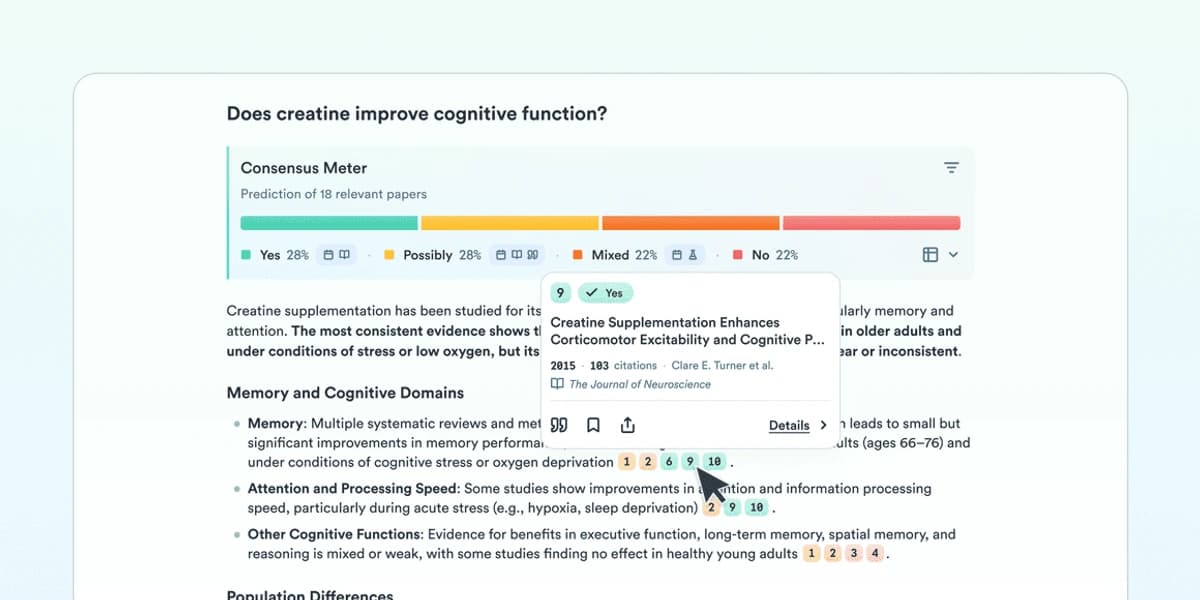
Official Consensus help-center screenshot from its Consensus Meter documentation, showing how a claim-check answer groups cited papers by evidence direction.
In text form, the screenshot shows a single research question with papers split into yes, possibly, mixed, and no positions. Treat it as an orientation layer. Open the cited paper markers, read the relevant passages, and check whether the answer framing still matches your research question.
That can orient the first reading pass. The meter reflects returned papers from the search. A full review still needs source reading, inclusion rules, and citation checks. Consensus warns that labels can miss nuance. It also says AI can misread sources.
Elicit for structured review work
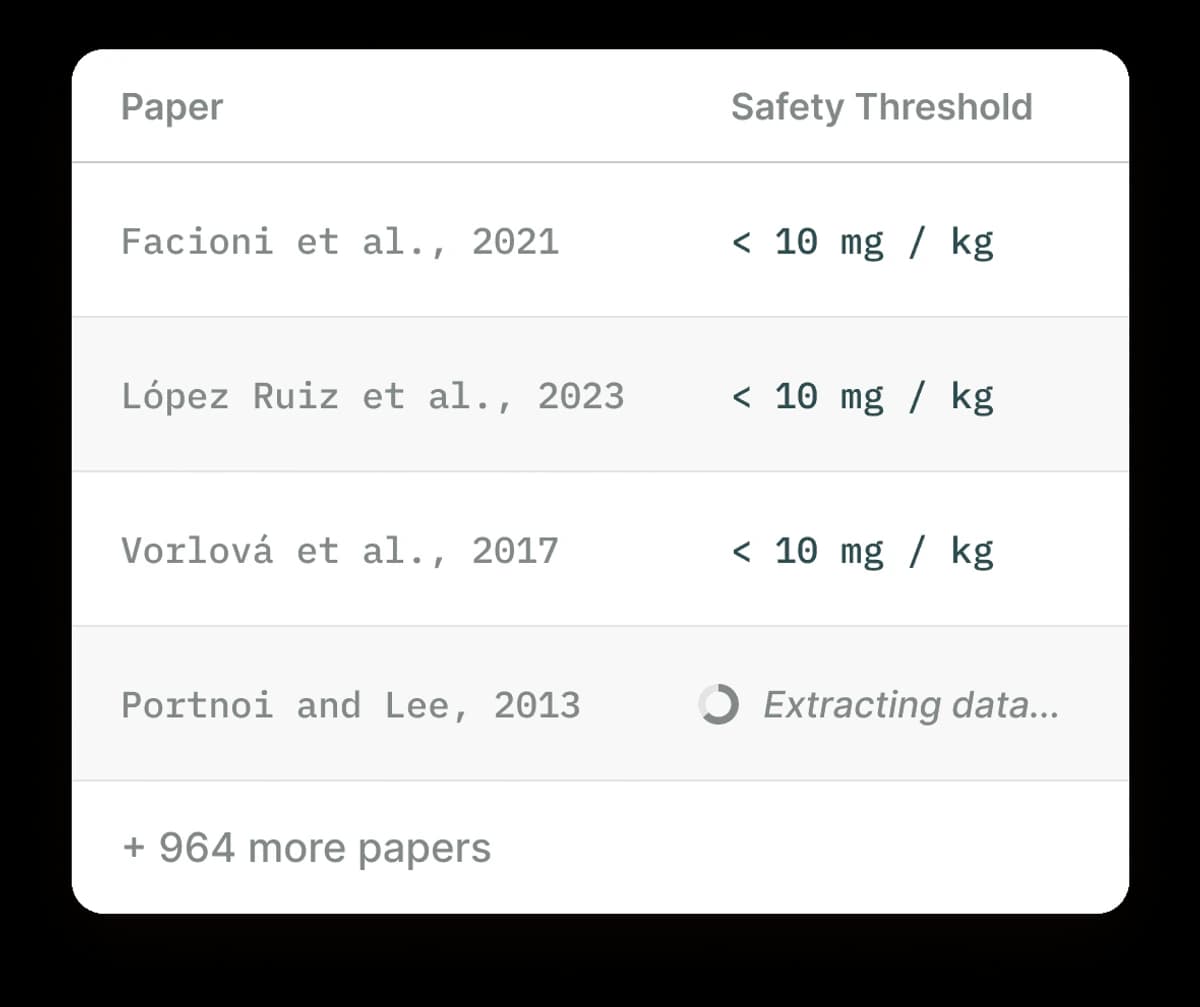
The table shows Elicit filling a structured field across paper rows. Inspect the source papers before relying on extracted values.
Elicit is strongest when the claim has moved into review work. Its review workflow covers the plan, source gathering, screening, data pulls, and synthesis. At that stage, a researcher needs columns, rules, and traceable rows more than a single directional answer.
This distinction matters because a first good answer is not a finished review. A Consensus summary can help decide whether a topic is worth reading. An Elicit table can help organize a review. Both still require source reading and citation inspection. Paperguide and BioSkepsis frame the same workflow split. The HKUST Library evaluation adds a useful warning: check the source, then judge the AI answer.
Test both on the same topic
How I would test both tools on the same topic
Start with a yes-or-no claim in Consensus. Record the top papers, the signal, and the papers behind it. Then run the same topic in Elicit. Build a small table with the fields that matter to your review. Spot-check at least five cells against the paper text. Judge the 2 tools by the review path that leaves you with traceable papers, clear criteria, and fewer unsupported claims.
Verify sources after choosing
After Consensus or Elicit gives you a source set worth checking, the job changes. You are no longer choosing the search tool. You are checking whether the kept papers support the claim.
The sequence is simple. Use Consensus for the first read on a claim, use Elicit when the review needs screening or extraction structure, then verify the kept papers before the claim enters a draft. A row that says "positive effect" may hide dose, group, time span, exclusion rules, or a weak outcome measure.
Atlas can help with that final source-checking step when the kept papers, notes, or web sources need to sit in one project with citation badges. Use it after the Consensus or Elicit step, when the next job is cross-source synthesis and source-passage inspection.
Which should you choose?
Choose Consensus if your immediate job is to see whether papers support a claim. It helps with early search, cited answers, yes-or-no claims, and quick checks before a deeper review.
Choose Elicit if your immediate job is to build the review itself. It is the better fit when you need screening, data pulls, custom columns, cited reports, or explicit criteria.
Use both if the research starts broad and then needs structure. Consensus can help you find the signal and candidate papers. Elicit can help turn those papers into a review table. Use a separate source-checking step once you know which papers matter.
The boundary is important for high-stakes research. A tool can shorten the path from question to evidence, but it should not erase the reviewer's responsibility.
Before you cite, decide, or publish, open the source and read the passage. Check whether the AI output kept the claim inside the evidence.
Related comparisons
Compare selected research sources in Atlas
Compare the papers you keep, then inspect citations and source passages.