


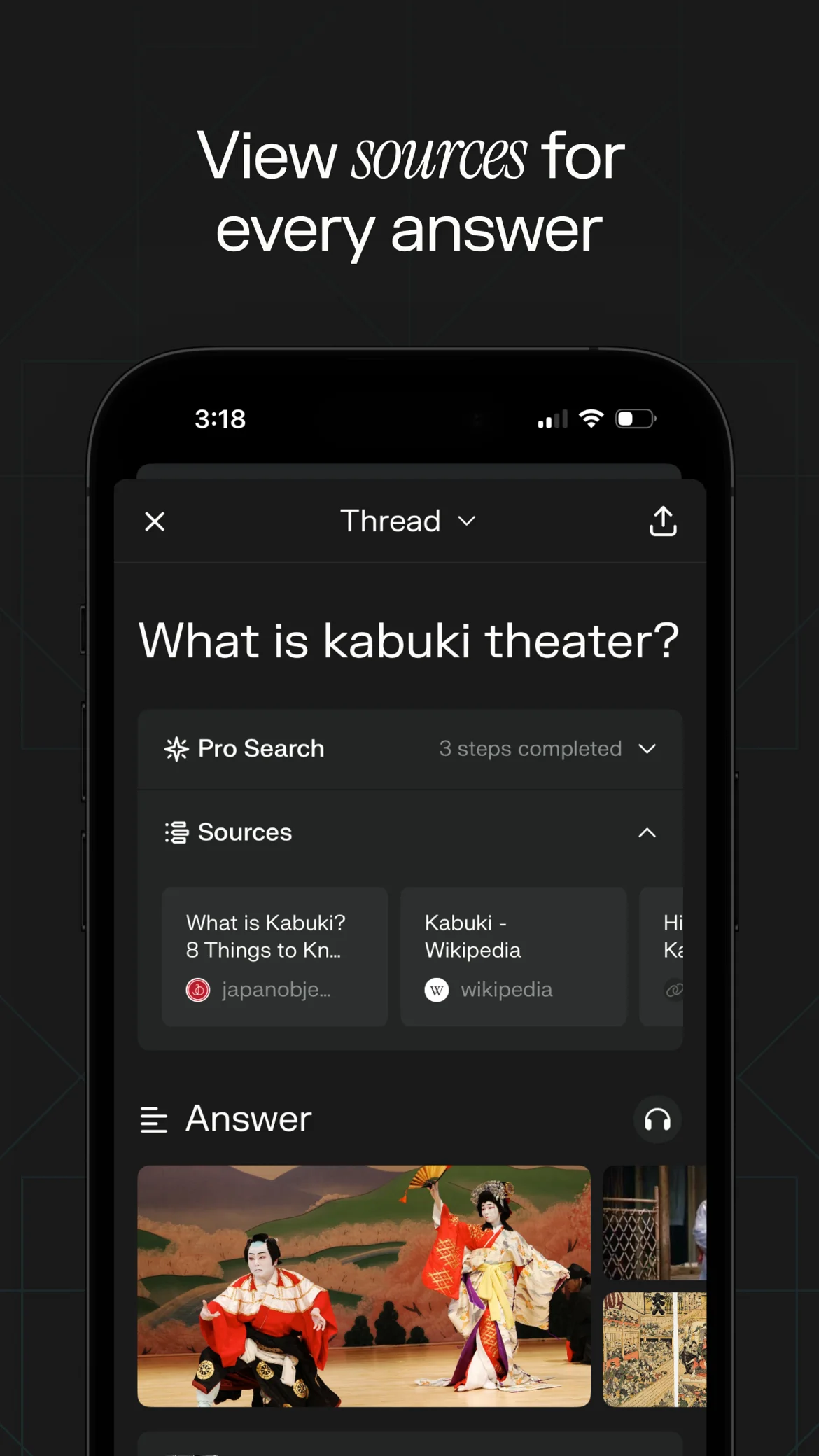
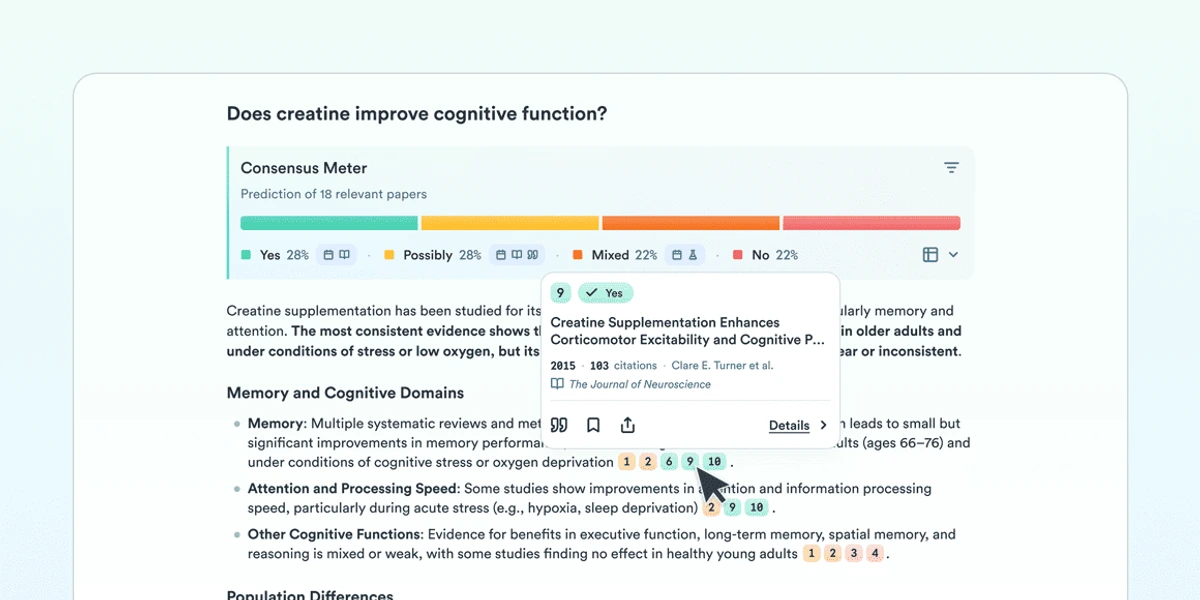
Perplexity and Consensus search different places. Perplexity searches the open web. Its answers may cite news, company pages, reports, papers, and other sites. Consensus searches scientific papers. It is a better starting point when published studies should shape the answer.
After the search, you still need to read the sources you plan to use. A citation shows where an answer came from. It does not prove that the source is sound or that the cited text supports the claim.

Synthesize selected sources in Atlas
Synthesize selected sources and inspect citations before using the findings.
Quick verdict
Choose Perplexity to find current web sources. Choose Consensus to find what research papers say. Use both when you need current events and scientific evidence.
Neither tool completes a literature review for you. Perplexity can cite weak web pages. Consensus can hide key differences between studies, such as sample size, method, or population. Open each source and check those details.
Use Atlas once you have chosen the sources worth keeping. It can compare those sources and let you open the text behind each citation.
Compare the research stack
The three tools fit at different points:
- Search the web with Perplexity. Use it to find recent pages, reports, news, and company or policy sources. Perplexity explains how its answers cite web sources.
- Search papers with Consensus. Use its research database when your question calls for scientific studies. Its Consensus Meter can show whether the papers lean toward yes, no, or mixed results.
- Compare chosen sources with Atlas. Add only the papers and pages you trust. Ask a question across that set, then open the cited text before you use a claim.
Consensus also lists its own limits and responsible-use guidance. Its summary cannot replace a close read of methods and results.
Perplexity vs Consensus compared
Use the table to match your question to the right search source.
| Research job | Perplexity | Consensus | Best fit |
|---|---|---|---|
| Current web research | Strong for recent pages, organizations, explainers, reports, and news-like context | Limited when the answer depends on non-paper web sources | Perplexity |
| What published studies say | Can find papers, but mixes them with other web sources | Built for questions answered by scientific papers | Consensus |
| First look at a topic | Finds names, claims, and many kinds of sources | Best when the topic is already a research question | Depends on the question |
| Academic paper discovery | Helpful for finding candidate papers or scholar-facing pages | Built around research evidence and paper-level signals | Consensus |
| Policy or market research | Better fit because source types vary across government, company, analyst, and news pages | Weaker if the project is not paper-led | Perplexity |
| Compare sources you chose | Its answer may draw from a new web search | Its answer stays focused on papers in its database | Atlas after selection |
| Citation verification | Open links and inspect whether the cited page supports the claim | Open papers and inspect methods, samples, and limits | Open source passages |
Table 1: For example, a student may ask, "What are the main arguments about four-day school weeks?" Perplexity can find policy pages, district reports, and recent guides.
If the research needs to stay organized inside a Perplexity workspace, Projects can collect context for a clear line of work.
The next question may be, "What do published studies say about student results?" Consensus is the better next stop. Its search filters can narrow the type of paper. Its Research Agent can handle research questions with several steps.
The final assignment may need a paper, a policy report, and a local case study. At that point, the student needs to compare a chosen set of sources rather than run another search.
Where Atlas fits after discovery
Save the sources that you may cite, then add those papers, reports, pages, PDFs, or notes to Atlas. Perplexity also supports file uploads and internal file search, but an answer over a file still needs a source check. Here is one way to move from search to a checked comparison:
- Ask Perplexity, "Which sources explain the debate about AI tutoring in universities?"
- Save the best reports and university pages. Do not copy the answer itself.
- Ask Consensus, "Does AI tutoring improve learning in higher education?"
- Keep the papers with relevant methods and results.
- Add those sources to Atlas and ask it to compare only that material.
Example prompt:
Compare these sources on the strength of evidence for the claim, with one row per source and citations for each claim.
In the Atlas answer, open each citation and check whether the passage supports the claim beside it. Also check whether the sources studied the same group. For example, ask Atlas to separate K-12 and university results instead of blending them into one broad finding.
Atlas does not replace Consensus for paper search or Perplexity for web search. It becomes useful after you have a shortlist and need to turn those sources into checked notes, tables, or answers.
Which should you choose?
Choose Perplexity when the answer may be on news sites, company pages, policy pages, reports, or other current web sources.
Choose Consensus when scientific papers should lead the answer. This is often the better start for questions about whether an intervention works or what studies have found.
Use both for work that needs current context and published research, such as a policy memo or thesis background. Start with the web, check the papers, and keep only the sources that help answer the question.
Use Atlas after you have chosen those sources and need to compare them with citations. For related decisions, see Consensus vs Perplexity, AI tools for academic research, and how to synthesize research papers.
Synthesize selected sources in Atlas
Synthesize selected sources and inspect citations before using the findings.