

Results report what a study found. Discussion explains what those findings may mean, how they relate to other work, and what limits the claims. For a sentence that does both, split the finding from the explanation before deciding where each part belongs.
Placement is only one check. A cause claim still needs support when you move it into Discussion. Start with the evidence, then choose the section and wording that let a reader see what was found and what you infer from it.

Check the support for each manuscript claim
Compare reported findings with interpretations and section rules.
What each section does
Results can include analyzed findings. A reported group difference, model estimate, or theme from interviews is a result of the study's work. Explain the main finding and show the study evidence behind it.
ICMJE's manuscript guidance distinguishes that reporting task from Discussion. Discussion explains the findings, places them in relevant evidence, and states their limits. It can briefly restate a main finding without repeating the full Results account.
These section jobs help readers follow the argument across different formats. PLOS One permits combined sections. Check the required format while keeping the move from finding to meaning clear.
Classify the claim before moving it
Read the sentence and ask what it adds. Does it state an outcome of this study, explain why that outcome occurred, compare it with prior work, or limit the conclusion? A single sentence can contain more than one of those jobs.
| Claim job | Usual home in separate sections | Support to check |
|---|---|---|
| Report a finding | Results | Study output, table, figure, or analysis |
| Explain its meaning | Discussion | Finding plus reasoning and qualified evidence |
| Compare prior work | Discussion | Relevant sources and a fair comparison |
| Limit the conclusion | Discussion | Study design or measurement constraint |
Table 1: This placement rubric starts with the job of the claim and the evidence it needs.
“Usual home” matters. Use the table to review a claim, then check the journal's instructions for its final placement. A Results section may need brief context so a finding makes sense; it should not silently turn that context into a broader cause claim.
For example, “The groups differed on the final test” reports a finding if the study supports it. “The new route labels caused the difference” adds an explanation. Look for the evidence that supports this extra step before treating the two as one claim.
The PLOS discussion guide connects findings with the research question and related studies. That reasoning adds reader value. Moving a sentence without checking its support does not.
If the main task is to build a whole section, use the Results section guide or Discussion writing guide. Here, we are checking the boundary between claims already in a draft.
Split a finding from its explanation
In this fictional teaching example, Group A uses new labels on a campus route map; Group B uses the old ones. Their mean scores on a short route task are eight and six. Group A also receives a map briefing that Group B does not receive. These invented means imply no statistical test.
The draft Results sentence says: “Group A scored eight while Group B scored six because the new labels made the route clear.” The first part states the scores. The second says what caused the difference.
A Results revision reads: “The mean route-task score was eight in Group A and six in Group B.” In a real paper, retain the relevant sample, units, uncertainty, and table reference from the verified study output. Do not fill them in from this example.
A Discussion revision reads: “The higher score in Group A may reflect clearer labels, the extra briefing, or both. The study as described does not isolate the contribution of the labels.” It connects the result to possible meaning while keeping the design limit visible.
The revised text has two benefits. The finding is easy to locate, and the cause claim is no longer stronger than the supplied design supports. This does not establish which explanation is correct.
ICMJE advises against conclusions beyond the data. In this example, changing the heading alone would leave the problem in place. The wording needed to change as well.
Suppose the draft also claims that the new map saves time across all campuses. The supplied score comparison does not measure that outcome or population. Remove the claim or supply suitable evidence; do not treat broad implications as free space for unsupported results.
You can retain the explanation gap in a limitations note. That note should identify the extra briefing as the reason for caution, rather than use a vague statement that the study has limitations.
Keep the distinction in combined sections
A combined heading brings both jobs into one section. Report the finding, then signal the move to its meaning or relation to other work. Keep the study evidence near the first claim it supports so readers can follow the argument.
PLOS One's submission rules explicitly allow a mixed Results and Discussion section. That permission applies to PLOS One. Read your target's current instructions before reorganizing the draft.
Qualitative findings can already involve interpretation. APA's JARS–Qual reporting standard asks authors to explain the meanings drawn from their analysis and ground them in source material. A theme develops an analytic account of that material. Distinguish the study's supported themes from broader claims about why they matter, while allowing readers to follow the analysis behind each theme.
Loughborough's writing guidance recognizes combined chapters and asks writers to explain rather than merely restate findings. Use the format to make that explanation easy to follow, with each paragraph adding a clear point.
A brief finding at the start of Discussion can orient the reader. PLOS recommends a clear principal finding as an entry into the explanation. Reproducing the full results table adds little if the next paragraph never develops its meaning.
If your course uses “Findings” rather than “Results,” check what it expects under that heading. Scribbr's learner comparison offers a starting point. Discipline and journal instructions still decide the final structure.
Compare manuscript passages in Atlas
Add the draft Results and Discussion sections, verified study evidence, and relevant journal guidance to one project. Give the sources clear names and wait for processing to finish. A manuscript claim and the source meant to support it need to be checked as distinct items.
Choose Project only to prevent new web or literature retrieval. Earlier chat context remains available, so name the manuscript, study evidence, and guidance you intend to compare.
- Use @ to select those items. Ask: “For each draft claim, identify the reported finding, any explanation or comparison, the supporting passage, and the suggested section under this journal's rules. Flag missing support.”
- Open each citation. Check whether it supports the same outcome, group, and time point. A passage about another measure cannot establish the route-task score.
- Correct an answer that calls the labels the proven cause. Ask for the source supporting that wording. Preserve the two means while adding the briefing limit from the methods.
- Use New → Note to save the claim, evidence, section choice, corrected wording, and open gap. Wait for Saved before closing it.
Atlas helps compare supplied sources for a reading and editing note. You judge the study's logic and the final wording. The steps do not run the analysis, invent missing results, or certify the manuscript.
The Atlas view below shows a cited answer beside its source. Use that source panel to check whether a passage supports the reported finding or an explanation of it. The pictured paper is unrelated to the fictional map study.
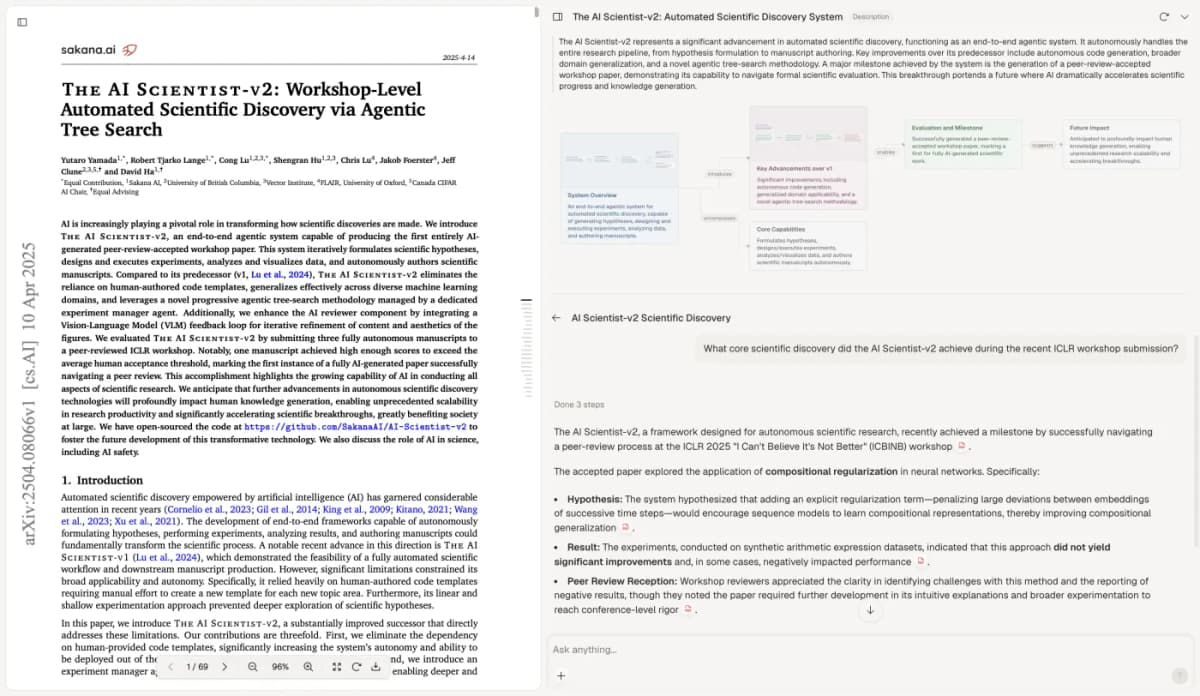
Open the supporting passage before accepting a claim or deciding where to place it.
The visible paper is Yamada et al. (2025), licensed under CC BY 4.0. It appears within the unchanged Atlas capture.
Save a placement note you can check
Keep the note specific enough that a coauthor can follow the edit. “Scores belong in Results; the explanation needs qualification in Discussion” is useful when it includes the exact source and the extra-briefing reason. “Move this paragraph” leaves the main judgment hidden.
For the wider argument, the research paper outline guide connects those sections to the question and methods. For claims that compare multiple studies, use research paper synthesis to preserve each source's finding and scope.
Check the support for each manuscript claim
Compare reported findings with interpretations and section rules.