

Semiotic analysis studies how signs create meaning. A sign can be a word, image, sound, gesture, or object used within a wider set of shared rules. The task is to explain how a reading follows from source details and context.
A leaf beside a product name might invite a reading of “natural” or “green.” That is a proposed reading. It does not prove that the product is sustainable, that its maker intended that message, or that every viewer read it that way.

Check the sources behind your reading
Compare source descriptions and context, check citations, and save your reading.
What semiotic analysis asks
A semiotic reading asks how forms, choices, and links make meaning possible. It looks beyond the presence of one symbol to the system in which that symbol appears. Words, layout, objects, and contrasts can work together.
Joseph Goguen's teaching notes stress that meaning depends on links and context. A sign does not carry a fixed message in every setting. A raised hand can function differently in a classroom, an auction, or a street crossing.
This guide uses a small fictional poster to show a checked reading. The example teaches the method; it supplies no audience response data. For a real project, choose your theory and justify the source set before making claims.
Choose a model and define its terms
In a Saussurean account, the signifier is the form and the signified is the concept linked to it. Meaning also depends on differences within a sign system. A word gains part of its meaning through its relation to other words.
Peirce's model has three related parts: a sign-vehicle, an object, and an interpretant. The interpretant concerns the meaning or understanding produced through that relation; it is not simply the person who looks at a sign. The Stanford reference entry explains the distinction in more detail.
Choose the model that fits the research question and keep its terms clear. Do not combine a two-part and a three-part account without explaining why. Goguen's notes on sign systems provide a useful starting point for this choice.
Denotation concerns a sign's more direct or common reference. Connotation concerns the linked meanings it can carry. For the fictional leaf, describing a leaf-shaped mark is different from proposing an association with nature.
The distinction helps organize an analysis, but it is not a clean split between neutral facts and personal opinions. Chandler's scholar guide discusses why even apparently direct meanings depend on shared rules and context.
Describe the source before interpreting it
Choose a small object or set of objects. A poster series, two versions of an advertisement, or a defined scene can give you clearer boundaries than “the brand's meaning.” Explain why those objects answer your question. The scope of the study should make that boundary clear.
Keep a source record with details that a new reader can check:
- Name the object, version, date, medium, and source location.
- Describe visible or audible features with positions, time stamps, or text passages.
- Record the context supplied by reliable sources, such as where the object appeared.
- Mark details you cannot recover, including missing versions or unclear image quality. Keep these choices in a research log.
For images, retain the original and a careful human-written account. An account helps textual comparison but can omit small details that matter. Return to the image when a proposed reading depends on a feature that the account does not capture.
Primary-source analysis can help establish what the object is and what is known about its origin. Those checks support the reading without deciding its meaning in advance.
Work through a fictional poster
Imagine a poster for a refillable bottle. It contains a green leaf, a close-up of a hand holding the bottle, a short “refill” headline, and a plain background. No real poster or audience is being studied here.
The table below separates described features from proposed meanings. Each row also keeps a possible other reading and the support needed to choose or narrow the claim.
| Described sign | Candidate reading | Other reading | Support to seek |
|---|---|---|---|
| Green leaf beside bottle | Invites an association with nature. | Marks a product variant. | Related versions and supplied brand context. |
| Hand holding the bottle | Presents the product as part of daily use. | Shows scale or grip. | Surrounding text and comparable images. |
| Refill headline | Frames reuse as the main action. | Gives a simple use instruction. | Campaign wording and placement context. |
| Plain background | Gives the bottle visual focus. | Fits a standard product-photo format. | A defined comparison set. |
Table 1: A useful note names what supports each reading. The “refill” word supports an emphasis on repeated use, but it does not establish how often customers actually refill the bottle. Keep that behavior claim outside the source reading.
Relations matter too. The leaf, refill word, and bottle may reinforce a reading together. Compare that combination with a second version before claiming a shared campaign code. AURA Lab's overview offers a concise account of how models frame these questions.
Test the reading against context and alternatives
A rival reading needs its own explanation of the same feature. If a green mark could name a flavor, look for other versions where color marks flavors. If those versions are missing, record the gap.
Ask what would weaken your preferred reading. A clear color key might narrow the leaf claim; a different placement might change how text and image relate. This check keeps the analysis tied to support rather than to an appealing story.
Chandler's discussion of analytic limits warns about readings that ignore alternatives and actual interpretive practices. Do not write “viewers felt trust” unless suitable audience data support it. When you quote a source as support, integrate the quotation with the claim and its limits.
For claims about everyday social practices, ethnomethodology asks a distinct question about how people make activities intelligible. For language and power, critical discourse analysis may offer a more fitting lens. The qualitative document analysis guide explains a broader document-evidence task. Choose a method whose evidence and concepts fit the question you want to answer.
Compare textual evidence in Atlas
Add permitted text passages, accurate source accounts, and context documents to an Atlas project. Open a chat and use @ to choose the sources. State which reading and source set you want to check.
Ask for proposed readings with support:
Compare this proposed reading with the source account and context documents. Cite support for each claim, suggest one plausible rival reading, and mark missing support. Do not infer audience response or maker intent.
Ask Atlas to compare the selected sources, then inspect the original yourself. Atlas may help organize textual support, but the analyst must decide whether the cited context fits the object and theory.
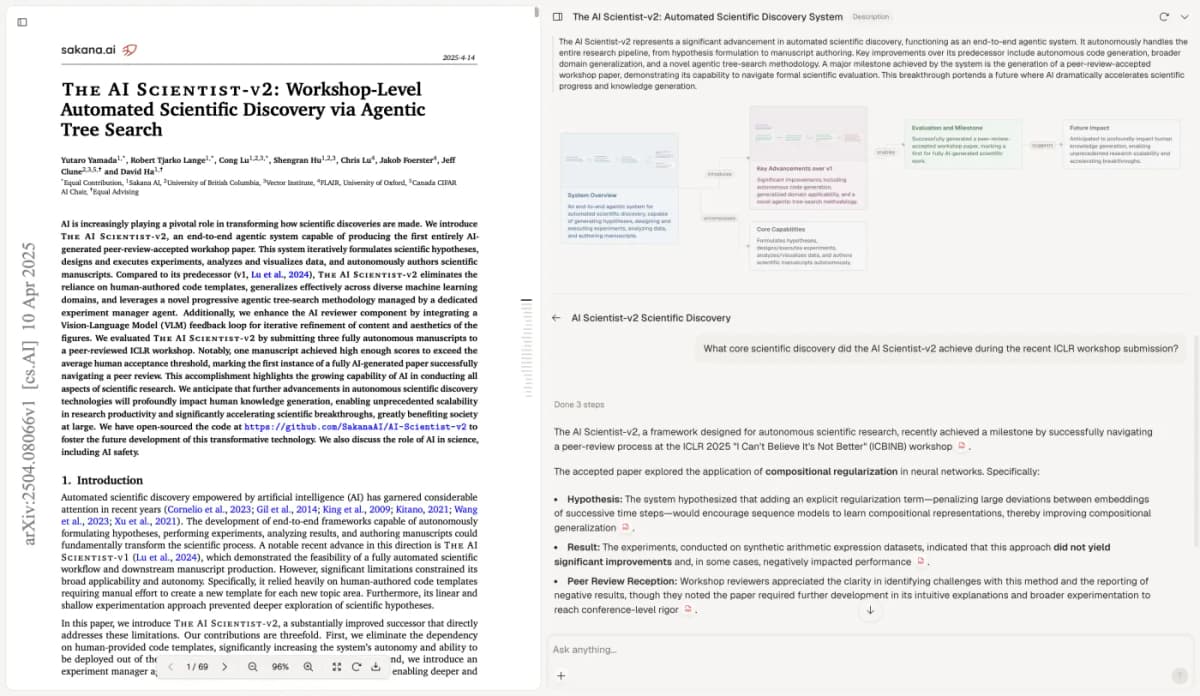
The screenshot shows a PDF beside a cited answer. It does not show the fictional poster, and it provides no evidence of image-analysis accuracy. Its role is to show how the reader can compare an answer with its source.
Open each citation and read the cited passage in context. If the answer turns “refill headline” into “all viewers saw a green message,” remove that claim. Retain the narrower reading and note what audience data would be needed.
Save the checked sign-meaning-context note with the original detail, proposed reading, rival reading, source location, and limit. Keep the note in the same project as its sources. Keep open alternatives for later review instead of asking the tool to force a single answer.
Write one bounded analytic claim
A well-grounded claim might read: “In this fictional poster, the leaf and refill headline support a nature-and-reuse reading. A product-variant reading remains possible without the wider campaign set.” It identifies the source basis and its limit.
Keep a short claim log as you write. Put the source detail on one line and the claim on the next. Ask a peer to point to the sign that supports your claim. If they cannot find it, check the source or narrow the claim before you use it.
Apply that pattern to one real source detail in your project. Record what is described, what you infer, which context supports the inference, and what remains unknown. Then decide whether a wider source set or audience study is needed.
Check the sources behind your reading
Compare source descriptions and context, check citations, and save your reading.