


Consensus is still strong for one narrow job: ask a research question, search peer-reviewed papers, and get an answer tied to the papers Consensus found. Its help center calls Consensus an academic search engine where AI summaries come after paper search.
The best Consensus alternative depends on the task. Use Elicit for review tables, SciSpace for paper reading, Scite for source checks, and Semantic Scholar for free paper search. Use Atlas after search, when you have papers, PDFs, or web sources to compare.

Synthesize selected sources in Atlas
Bring selected papers into Atlas for cited answers and source-passage checks.
Consensus alternative verdict
The best Consensus alternative is not one tool. Choose Elicit when a review needs a table. Choose SciSpace for paper reading. Choose Scite when you need to see how later papers cite a claim. Choose Semantic Scholar for free paper search. Choose Atlas for work across sources you already selected.
Choose by the task left after Consensus answers the first research question. Use the Elicit alternatives guide if the next step is a deeper Elicit comparison.
Quick verdict
Use this deterministic routing rule:
-
Choose Atlas if you already have retained sources and need cited synthesis, source comparison, and passage checks in one project.
-
Choose Consensus if you want a fast answer from indexed papers.
-
Choose Elicit if the work needs paper screening, review columns, or a review table.
-
Choose SciSpace if the main job is understanding individual papers and moving from reading to writing.
-
Choose Scite if source context matters more than answer generation.
-
Choose Semantic Scholar if you need free paper search first.
That last split decides the tool. Consensus is most useful while you search for papers, and Atlas is most useful after the source set exists. At that point, the next task is to ask, "What do these sources say together? Where do they disagree? Which passages support the finding?"
What to compare first
Most researchers do not leave Consensus because it fails at its main job. They look for other tools when a quick answer turns into paper screening, review columns, source-context checks, or work across a kept source set.
The common switch triggers are:
-
Extraction. A literature review often needs rows for study group, method, outcome, limits, and evidence strength. A fast answer helps with orientation, but the review table still needs fields.
-
You need to work from chosen sources. Once you have papers from Consensus, PubMed, a professor, a client, or your own PDF library, the job becomes source control rather than search.
-
You need source context. Citation counts rarely show whether a later paper supports, disputes, extends, or only mentions the claim.
-
You need free broad search. Some searches start with "what exists?" before they become "what does the evidence say?"
-
You need a writing or decision handoff. The final output may be a review paragraph, evidence table, memo, or note.
Consensus's responsible-AI guide is useful here. It says AI answers begin with a literature search. It also says no database covers all research and that a model can still misread real sources. That makes source checks part of the research process.
Consensus alternatives comparison table
The useful question is: which part of the research process is stuck? Read the table by workflow stage. Each row ties the blocked stage to the tool whose official positioning best matches that job, then names the boundary to check before you trust the output.
The Consensus Meter screenshot below shows the answer pattern Consensus is known for: papers are grouped by answer direction, and the reader can inspect the cited paper markers behind each position. That helps with one research question. It is a different job from building a review table or joining a kept source set.
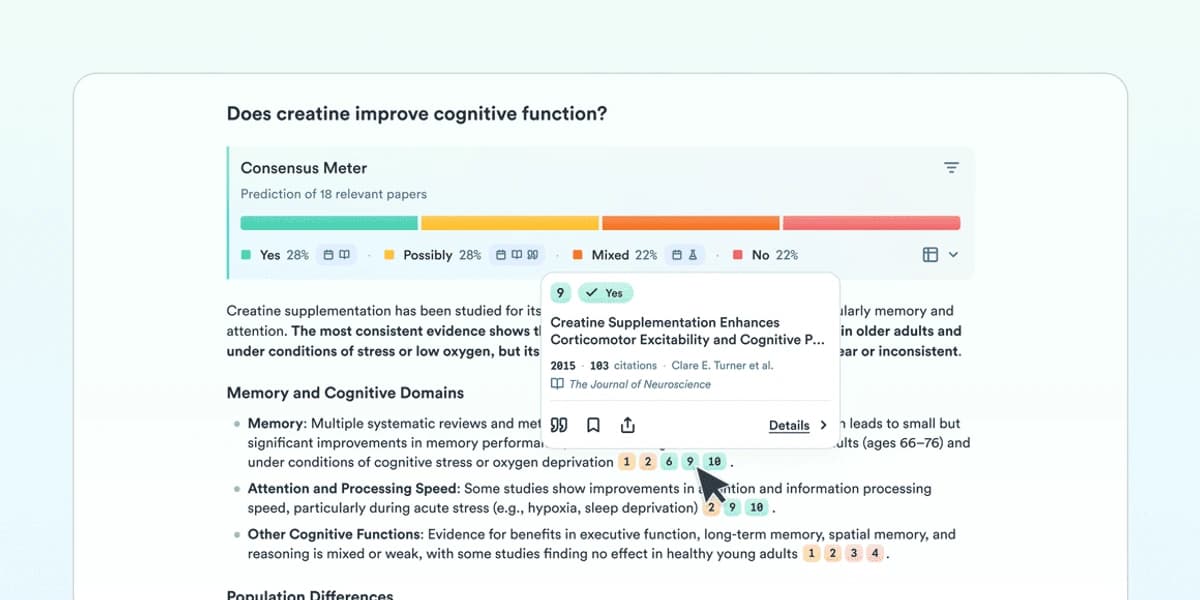
In text form, the screenshot shows a Consensus Meter score for a single research question. It divides found papers into answer positions, shows which papers support each position, and exposes cited paper markers that readers can inspect before trusting the summary.
| Workflow stage | Best first alternative | Source-backed fit | Boundary |
|---|---|---|---|
| Fast evidence Q&A | Consensus | Searches peer-reviewed papers first, then summarizes retrieved evidence for a focused question. | Its answer is a literature snapshot, so inspect the cited papers. |
| Systematic-review extraction | Elicit | Supports paper gathering, screening, extraction, and review-column workflows. | Consensus may still be faster for a single evidence answer. |
| Paper reading and explanation | SciSpace | Focuses on literature review, paper reading, and cited writing support. | Vendor comparison claims still need source checks. |
| Citation context | Scite | Centers Smart Citations and how later papers cite a work. | Citation labels should lead to paper review. |
| Free discovery | Semantic Scholar | Provides free scientific literature search and paper discovery. | Use it to find papers first, then move to another tool for synthesis or source comparison. |
| Owned-source synthesis | Atlas | Works from sources in one project, answers focused questions with citation badges, and supports multi-source comparison. | Use Atlas after you have chosen the source set and need cited answers across those materials. |
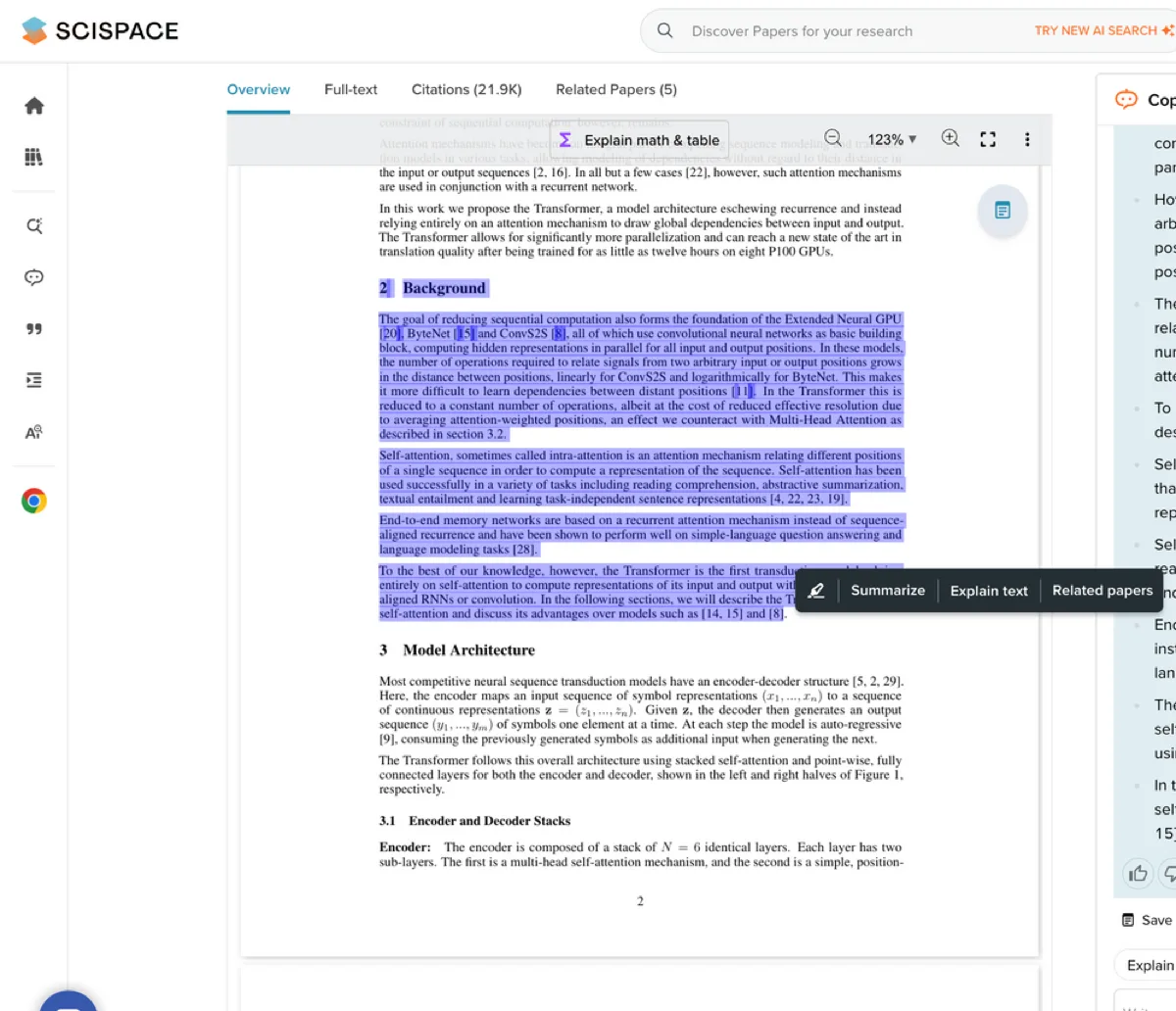
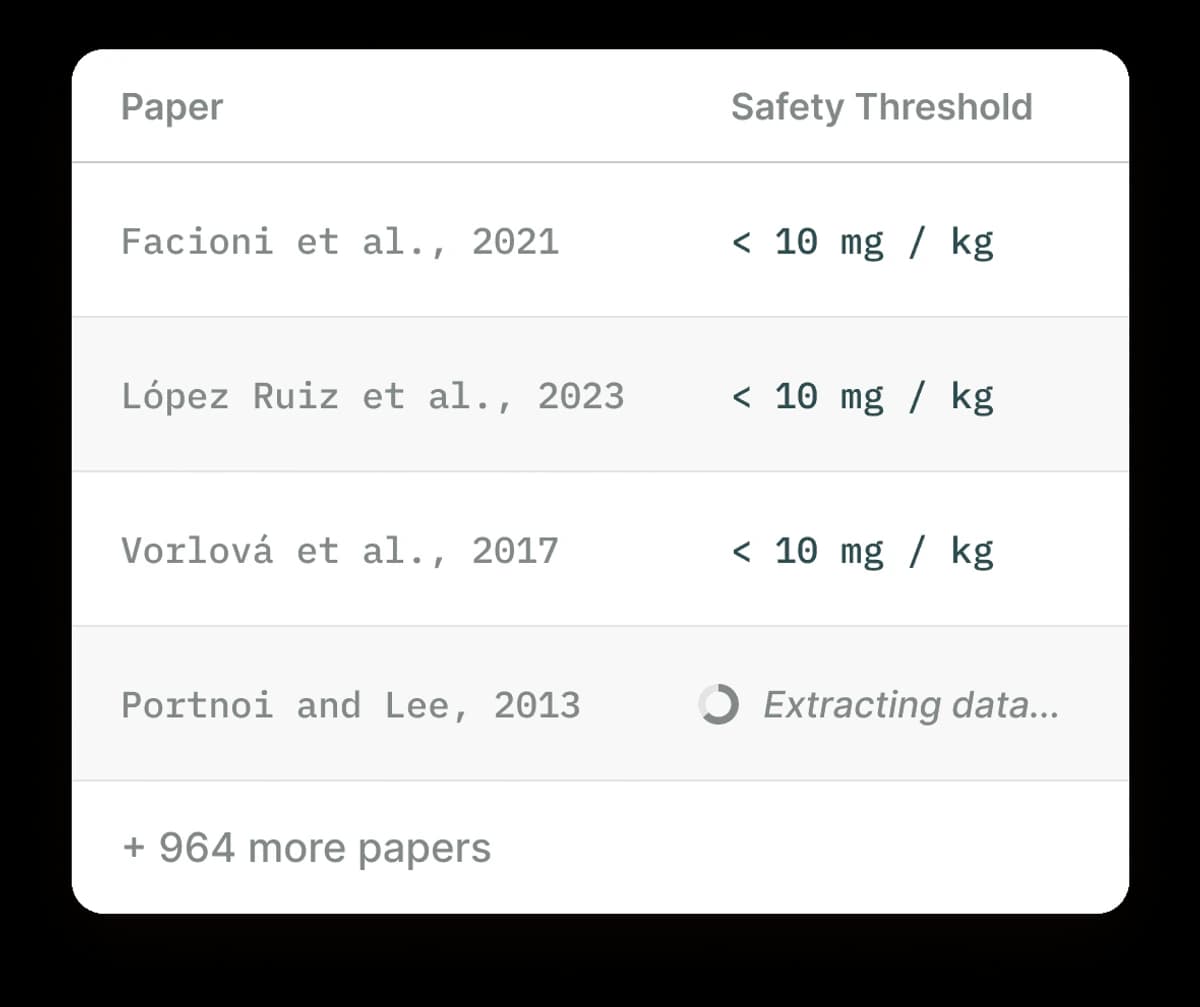
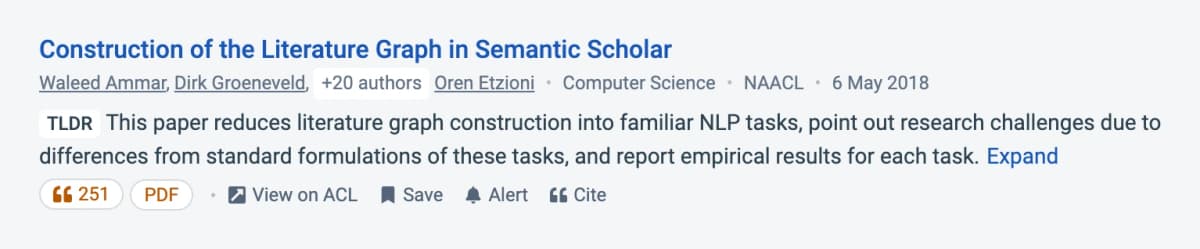
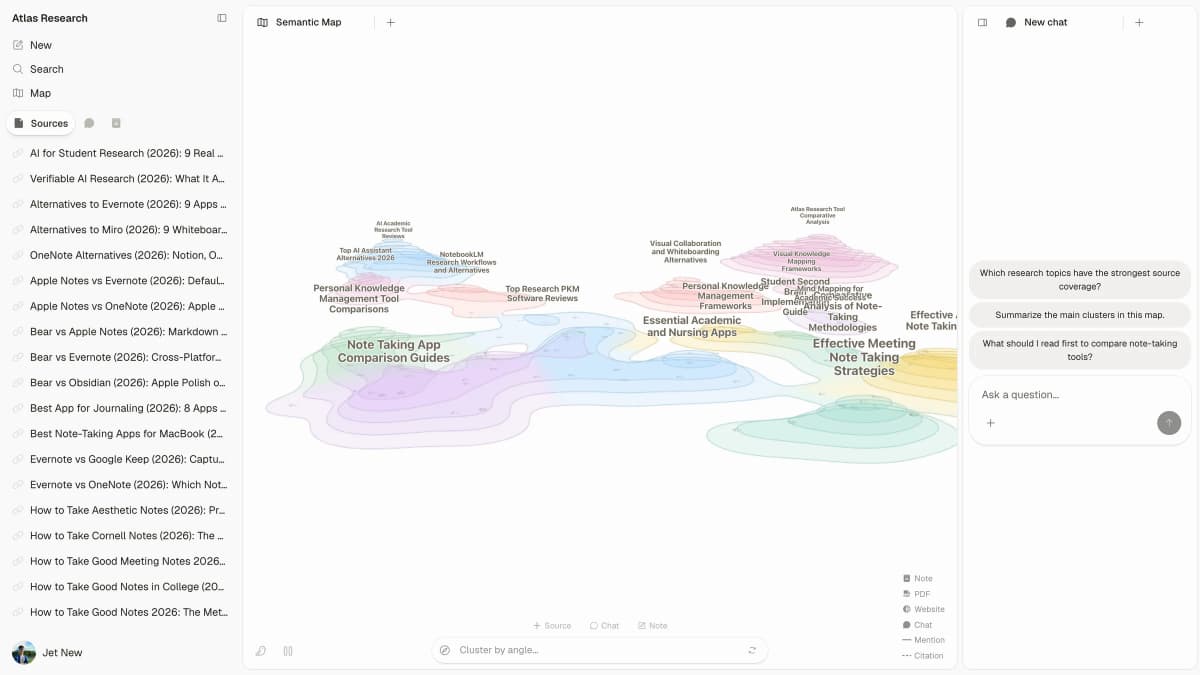
This table follows the research step. You might use Semantic Scholar or Consensus to find papers before review starts. You might use Elicit for review columns and Scite for source context. Then use Atlas when the final source set needs a checked answer across papers.
If the shortlist is only Consensus and SciSpace, use the Consensus vs SciSpace comparison to choose between evidence answers and paper reading.
If source checks are the main concern, the broader AI that cites sources guide compares answer tools by links and passage checks.
Where Atlas fits after discovery
Atlas fits when the problem has moved from search to work with kept sources.
Here is the handoff I would use:
-
Search or screen papers in Consensus, Elicit, Semantic Scholar, or a subject database.
-
Keep the PDFs, papers, notes, web pages, or reports that will support your next decision.
-
Add those sources to one Atlas project.
-
Ask a focused question such as "Where do these papers disagree about the treatment effect?" or "Which source gives the strongest evidence for this claim?"
-
Open the citation badges for key claims and inspect the supporting passages before you save the finding.
Atlas can answer focused project questions with source badges linked to passages, and it can compare several sources. Use those answers as a path back to the source. Check the passage before reusing the claim in your notes, memo, or draft document.
Use Atlas when the hard part is no longer finding one answer. Use it when chosen sources, cited answers, disagreements, and notes need to stay together for a review, memo, or decision.
Which Consensus alternative should you choose?
Use the missing job to choose. Stay with Consensus for a fast paper-backed answer. Try Elicit when the review needs a table with fields. Use SciSpace when one hard paper needs a clearer reading pass. Use Scite before you draw meaning from a citation count. Begin in Semantic Scholar when you need free paper search. Use Atlas when the kept sources need a cited answer across the set.
If the choice is specifically broad web discovery versus paper-first evidence direction, use the focused Perplexity vs Consensus comparison instead of a full alternatives list.
For evidence work, use this pattern. Search broadly. Keep the sources that carry the finding. Synthesize from that retained set. Check the passages behind any claim that will appear in writing.
Consensus can help with the first evidence answer. Atlas helps when that answer needs to become a checked, reusable finding across your own sources.
Synthesize selected sources in Atlas
Bring selected papers into Atlas for cited answers and source-passage checks.