


AI tools can remove the mechanical work that makes literature reviews slow. They will not write the review for you. The C-S-V Framework keeps every claim sourced, verified, and synthesized in your own words.
My 10-minute trace test is simple. I pick one draft paragraph and open its strongest claim. Then I trace it through the AI output, source passage, and PDF. If I cannot finish that check in 10 minutes, the workflow is too loose to trust.
Two rules follow from that test. A paragraph is not draft-ready until its strongest claim traces to a passage. A paper is not excluded until the reject reason is clear enough for another reader to audit.
This guide adds three checks to the usual AI-tool workflow: the C-S-V Framework, the C-S-V Risk Score, and the handoff ledger. For more context, see our complete guide to AI for literature review. You can also compare literature review software tools or read our guide to AI for literature review tools and workflow.

Run your synthesis step in Atlas
Upload screened papers, ask across them, and verify every cited passage.
C-S-V framework for AI literature reviews
The C-S-V Framework is the guardrail for the whole workflow: claim, source, verification. It keeps AI in the role of research aid rather than hidden author.
Use it as a five-day work plan for a small course paper, proposal chapter, or scoping review:
| Day | Main job | C-S-V checkpoint |
|---|---|---|
| 1 | Search and save candidate papers | Record query, database, date, and count |
| 2 | Screen abstracts | Keep include and reject reasons |
| 3 | Pull notes from accepted papers | Mark high-risk fields for manual check |
| 4 | Ask cross-paper questions | Keep only cited answers you can verify |
| 5 | Draft and revise | Trace each key claim back to a source |
Table 1: Five handoffs that keep an AI review easy to audit.
This timeline is not a promise that every review takes five days. It is a pressure test. If a short review cannot pass these five handoffs, a longer thesis review will fail in the same places.
Plan the review
Set the outcome and prerequisites
By the end, you should have a defensible workflow supported by more than AI summaries. The working files should include a search log, a screened paper library, a checked extraction table, a thematic outline, and a traceable evidence base for each paragraph.
Before you start, prepare four things:
- A research question narrow enough to search.
- Inclusion and exclusion criteria.
- A place to store the screened papers.
- A rule for AI disclosure in your course, lab, or journal. If you are doing a formal review, keep the PRISMA 2020 checklist beside your method notes.
Use the table below as the operating contract for the project.
| Review phase | AI can help with | You must own |
|---|---|---|
| Search | Find candidate papers and related concepts | Decide databases, keywords, and scope |
| Screening | Rank abstracts and surface likely inclusions | Make final include/exclude decisions |
| Extraction | Pull methods, samples, findings, and limitations | Verify important fields against the PDF |
| Synthesis | Surface themes, conflicts, and gaps | Interpret why those patterns matter |
| Drafting | Improve clarity and transitions | Write the argument and disclose AI use |
Table 2: Division of labor between AI assistance and researcher judgment across the main review phases.
Keep one audit log beside the draft. It turns AI help into a trail you can defend.
| C-S-V field | What to write down | Why it matters |
|---|---|---|
| Claim | The sentence you want to use | Prevents vague AI summaries |
| Source | Paper, page, or passage | Lets you check the basis |
| Verification | Checked, changed, or rejected | Shows what you reviewed |
| Synthesis note | Why this changes the review | Keeps your own analysis visible |
Table 3: Audit-log fields that preserve the claim, source, verification, and synthesis trail.
Map the time-consuming work
Literature reviews take time because the work is split across many small tasks. Search creates duplicates. Screening creates borderline decisions. Extraction creates tables. Synthesis asks you to remember papers read days apart.
AI helps most when it removes repeated handling. It is weaker when it replaces thinking. Treat the workflow as a time-sink map:
| Time sink | Why it wastes time | Best AI use | Risk if automated blindly |
|---|---|---|---|
| Search expansion | Keyword searches miss adjacent terms | Semantic search and citation-network discovery | Bloated corpus with weak relevance |
| Abstract screening | Many abstracts are obvious rejects | Rank likely includes first | False exclusions if criteria are vague |
| Extraction | Methods and findings are copied repeatedly | Draft extraction tables | Wrong sample sizes or misread outcomes |
| Theme finding | Patterns are hard to hold in memory | Cluster claims across papers | Shallow themes that restate abstracts |
| Citation checking | Draft claims drift away from sources | Link claims back to passages | Hallucinated or unsupported citations |
Table 4: Common literature-review bottlenecks, useful AI support, and the failure to check for.
The goal is not a five-day shortcut. The goal is fewer clerical passes over the same paper and more time spent deciding what the literature means.
Choose general or specialized AI
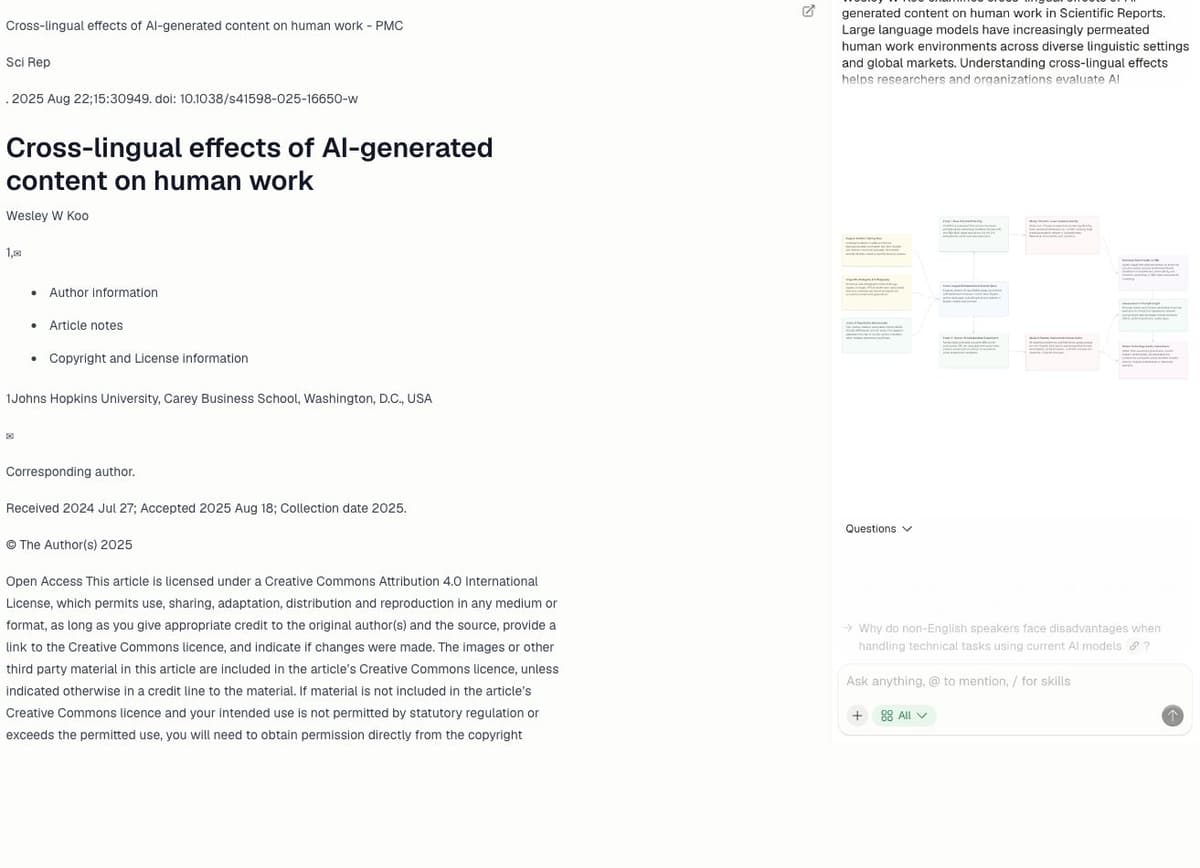
Claude, ChatGPT, and Gemini help with ideas, outlines, and edits. They are weaker as the system of record because they do not keep a stable paper library by default. Specialized review tools are better when the task needs a record you can check. Elicit is built around papers and table columns. Rayyan is built around screen decisions. ResearchRabbit is built around citation links. Atlas is built around uploaded sources, Knowledge Maps, and cited answers across a paper set.
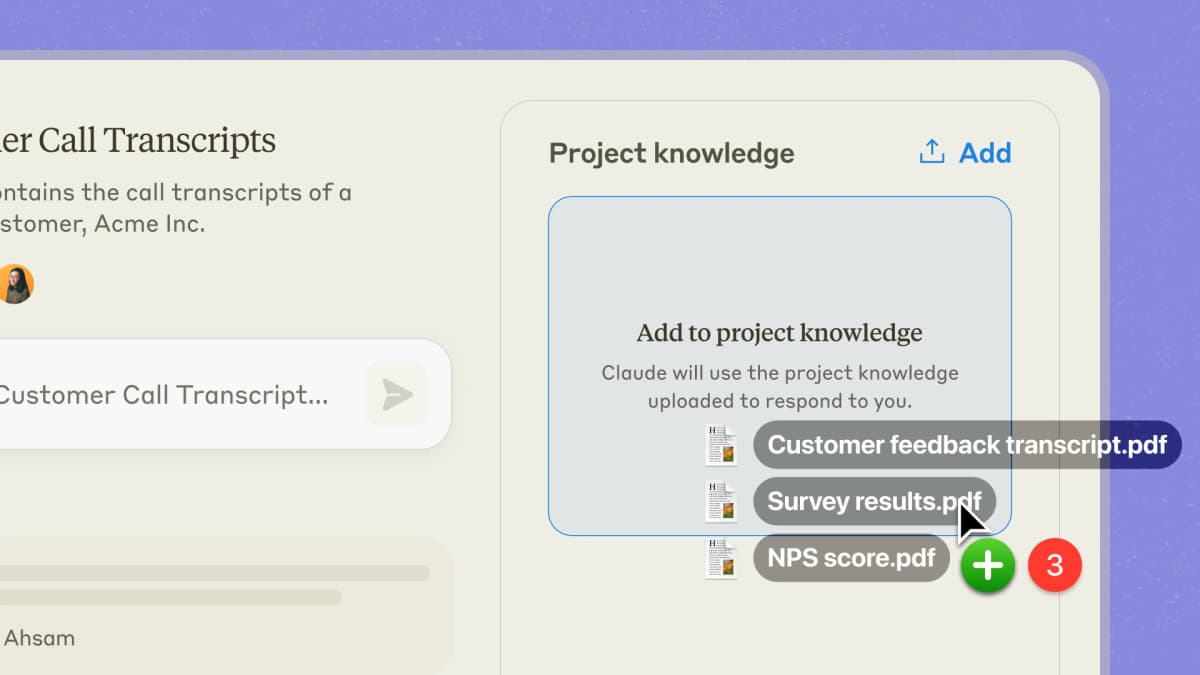
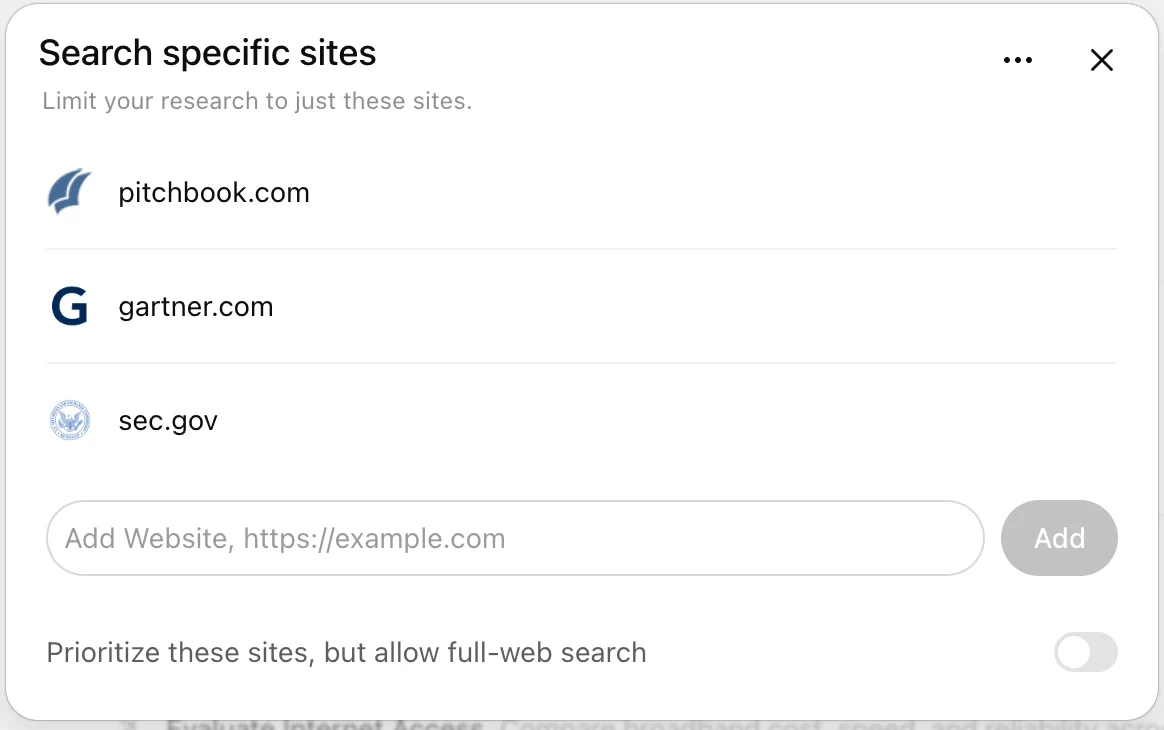
Use general AI when the input is your own prose. Use research tools when the input is a set of papers that must stay easy to audit. Keep AI close to process and the researcher close to judgment. AI can reduce lookup cost. It cannot decide which conflict matters for your field. Use a handoff ledger when you move between tools so the reason for a choice does not disappear.
| Handoff | What must move with it | Failure mode |
|---|---|---|
| Search to screening | Query, date, database, result count | You cannot explain why papers entered the set |
| Screening to notes | Include rule and reject reason | Borderline papers get forgotten |
| Notes to synthesis | Checked fields and source passages | Themes rest on unchecked cells |
| Synthesis to draft | Claim, source, and why it matters | The draft sounds fluent but thin |
Table 5: Handoff records that stop search, screening, notes, and synthesis decisions from disappearing.
AI can speed up each handoff, but it also makes hidden handoffs easier to miss. The researcher protects the review by making each handoff visible.
How to synthesize your corpus with Atlas
After screening, move only the accepted papers into Atlas. Atlas is not the search tool. It is not the screening tool. It is the synthesis workspace for the final paper set.
Use this Atlas workflow after your included set is stable:
- Upload the screened papers into one Atlas project.
- Generate a Knowledge Map for each paper.
- Check each map against the paper's real claim, method, limits, and evidence.
- Open the project Semantic Map to see which papers cluster by theme.
- Ask a cross-paper question: "Which papers say mechanism A explains outcome B, and which papers disagree?"
- Open the cited answer and read the quoted passages in the PDFs.
- Export cited synthesis passages only after you have checked them.
- Rewrite the final paragraph in your own words and add it to the C-S-V log.
The proof to look for is not a polished paragraph. It is a claim trail: answer, passage, and reason. That trail lets you move from AI output back to your own judgment.
| Atlas synthesis step | What to check before using it |
|---|---|
| Upload screened papers | Are excluded papers out of the project? |
| Generate a Knowledge Map | Does the map preserve the paper's real argument? |
| Ask a cross-paper question | Are the papers being compared on the same idea? |
| Read the cited answer | Does each passage support the exact claim? |
| Export cited synthesis passages | Can you turn this evidence into an original paragraph in your own words? |
Table 6: Atlas synthesis checks that turn cited answers into source-checked draft material.
If synthesis is the stage slowing you down, upload at least five screened papers to Atlas and ask one question across the set. Check every cited passage before adding the result to your review.
Define the research question
A strong review starts with a focused question. Move from a broad topic to a narrow one. Name the group, key terms, dates, and scope. For example:
- Too broad: "How does social media affect mental health?"
- Better: "How is Instagram use linked to body image concerns among women in college?"
- Best: "What do 2020-2025 studies say about Instagram use and body image concerns among women in college?"
Use a general AI assistant to test versions of your question. Upload your proposal or outline and ask:
- "What smaller questions does this question imply?"
- "What related concepts should I search for?"
- "What disciplinary perspectives might address this question?"
This helps you find search terms before you hunt for papers. AI cannot tell you whether your question is new or worth asking. That judgment comes from advisors, seminars, and field reading.
Set the scope before using AI
Do not open an AI tool until the scope is written down. Scope is the part of the method that says what belongs in the review and what does not.
Write three lines before search:
- Topic boundary: Instagram use and body image concerns.
- Population: Women in college.
- Evidence window: Empirical studies from 2020-2025.
This scope does two things. It gives AI a sharper prompt. It also gives you a reason to reject papers that look interesting but miss the review question.
Keep research judgment with the researcher
AI changes the unit of work in a review. Without AI, the hard part is often finding and copying details. With AI, the hard part is deciding which AI-made connections are real. That shift creates a new risk: a weak review can look organized because the summaries are clean. Read the source link before trusting the sentence. Ask whether the paper supports the claim, or whether the tool merely matched two similar phrases.
This is why AI does not remove academic judgment. It moves judgment earlier. You judge scope before search, inclusion before notes, evidence before synthesis, and claims before the draft.
Score each paragraph before drafting
Use the C-S-V Risk Score before a paragraph enters the draft. Score each draft paragraph from 0 to 6. Give 0, 1, or 2 points for each check:
- Claim: 0 for vague or over-broad, 1 for clear but too general, and 2 for narrow and testable.
- Source: 0 for no source passage, 1 for an indirect source, and 2 when the passage supports the exact claim.
- Verification: 0 when unchecked, 1 when checked only in the AI output, and 2 when checked against the PDF.
Treat 0-2 as rewrite, 3-4 as revise, and 5-6 as draft-ready. This score separates fluency from trust. A fluent paragraph with a weak source still fails. You spend less time copying notes, but more time checking the link between claim and source. That trade works only when the check is clear.
Check for C-S-V failure patterns
Watch for these failure patterns before you trust an AI-assisted paragraph:
- Source drift: the cited paper is related to the topic but does not support the exact sentence.
- Scope creep: the answer includes papers that your search rule would have excluded.
- Method flattening: qualitative, quantitative, and review papers get treated as the same kind of evidence.
- Agreement inflation: two papers using similar terms are described as agreeing, even when their claims differ.
- False gap: the AI names a missing keyword as if it were a research problem.
- Citation laundering: a weak AI claim looks stronger because a source link sits beside it.
These are not grammar problems. They are research judgment problems. Fix them before editing for style.
AI Screening Accuracy
AI screening helps rank which abstracts to read first. The researcher makes every inclusion and exclusion decision and records the reason.
For each excluded paper, keep one of four labels:
| Label | Meaning |
|---|---|
| Out of scope | The topic does not match the review question |
| Wrong population | The people or setting do not match |
| Wrong method | The study type is outside your rules |
| Unsure | Needs human review before exclusion |
Table 7: Screening labels that keep AI-ranked abstracts easy to review.
The "unsure" label is the safety valve. If an AI tool sounds sure but your rule is vague, keep the paper in the unsure pile. Move it only when you can defend the call.
Step 2: Conduct a Systematic Search
Once your question is clear, find the right papers. Some searches are too narrow and miss key work. Others are too broad and return weak matches.
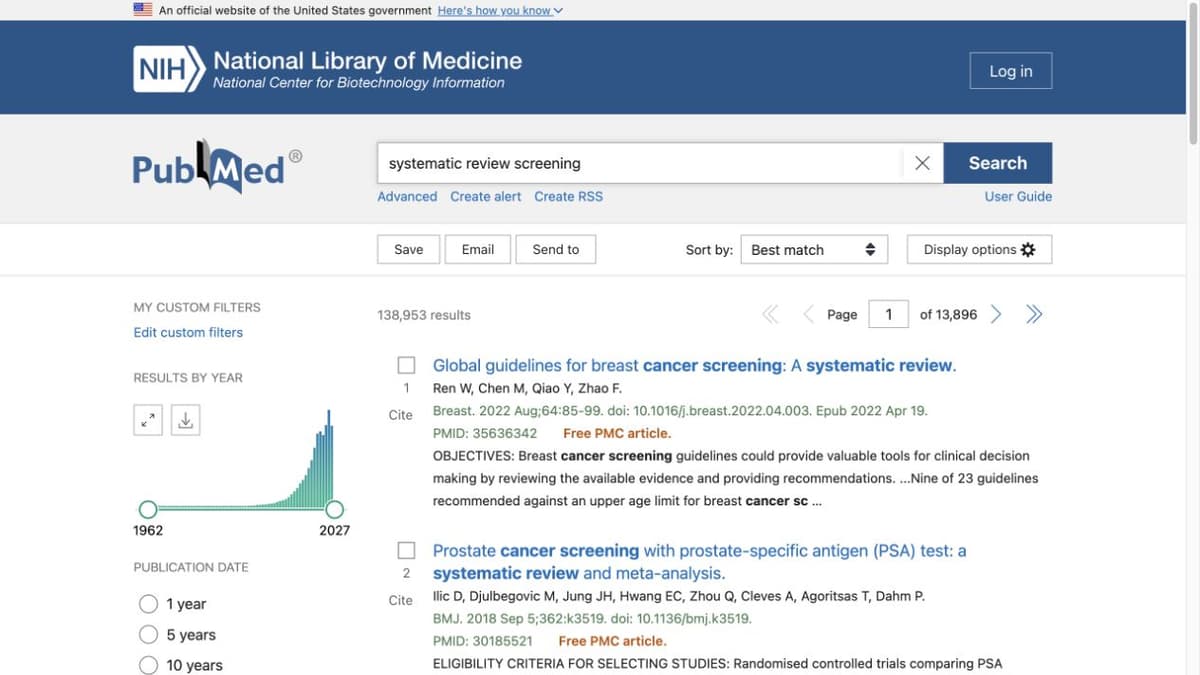
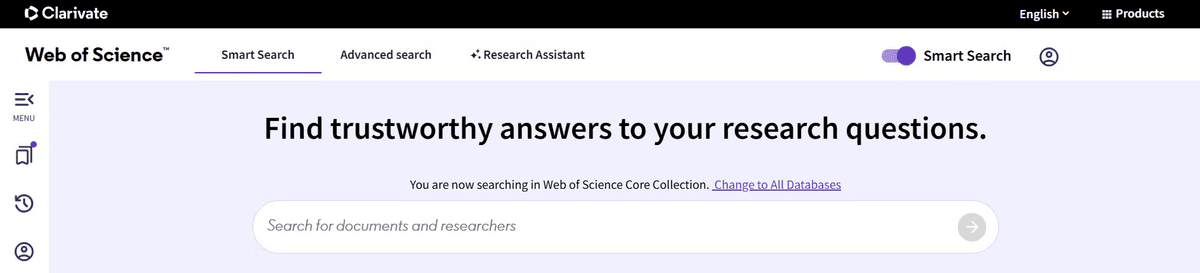
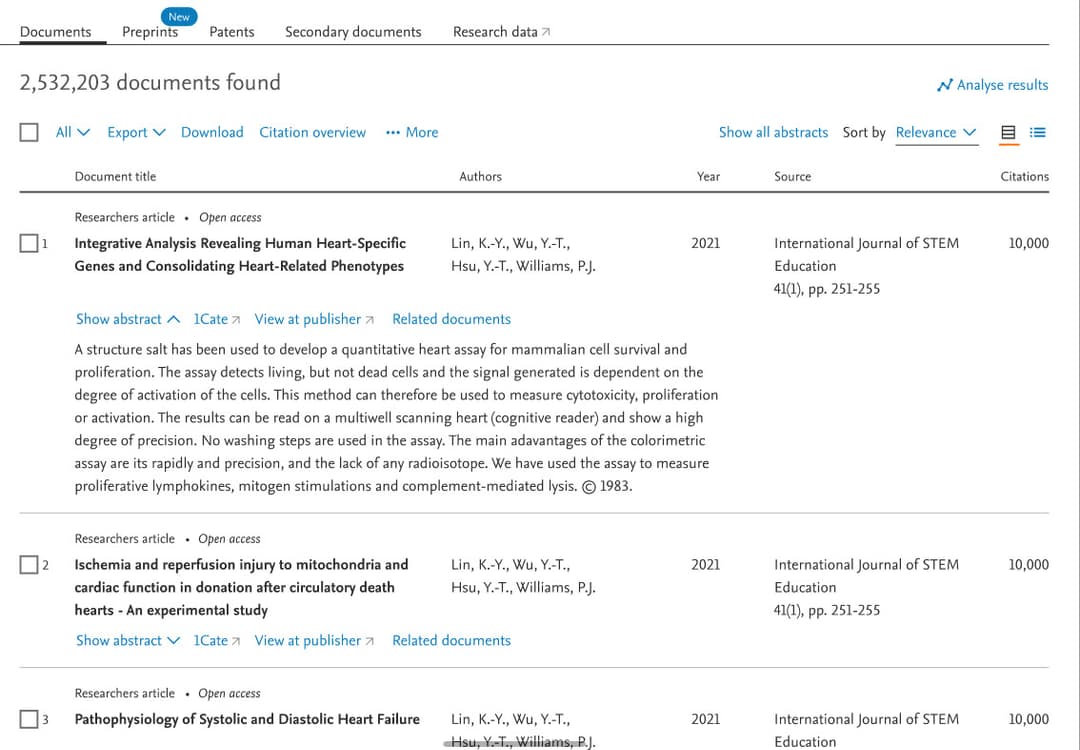
Use a three-pass search. First, run a normal database search. Second, use semantic search to find papers that use different words. Third, map citations from the best seed papers. Keep a log with the query, tool, date, and count.
Traditional Search Strategy
- Pick 3-5 databases for your field (PubMed, PsycINFO, Web of Science, Scopus, etc.)
- Build keyword sets with Boolean operators
- Run searches and export results
- Check reference lists of key papers
AI-Assisted Search Strategy
Layer AI tools on top of traditional methods:
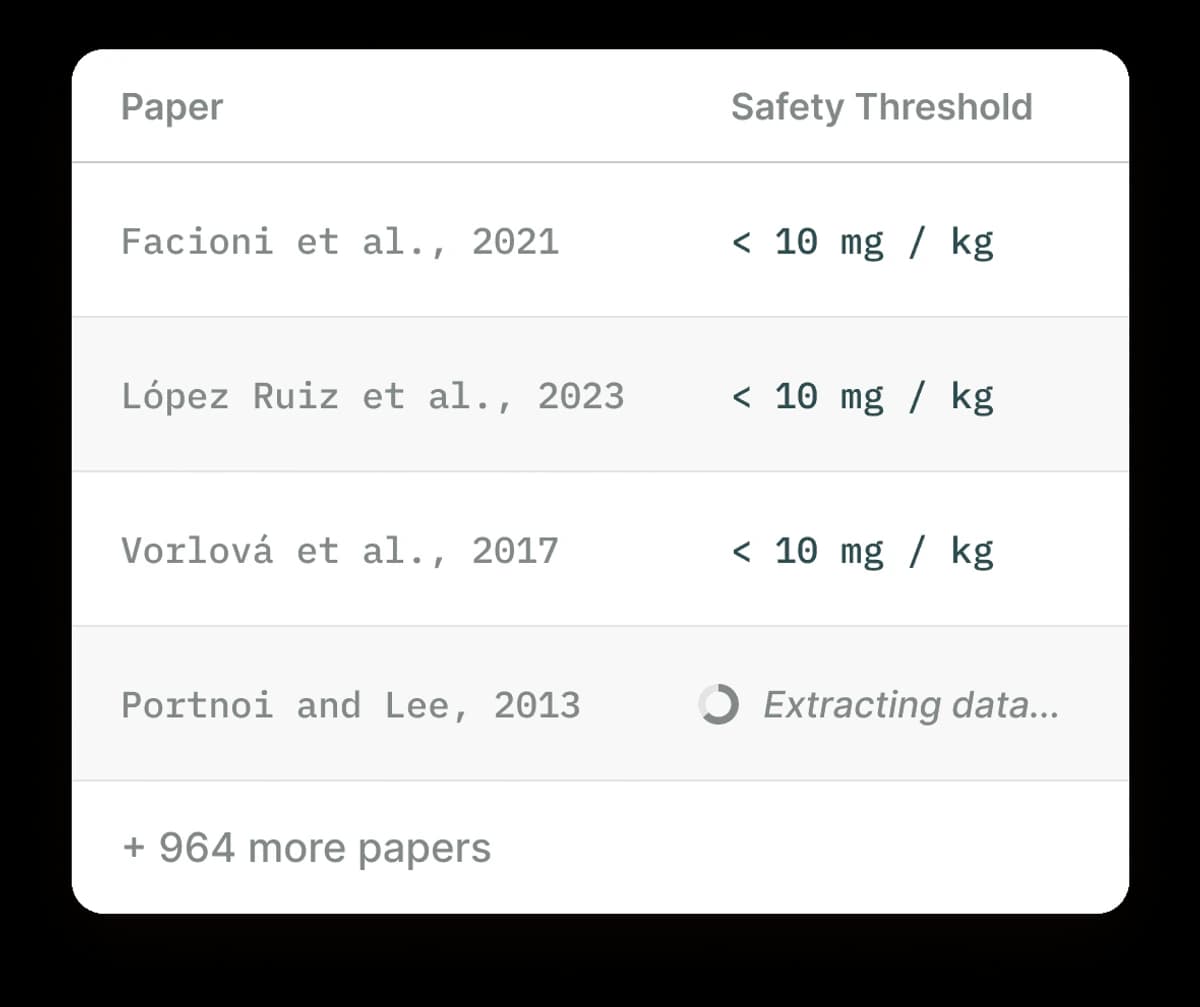
Semantic search with Elicit:
- Enter your question in plain language
- Elicit finds related papers even when keywords differ
- Good for topics that cross fields
- Prompt example: "Find 2020-2026 studies on Instagram use, body image concerns, and women in college. Favor papers with clear methods and measured outcomes."
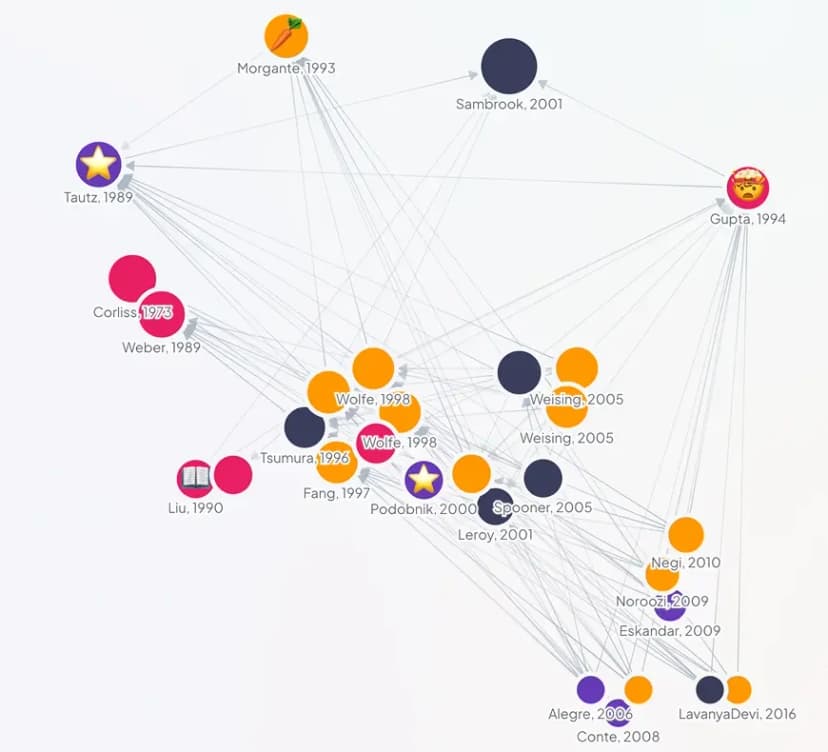
Network discovery with ResearchRabbit:
- Add 5-10 seed papers you already know are relevant
- ResearchRabbit maps citation links and suggests related work
- Finds papers you may miss with keyword search alone
- Prompt yourself before adding a paper: "Is this a seed paper, a background paper, or a likely exclusion?" Keep seed papers that guide the network toward relevant work.
Consensus checking:
- Use Consensus to see what the field broadly agrees on
- Helps you spot where your review can add value
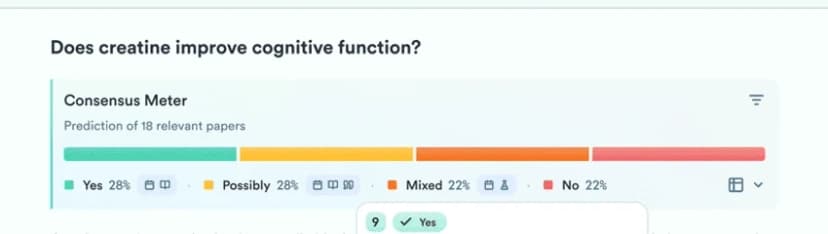
Not sure which discovery tool fits your needs? Our comparison of the best AI research assistants covers strengths and weaknesses in detail.
Recommended Workflow
| Step | Tool | Purpose |
|---|---|---|
| Database search | PubMed, Scopus, etc. | Complete, reproducible search |
| Semantic search | Elicit | Find papers missed by keywords |
| Citation network | ResearchRabbit | Discover connected work |
| Field consensus | Consensus | Understand the field |
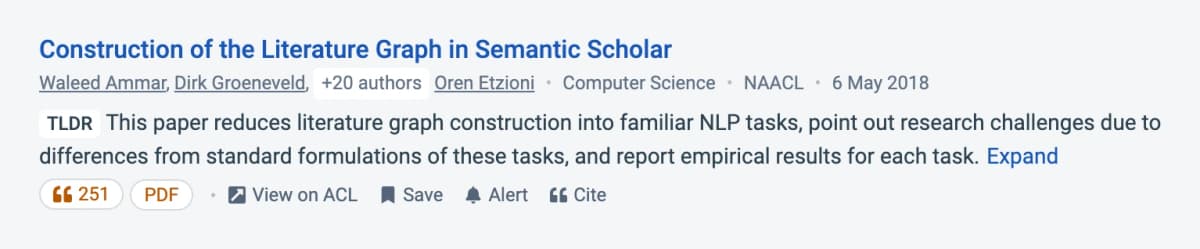
| Ongoing alerts | Semantic Scholar | Catch new publications |
Table 8: Search workflow that blends databases, semantic search, and citation maps.
Step 3: Screen and Select Papers
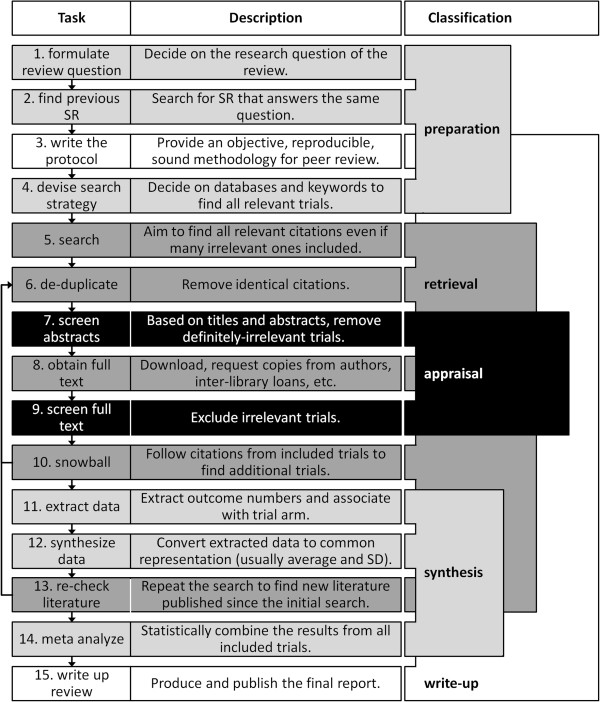
You've found 200+ papers. Now decide which ones belong in your review.
Setting Inclusion Criteria
Before you read, set:
- Date range (e.g., 2018-2025)
- Study types (empirical, theoretical, meta-analyses)
- Population (who was studied)
- Method (qualitative, quantitative, mixed)
- Language (typically English, but note this limitation)
AI-Assisted Screening
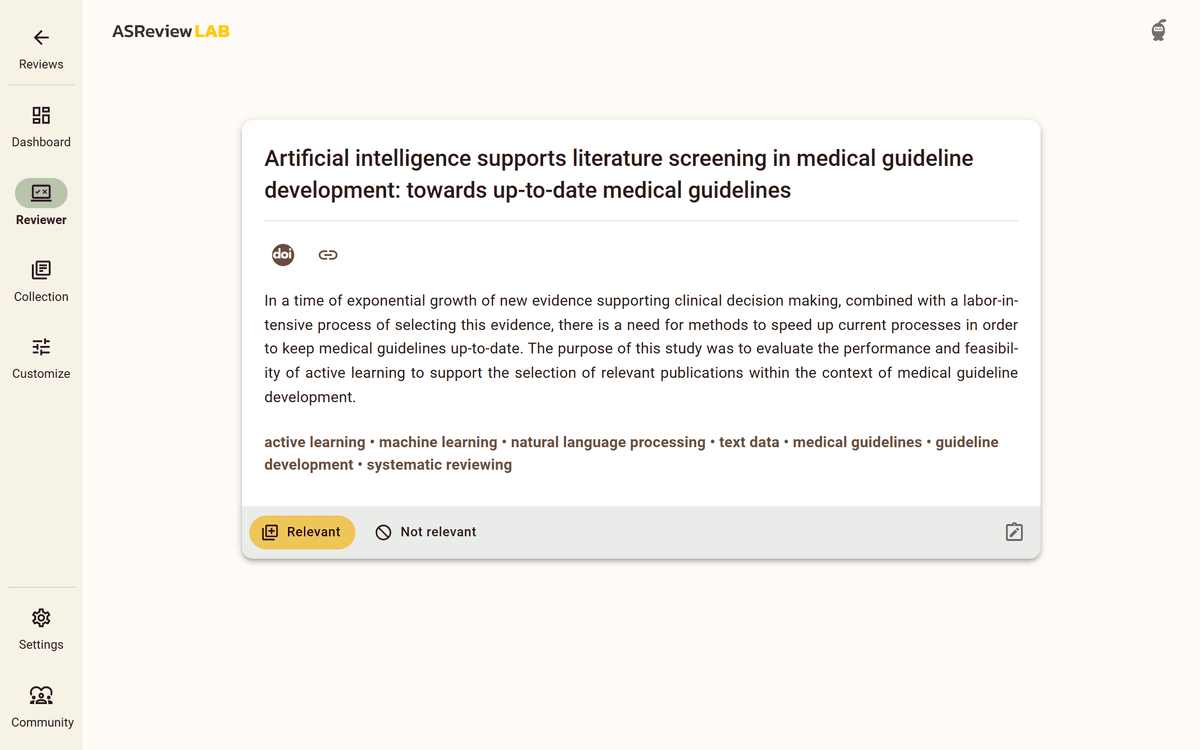
Rayyan is a strong screening tool, especially for formal reviews:
- Upload all your search results
- Mark a few papers as include/exclude
- The AI learns your rules and ranks the papers left
- Saves hours of abstract reading
Elicit also helps here:
- Bulk import your paper list
- AI ranks papers by fit with your question
- Quick filters for study traits
What to Watch For
AI screening tools make mistakes. They miss good papers and flag weak ones. Use AI to sort the reading order. Do not let it make final calls. Always review close cases by hand.
For common screening mistakes, check out literature review mistakes that waste your time.
Step 4: Extract Key Information
Now read the papers you kept. Pull only the facts you need.
What to Extract
Use the same note template for each paper:
- Citation details (author, year, journal)
- Research question or claim
- Method (design, sample, measures)
- Main findings (results, effect sizes)
- Limits named by the authors
- Why it matters for your themes
AI Tools for Extraction
Elicit handles table notes well:
- Define the columns you need
- Let AI draft the cells across your papers
- Export to a sheet for review
SciSpace is useful for understanding individual papers:
- Mark hard passages for AI explanations
- Helpful for papers outside your main field
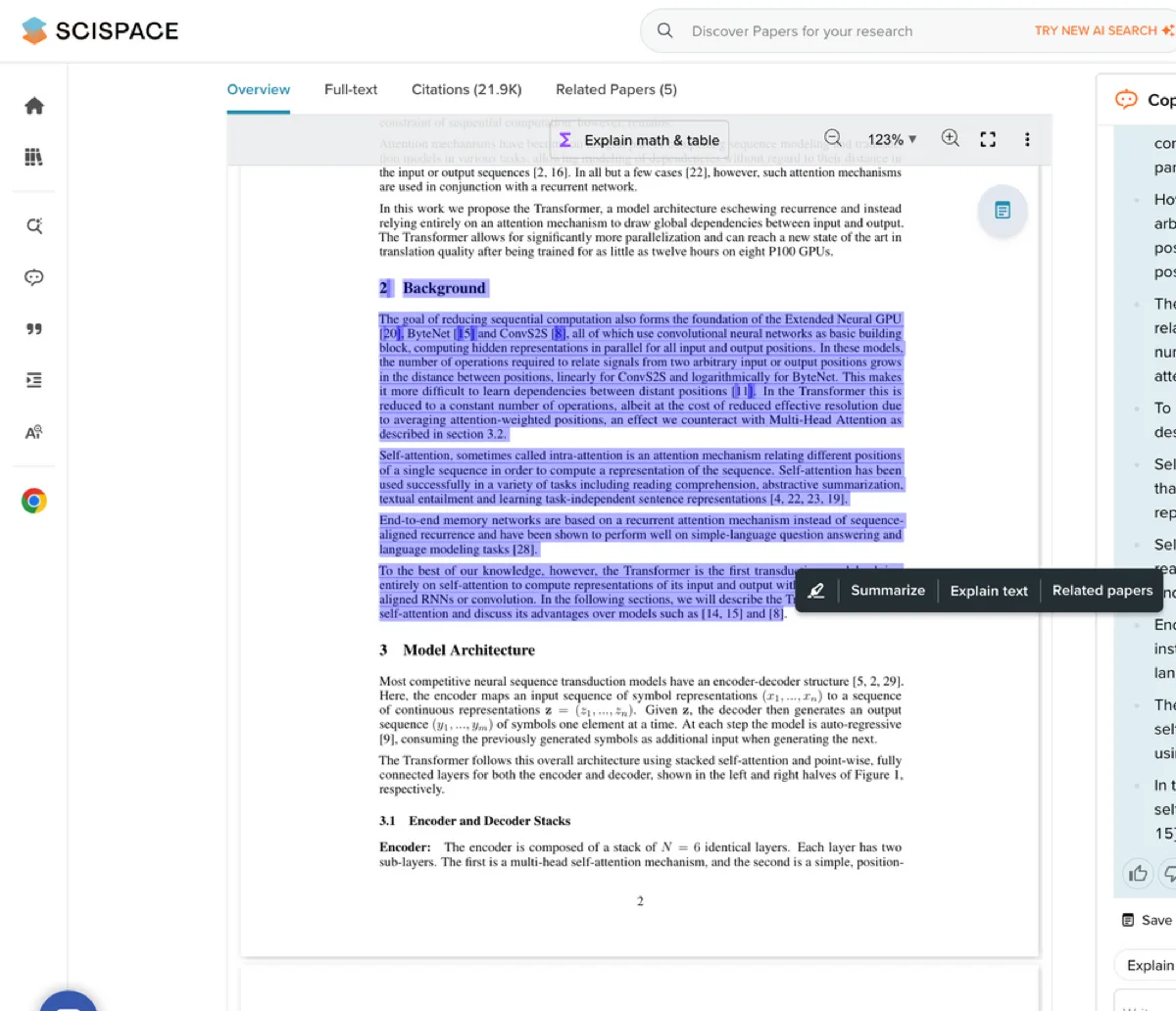
A good research paper organizer also helps. It keeps sources in one place, so notes are easier to check.
Verification Is Non-Negotiable
AI notes are useful, but they can be wrong. Check the papers that carry your main claims by hand. Bad facts weaken the review.
Step 5: Analyze and Identify Themes
With your extraction table complete, look for patterns. This is where the review shifts from summary to synthesis.
Ways to Find Themes
The matrix method: Create a grid with papers as rows and themes as columns. Fill in how each paper treats each theme. Empty cells show gaps.
Concept mapping: Sketch how major ideas relate across papers. Which papers support each link? Where do findings conflict?
Time-based view: How has the topic changed over time? What did early papers assume that later papers challenged?
For a deeper dive, see our guide on how to synthesize research papers.
How AI Assists Synthesis
Upload your table or papers to Atlas and ask:
- "What are the main themes across these papers?"
- "Which papers disagree on [specific topic]?"
- "Which methods are most common?"
- "What gaps exist in the current literature?"
AI is useful here because it can compare many papers at once. That is hard to do when you read one paper at a time.
Your Analysis
AI can find patterns. Your job is to explain them. Why do findings conflict? What do the gaps mean? How does the evidence affect your thesis? This is where the review earns its argument.
Step 6: Write the Review
You have your themes, your evidence, and your argument. Now write.
Structure Options
Theme structure (most common): Organize sections around themes. Each section compares several papers around one idea.
Time-based structure: Trace how ideas changed over time. Best for topics with a clear history.
Method structure: Organize by research method. Best when methods drive the results.
AI-Assisted Drafting
Use AI after your outline and evidence are already in place:
- Outline first: Create your section structure from your themes
- Draft sections: Write each section yourself, then use AI to suggest improvements
- Check flow: Ask AI to find gaps in your argument
- Polish sentences: Ask for clearer wording only after the paragraph's evidence is checked
For more on ethical AI use while writing, see our guide on AI for academic writing.
What AI Should Never Do
- Write your thesis statement or argument
- Make evaluative claims about paper quality
- Generate full synthesis paragraphs from scratch. That is your job.
- Replace your voice and perspective
Step 7: Revise and Polish
A first draft is not a final draft. Revision is where the review gets stronger.
Use revision to check each section against the question. Make sure it compares sources, names conflicts, cites well, and states the review's limits. AI can flag weak claims or awkward flow. It cannot decide whether the argument works.
Common Mistakes and Troubleshooting
Synthesizing before screening is complete
The biggest mistake is asking AI for synthesis before the paper set is fixed. If the set keeps changing, each answer changes too. Freeze the set before asking synthesis questions, and record the freeze date in the search log.
Using one chatbot for every stage
The second mistake is using a general-purpose chatbot as the only research environment. That can work for one paragraph. It breaks down when you need a trail from draft claim to PDF passage.
Trusting extraction tables without checking
The third mistake is accepting extraction tables without checking sample size, group, method, and core finding. Those fields drive the argument.
Letting AI replace the analysis
The fourth mistake is outsourcing the analysis. AI can show that two papers disagree. It cannot decide why that disagreement matters for your field, theory, or thesis.
Repairing a generic draft
If the draft feels generic, return to the evidence matrix. Add one sentence per paragraph that explains what changed in your understanding after comparing papers. That sentence is usually the start of your contribution.
Tools at Each Stage: A Summary
Read this table as a handoff map. Pick the tool for the current stage, then write down what decision moves to the next stage.
| Stage | Primary Tool | AI Role | Your Role |
|---|---|---|---|
| Research question | Claude/ChatGPT | Brainstorm variations | Judge significance |
| Search | Elicit, ResearchRabbit | Semantic discovery | Set criteria |
| Screening | Rayyan, ASReview | Rank relevance | Final decisions |
| Extraction | Atlas, Elicit | Populate data | Verify accuracy |
| Synthesis | Atlas | Find patterns | Interpret meaning |
| Writing | Claude/ChatGPT | Edit and refine | Write the argument |
| Revision | AI editors | Check coherence | Ensure quality |
Table 9: Tool choices for each literature-review stage and the decision the researcher still owns.
Ethical Considerations
Using AI for your review is ethical when you are clear about it. Disclose which tools you used and how in the method section. For citation handling, check the APA Style guidance on citing ChatGPT and other AI tools.
You still own the argument. Verify every claim, citation, and data point, even if AI pulled it. Policies vary by course, lab, and journal, so check the local rule before you begin.
Run your synthesis step in Atlas
Upload screened papers, ask across them, and verify every cited passage.