

A theoretical framework explains how an established theory guides your study. It names the ideas you will use, shows why they fit the research question, and sets limits on what you can conclude.
The hard part is choosing a theory for a reason you can defend. Two theories may concern the same topic while explaining different things. A theory about plans to act and a theory about reasons for acting can both inform school research.
Start by comparing their claims against your question and the evidence you could collect. The worked example below produces a provisional choice for supervisor review. It uses real theory texts and a published study, but the proposed new school study is hypothetical.

Compare theories against your question
Check candidate theories against selected research sources.
What a theoretical framework explains
Your framework gives the reasons for using a theory in this study. A reader should know which ideas matter, which links you expect, and how the theory will help you make sense of what you find.
Grant and Osanloo's dissertation guidance recommends carrying theory through the research question, literature review, design and analysis. Naming a theory once, then leaving it behind, gives the reader little basis for judging its use.
A literature review looks at what past studies say. The framework states the view you take within that work. You may read studies that use several theories before you choose one to guide your own question.
A conceptual framework sets out the ideas and planned links in a study. It can draw on a known theory. Fields use these terms in different ways, so check your course guide. The same rule may not hold for every thesis.
Start with the question and evidence
Write the question before you search for a famous theory. State what you want to explain, who it concerns, where it happens and what counts as the outcome. Ask whether the theory can explain that outcome at the level you need.
For this example, a researcher asks: "Which beliefs relate to pupils' intentions to take part in physical activity during school recess next term?" The outcome is a stated intention. It is not a record of how much activity pupils later perform.
This wording still needs work. State which pupils, which form of exercise and which time period you mean. Pupils need to answer about the same thing. One may think of running while someone else thinks of a team game.
Ajzen's questionnaire guidance calls for defining the target, action, context and time. Use that discipline to sharpen the question before deciding what evidence to seek. Do not copy a questionnaire from another population and assume its measures fit yours.
Build a small reading set with three purposes:
- Read the original or authoritative account of each candidate theory to establish its concepts.
- Read studies that apply those theories to a similar question, population or setting.
- Read evidence that exposes limits, conflicting findings or plausible rival explanations.
Note why each paper belongs in the set. A study of adults who exercise in their free time may offer useful measures, but its setting differs from school recess. Keep that gap in view when you make your choice.
If you have many papers, organize the research sources before comparing them. Give each source a role: theory definition, prior application, measurement evidence or challenge. A long folder of PDFs does not itself justify a framework.
If you use AI to help find or screen papers, define those tasks before asking it to compare theories. The literature review AI workflow explains how search, screening and synthesis serve different roles. Keep a record of what you searched and why you kept each paper.
Compare two theories for one question
The Theory of Planned Behavior, or TPB, is one option. It links attitude, subjective norm and perceived behavioral control to intention. These mean how a person views an action, what they think others expect, and how able they feel to act.
Self-Determination Theory, or SDT, offers another. Ryan and Deci's account examines motivation and the conditions that support it. It distinguishes reasons for acting and discusses autonomy, competence and relatedness. This helps frame questions about choice, pressure and engagement.
Neither theory earns its place just because a past paper used it. Ask what each helps you explain and whether your study needs that help. The table gives our view of fit for the made-up recess study. It reports no new school data.
| Selection check | TPB contribution | SDT contribution | Consequence for this question |
|---|---|---|---|
| Outcome to explain | Beliefs and constructs linked to intention | Quality and sources of motivation | TPB gives the more direct starting point for a question about plans to act. |
| Concepts to examine | Attitude, subjective norm and perceived control | Autonomous and controlled reasons for acting | Decide whether reasons for acting are part of the question or a separate extension. |
| Evidence to prepare | Measures tied to the specified recess activity and period | Measures that distinguish types of motivation | Review suitable measures rather than treating a general enthusiasm score as either theory's construct. |
| Reason to revisit | Intentions may not become action | Motivation may add an explanation the initial question omits | Reconsider the scope if the study must explain sustained participation or the effects of choice and pressure. |
Table 1: The two theories contribute different explanations to the same proposed school study.
TPB fits the question's focus on beliefs and plans to act. That does not make it the best theory for all school sport research. Use the table to start a case for your choice, then test that case through more reading.
If the question shifts to why pupils join in by choice or feel forced to do so, SDT has a larger role. The new question asks about reasons for acting. That shift may change the theory you need and the facts you must gather.
Using both theories needs its own case. State what each adds, where their ideas overlap, and which extra measures you need. If the second theory adds no clear purpose, it makes the study harder to judge.
Read a prior model with care
A relevant study by Pasi and colleagues combined SDT and TPB in school pupils' physical activity research. It provides a useful prior application to read alongside the original theory texts.
The diagram shows the model the authors planned to test. Perceived autonomy support links to the two types of motivation. Those link to attitude, subjective norms and perceived behavioral control. The arrows lead to intention on the right.
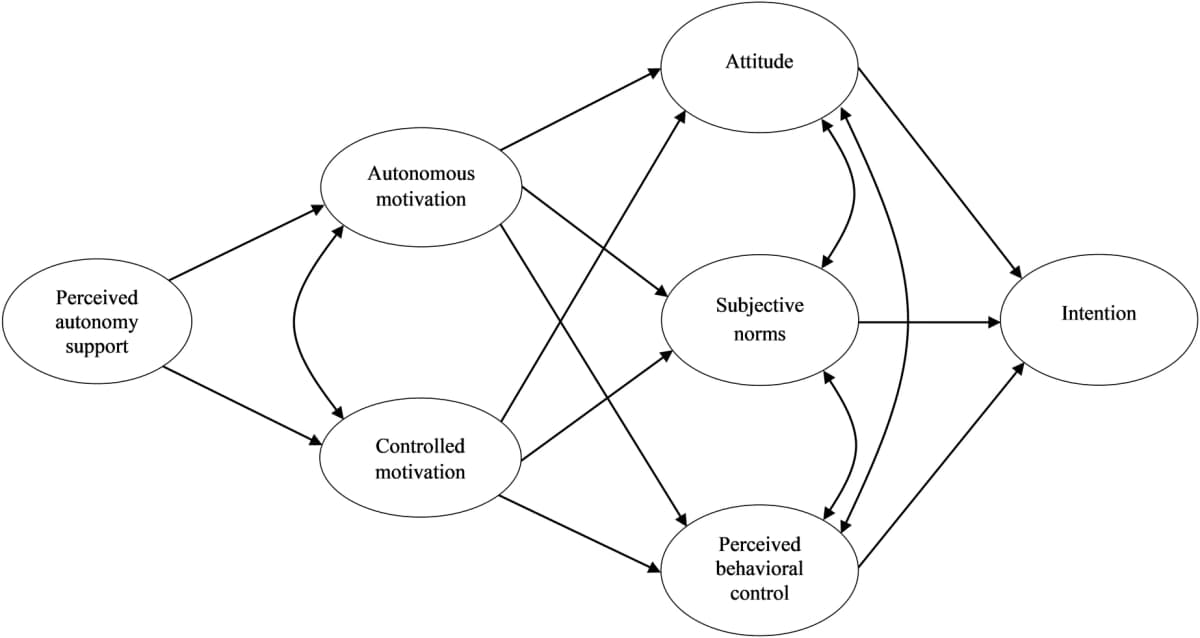
Figure 1 from Pasi et al. (2021), reproduced under CC BY 4.0, shows proposed relationships between the constructs.
Read the methods and results before you call those arrows findings. Pupils gave self-reports, and the study examined links between scores. The first model had poor fit, so the authors changed it. This figure does not prove every path or show cause and effect.
Keep three records: what the theories claim, what the past study found, and what you plan to test. A school setting makes this paper useful to read. It does not mean its findings will hold in your school.
Check the outcome with care. The paper concerns plans to act and calls for work on what pupils later do. A note that says it explains actual recess exercise goes too far. Fix that note before you use it to support your choice.
Write the argument for your choice
Write the framework as a case for your choice. State the problem, define the theory and explain why its ideas fit. Show how they guide the facts you plan to gather. Give the rival theory a fair hearing and state the gap that remains.
Here is a short outline for the made-up study. It is our draft, rather than a quote from a theory text. It still needs source links, a full account of the theory and review of the study plan:
This study asks which beliefs relate to pupils' plans to be active at recess next term. TPB is the starting framework. The question concerns how pupils view the action, what they think others expect, and how able they feel to act. These ideas will guide the search for suitable measures. SDT offers a way to look at reasons for acting, but that is not yet the main aim. If the aim changes, we will review the framework. Plans to act will not show what pupils later do or prove cause and effect.
Add source links where the full chapter explains the theory's claims and its use in past work. Define terms as you use them. Make clear whether "control" means how able a pupil feels or a rule that limits what they can do at school.
Link the framework to the method and evidence you plan to use. State which ideas you need facts about and why. Explain how you will check or adapt measures, and what the design lets you claim. A theory helps you make these choices but leaves more work to do.
Check your programme's requirements for placement and length. Sussex's proposal guidance illustrates how expectations differ across disciplines. Use the argument's completeness to guide revision, then fit it to the required format.
Check your theory sources in Atlas
Use Atlas to compare a reading set once you have a question and theories to check. Add the theory texts and useful papers to a project. Wait for each source to finish processing before you ask about it.
The purpose is to produce a comparison you can inspect. Research synthesis helps connect the readings, but the framework still needs your judgment about theoretical fit. Keep the new proposal distinct from evidence reported by the papers.
- Start a chat and mention the TPB text, the SDT text and the Pasi study by source name.
- Ask: "For my proposed question about recess activity intentions, compare what these theories explain. Identify relevant constructs, the evidence each would require and a limitation from the prior study. Cite the sources and separate my proposal from reported findings."
- Open each citation. Check that the passage supports the comparison and read enough surrounding text to preserve its meaning.
- Correct any claim that turns intention into observed behavior or a proposed arrow into a confirmed result.
- Save the checked fit table and provisional choice in a note, with source links and unresolved questions for your supervisor.
If a cited passage does not support a cell, mark that point as open while you read more. A source link lets you check the basis of a claim. You must still judge whether the set is complete and whether each measure fits.
Bring the limits to supervisor review
Bring the fit table, your reasons and the papers that support the choice. Ask your supervisor to challenge the case and the facts you need. You can then discuss why the theory fits, rather than just whether its name sounds right.
Review these points before expanding the chapter:
- Does the framework address the question's outcome, setting and level of explanation?
- Are the concepts defined consistently across the theory text, prior studies and proposal?
- Can the planned evidence distinguish those concepts rather than merge them into one vague score?
- Which assumption or rival explanation deserves further reading?
- What change to the question would require a different theory or additional evidence?
Keep a note of that last condition. In this example, to ask what pupils later do you need more than their stated plans. To ask about choice and pressure you need to look more closely at their reasons for acting. Either shift calls for a fresh review.
Westcliff's doctoral guidance encourages stating assumptions and examining theory limits. Carry those limits into the method and discussion. A defensible choice stays open to evidence that challenges it.
Compare theories against your question
Check candidate theories against selected research sources.