
Topic hub
Literature Review
Guides for reviewing, organizing, and synthesizing research literature, with source-grounded workflows for stronger reviews and defensible arguments today.
68 articles · Updated Oct 7, 2026
Start here
AMSTAR 2: Build a Review Appraisal Evidence Note
Background of the Study With a Source-Linked Example
PRISMA Abstract Checklist: Check Each Reported Item
Integrative Review: Compare Different Kinds of Evidence
Research & Synthesis
Literature Review vs Annotated Bibliography: A Worked Example
Research & Synthesis
Explore
Research & Synthesis
Research & Synthesis
Integrative Review: Compare Different Kinds of Evidence
An integrative review brings studies and theory together. Use a mixed-evidence matrix to check each source's claim, type, and limit in your synthesis.
Research & Synthesis
Literature Review vs Annotated Bibliography: A Worked Example
Literature review vs annotated bibliography: compare purpose and structure, then see the same sources turn from annotations into a checked synthesis paragraph.
Research & Synthesis
Narrative Synthesis: Group Studies and Explain Findings
Narrative synthesis compares studies without pooling results. Learn to group evidence, explain differences, and report limits with a traceable study table.
Explore
Knowledge Compounding
Knowledge Compounding
Atlas vs Anytype (2026) for Research Workflows
Atlas is a visual research workspace, Anytype is a local-first PKM tool. Compare paper deconstruction, citation grounding, and project context for research.
Knowledge Compounding
Atlas vs ChatGPT for Research (2026): Workspace Comparison
Compare Atlas Workspace and ChatGPT for research: citation grounding, visual paper maps, project context, drafting, coding, and broader assistant work.
Knowledge Compounding
Atlas vs Claude for Research (2026): Workspace Comparison
Atlas Workspace vs Claude for research: compare citation grounding, paper maps, project context, long-document analysis, drafting, and AI assistant work.
Explore
AI-Assisted Learning
AI-Assisted Learning
AI for Student Research (2026): 9 Real Workflows Guide
AI for student research, grounded in 14 interviews with undergrads, masters, and PhDs across psychology, healthcare, CS, and humanities. Tools, workflows.
AI-Assisted Learning
25 Best Tools for Research Analysis: Tested by Stage
25 research analysis tools tested and organized by workflow stage: AI assistants, data analysis platforms, qualitative coding tools, and reference managers.
Full library
All articles
AMSTAR 2: Build a Review Appraisal Evidence Note
Use AMSTAR 2 with a worked review appraisal note. Locate reported passages, check item conditions and explain confidence ratings without creating a total score.
Background of the Study With a Source-Linked Example
Background of the study writing connects existing evidence to a focused research question. Follow a cited example, evidence outline, and research gap check.
PRISMA Abstract Checklist: Check Each Reported Item
Use the PRISMA abstract checklist to check twelve reporting items. Map each item to a passage, flag missing review facts, and save a checked abstract note.
Research & Synthesis
Integrative Review: Compare Different Kinds of Evidence
An integrative review brings studies and theory together. Use a mixed-evidence matrix to check each source's claim, type, and limit in your synthesis.
Research & Synthesis
Literature Review vs Annotated Bibliography: A Worked Example
Literature review vs annotated bibliography: compare purpose and structure, then see the same sources turn from annotations into a checked synthesis paragraph.
Research & Synthesis
Narrative Synthesis: Group Studies and Explain Findings
Narrative synthesis compares studies without pooling results. Learn to group evidence, explain differences, and report limits with a traceable study table.
Research & Synthesis
Rapid Review: Report the Shortcuts and Their Consequences
A rapid review speeds up evidence work through planned shortcuts. See how to log what each shortcut may miss, check the chosen studies, and state a fair result.
Scoping Review vs Narrative Review: Choose by Your Question
Scoping review vs narrative review: compare questions, search, selection, synthesis, and reporting with a worked choice that shows what each design can claim.
Research & Synthesis
Systematic Review vs Meta Analysis: The Method Choice
Compare a systematic review with meta analysis, see when pooling belongs in the review, and check study differences before choosing a synthesis method.
Research & Synthesis
Umbrella Review: Compare Reviews Without Double Counting
An umbrella review compares systematic reviews. Learn how to assess their scope, quality, findings, and shared primary studies before drawing a conclusion.
Research & Synthesis
Best Academic Research AI Tools for Source-Grounded Analysis
Compare academic research AI tools for paper discovery, extraction, citation checks, and source-grounded analysis across your own research sources in Atlas.
Research & Synthesis
Best AI Research Apps for Source-Grounded Work
Compare AI research apps for paper search, citation checks, writing support, and source-grounded synthesis across your own documents and PDFs later on.
Research & Synthesis
Synthesis Matrix Generator for Source-Checked Research
Use a synthesis matrix generator to compare research papers, build a literature review matrix, check citations, and keep claims tied to sources in Atlas.
Research & Synthesis
Best Academic Paper AI Tools for Source-Checked Research
Compare academic paper AI tools for search, literature reviews, summaries, writing, citation checks, and Atlas cited follow-up with source-checking criteria.
Research & Synthesis
Best AI Research Assistant Tools for Source-Checked Work
Compare AI research assistant tools for discovery, paper analysis, citation checks, writing support, and the Atlas workflow for source-grounded research briefs.
Research & Synthesis
Best AI Tools to Summarize Research Papers With Citations
Compare AI tools that summarize research papers by citation quality, methods coverage, limitations, accuracy checks, and Atlas source-grounded Q&A today.
Research & Synthesis
Consensus Alternative Comparison for Research Workflows
Compare Consensus alternatives for evidence Q&A, systematic review, citation checks, paper discovery, and Atlas source-grounded synthesis after search.
Research & Synthesis
Consensus vs Elicit for Research Workflows
Compare Consensus and Elicit for evidence answers, literature search, systematic review screening, extraction, citations, and Atlas source-grounded synthesis.
Research & Synthesis
Consensus vs SciSpace for AI Research Workflows
Compare Consensus and SciSpace for evidence answers, literature review, PDF reading, paper discovery, citation workflows, and Atlas source-grounded synthesis.
Research & Synthesis
Elicit vs Consensus AI Research Tool for Literature Review
Compare Elicit and Consensus for academic search, evidence answers, systematic review screening, extraction, citations, and Atlas source verification workflows.
Research & Synthesis
Elicit vs Perplexity: Which AI Research Workflow Fits?
Compare Elicit and Perplexity for literature review, paper extraction, open-web answers, citations, source verification, and Atlas synthesis handoff paths.
Research & Synthesis
Elicit vs SciSpace for AI Research Workflows
Compare Elicit and SciSpace for literature review, paper discovery, PDF reading, extraction, synthesis, writing handoff, and Atlas source verification.
Research & Synthesis
How to Write a Literature Review: 7 Steps to Synthesis
A step-by-step guide to writing a literature review, from research question and search strategy to synthesis, structure, citation checks, and Atlas workflows.
Research & Synthesis
Jenni AI for Research With Source Checks That Hold Up
Use Jenni AI for research drafts and citations, then check source passages, citation fit, and claim support before you reuse important evidence in writing.
Related hubs
Keep browsing
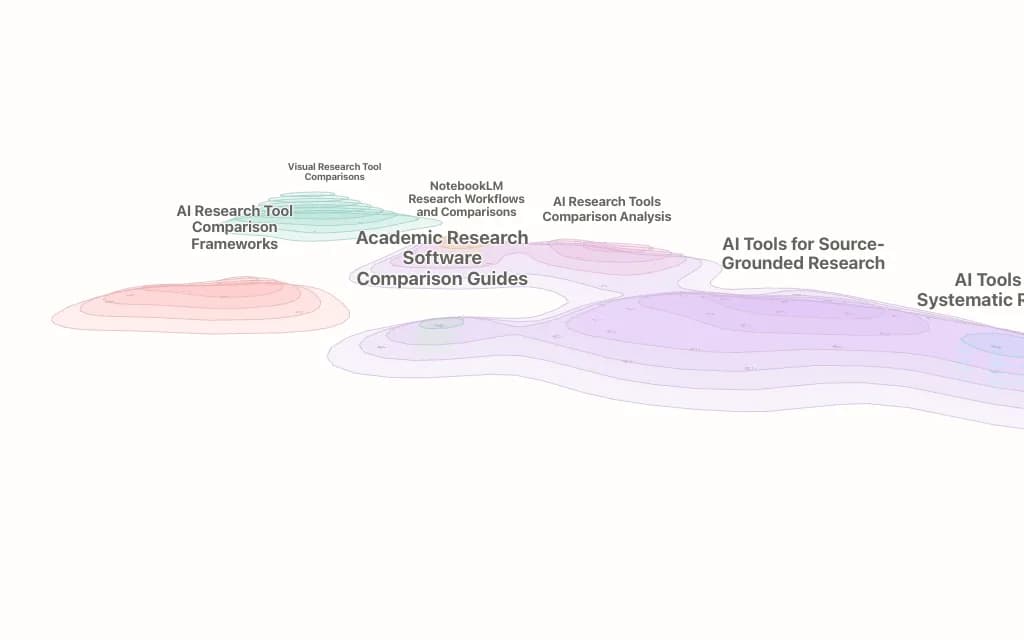
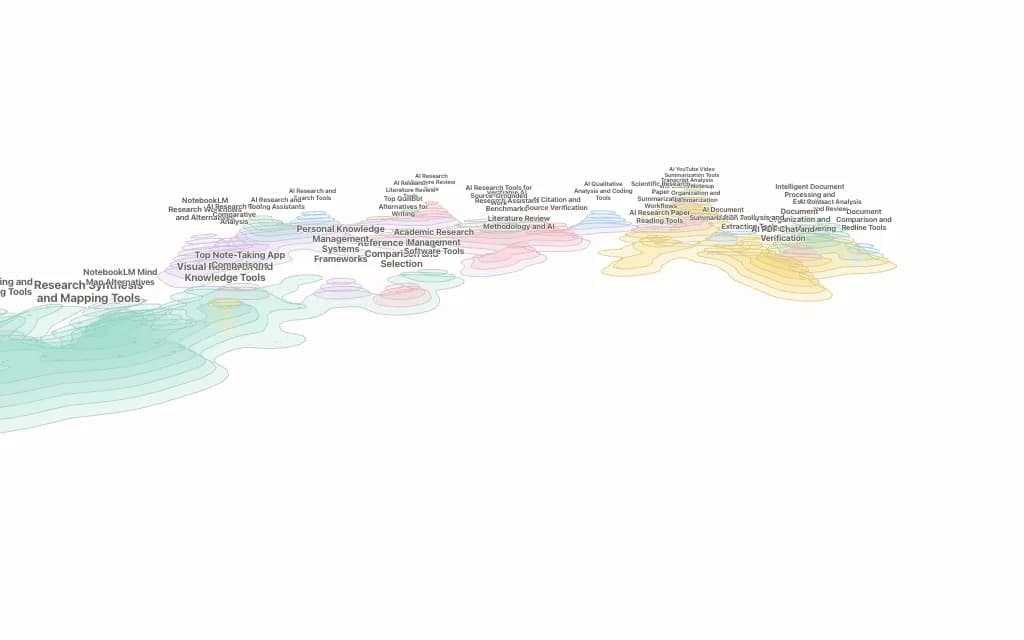
Use Atlas to turn sources into a map you can trust.
Atlas helps you read, connect, and synthesize material behind literature review with source-grounded notes, chats, and maps.
Start your workspace