
Topic hub
Competitor Comparisons
Atlas comparison pages and category decision guides for evaluating research, note-taking, and AI tools by workflow fit, citations, synthesis, and tradeoffs.
417 articles · Updated Oct 5, 2026
Start here
Atlas vs NotebookLM vs Obsidian (2026): Which Fits You?
Knowledge Compounding
Author Contribution Statement: Check Roles Before Submission
Research & Synthesis
Autoethnography With an Experience-Context-Positionality Note
Research & Synthesis
Axial Coding Through a Worked Relationship Note
Research & Synthesis
Carryover Effect: Trace Earlier Conditions Into Later Periods
Research & Synthesis
Explore
Research & Synthesis
Research & Synthesis
Author Contribution Statement: Check Roles Before Submission
Write an author contribution statement from confirmed work. Compare CRediT roles, journal rules, and a worked example before asking each person to approve.
Research & Synthesis
Autoethnography With an Experience-Context-Positionality Note
Connect autoethnography accounts with cultural context and positionality. Build a source-linked comparison note, check your reading, and keep its limits clear.
Research & Synthesis
Axial Coding Through a Worked Relationship Note
Axial coding relates categories through conditions, actions and consequences. Test a worked relationship note against supporting and contrary excerpts.
Explore
Knowledge Compounding
Knowledge Compounding
Atlas vs NotebookLM vs Obsidian (2026): Which Fits You?
Compare Atlas, NotebookLM, and Obsidian by source grounding, local file ownership, linked notes, visual maps, pricing, and fit for research workflows.
Knowledge Compounding
Best Note Summarizer AI Tools for Notes You Can Verify
Compare note summarizer AI tools for messy notes, PDFs, meetings, mind maps, and cited follow-up, including when Atlas fits for source-linked note summaries.
Knowledge Compounding
Best AI Notes Summarizers for Study and Cited Review
Compare AI notes summarizers for messy notes, PDFs, meetings, mind maps, and source-checked follow-up, including where Atlas fits for cited summaries.
Explore
Professional Knowledge Work
Professional Knowledge Work
Competitive Landscape Analysis With a Checked Evidence Table
Competitive landscape analysis starts with a defined buyer and ends with checked claims. Build an evidence table, compare alternatives, and flag gaps.
Professional Knowledge Work
Competitive product analysis with checked source claims
Competitive product analysis with a worked evidence table, source checks, unknowns, and plan conditions to compare products without inventing a winner.
Professional Knowledge Work
Policy Analysis Framework for Comparing Options
Apply a policy analysis framework with a worked evidence matrix. Compare impact, feasibility, and costs while keeping assumptions and human judgments visible.
Explore
Visual Thinking
Visual Thinking
Coggle Alternatives for Mind Maps, Teams, and Research
Compare Coggle alternatives for free mind maps, team whiteboards, diagrams, polished exports, AI mapping, source-grounded maps, and Atlas citation checks.
Visual Thinking
Best Concept Map Generators for Source-Based Maps
Compare concept map generators for templates, AI study maps, PDFs, whiteboards, exports, and source-based Atlas Knowledge Maps you can check against sources.
Visual Thinking
Best Concept Map Makers for Source-Based Visual Maps
Compare concept map makers for templates, AI mapping, team whiteboards, exports, and Atlas Knowledge Maps tied to source material in research workflows.
Full library
All articles
Quota Sampling: Examples and Recruitment Checks
Quota sampling fills preset groups without random selection. Learn its types, calculate a worked quota, and check recruitment rules before interpreting results.
Random Sampling vs Random Assignment: Check the Stage
Random sampling vs random assignment separates who enters a study from who receives a condition. Compare their purposes and check a worked methods example.
Research & Synthesis
Recall Bias: Compare the Memory Task Across Groups
Understand recall bias with a worked study example. Compare time windows, prompts, and collection conditions before judging a claim about past exposure.
Research & Synthesis
Reliability vs Validity: Read the Evidence Separately
Compare reliability vs validity with examples and a worked evidence note. Learn what consistency supports, what it cannot prove, and which passages to check.
Replicability vs Reproducibility: Check the Evidence
Understand replicability vs reproducibility by checking whether a report reuses original data or collects new data. Keep methods, results and gaps visible.
Replication Study: Compare Claims, Methods and Departures
Compare a replication study with its original paper. Check the claim, methods, measures and reported results in a worked comparison table with clear limits.
Reporting bias and the outcomes a paper leaves out
Check reporting bias by comparing planned and reported outcomes. Follow a protocol-to-report example and record discrepancies without assuming author intent.
Research Article vs Review Article: Trace the Evidence
Distinguish a research article from a review article by reading the reported work. Use a comparison note to trace findings, review claims, and source limits.
Research Paper Conclusion From Verified Findings
Write a research paper conclusion from your question, verified findings, and limits. Use a worked traceability note to check claims without adding new evidence.
Research & Synthesis
Results vs Discussion: Decide Where Each Claim Belongs
Compare results vs discussion with a worked sentence edit. Separate findings from explanations, check their support, and place each claim in the right section.
Research & Synthesis
Sampling Frame: Check the List Behind the Sample
Understand a sampling frame with examples of lists and area frames. Check the population, dates, duplicates and missing groups using a worked evidence note.
Sampling strategy in research that fits your question
Build a sampling strategy in research by connecting your question, population and selection method. Compare studies and write a bounded sampling rationale.
Scholarly vs Popular Sources: Check Type and Fit
Compare scholarly vs popular sources by audience, authorship, and review process. Use a worked source table to explain classifications and unresolved checks.
Research & Synthesis
Semantic Differential Scale: Examples and Anchor Checks
Understand semantic differential scales with published anchor examples. Check bipolar words, construct claims, midpoint meaning, and source support before use.
Research & Synthesis
Semiotic Analysis: Trace Signs, Context, and Other Readings
Use semiotic analysis to connect signs with meanings and context. Work through a fictional poster, compare other readings, and keep source evidence clear.
SPICE Framework: Build a Focused Question
Use the SPICE framework to define setting, perspective, intervention, comparison, and evaluation. Build a worked question and check its evidence needs.
Research & Synthesis
SRQR Checklist: Map Reporting Items to Your Manuscript
Use the SRQR checklist to map 21 reporting items to manuscript passages, distinguish partial reporting from missing information, and plan author review.
Research & Synthesis
Stratified vs Cluster Sampling: Follow the Selection
Compare stratified vs cluster sampling with a school survey example. Trace which groups enter the sample, who is selected, and what the report leaves open.
Research & Synthesis
Systematic Sampling: Check the Frame, Start, and Interval
Understand systematic sampling with a worked list example. Compare a study's frame, random start, interval, and ordering risks in a checked evidence note.
Theoretical Framework With a Worked Theory Choice
A theoretical framework explains why a theory fits your research question. Compare two theories, check their sources, and write a choice you can defend.
Theory Triangulation With a Worked Lens Note
Theory triangulation compares how multiple theories explain the same evidence. Build a passage-based comparison, test rival readings, and preserve disagreement.
Research & Synthesis
Transferability in Qualitative Research: Judge Context Fit
Assess transferability in qualitative research with a worked context comparison. Record relevant matches, differences, gaps, and a bounded transfer claim.
Treatment Fidelity: Compare the Protocol With What Was Delivered
Understand treatment fidelity across design, training, delivery, receipt and enactment. Build a planned-versus-delivered evidence table without overclaiming.
Research & Synthesis
Undercoverage Bias: Find Who the Frame Leaves Out
Understand undercoverage bias with a worked neighborhood survey. Compare target groups with the frame, separate nonresponse and save an inclusion-gap note.
Related hubs
Keep browsing
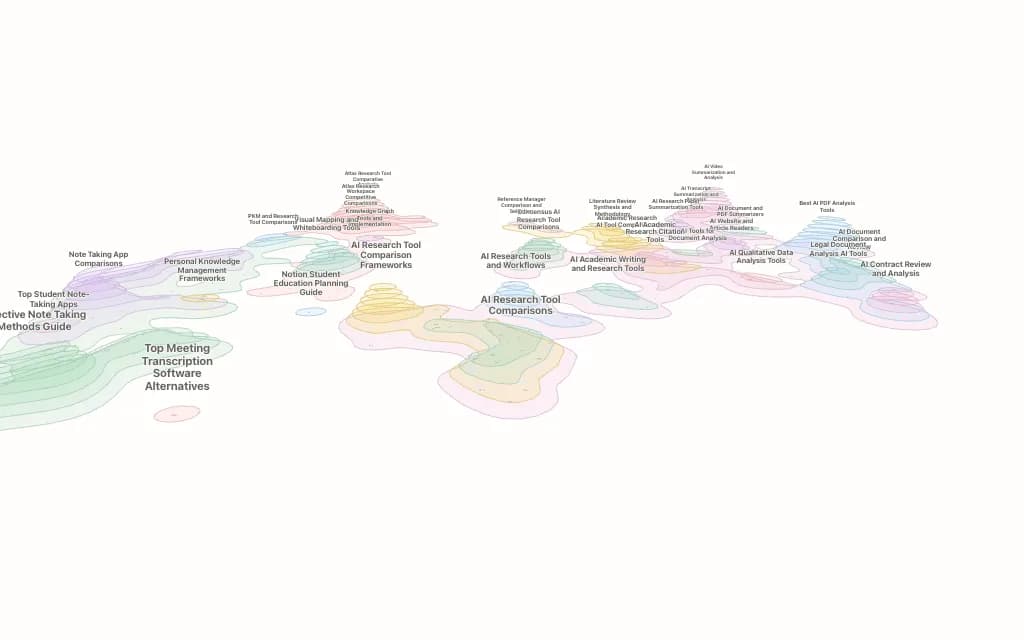
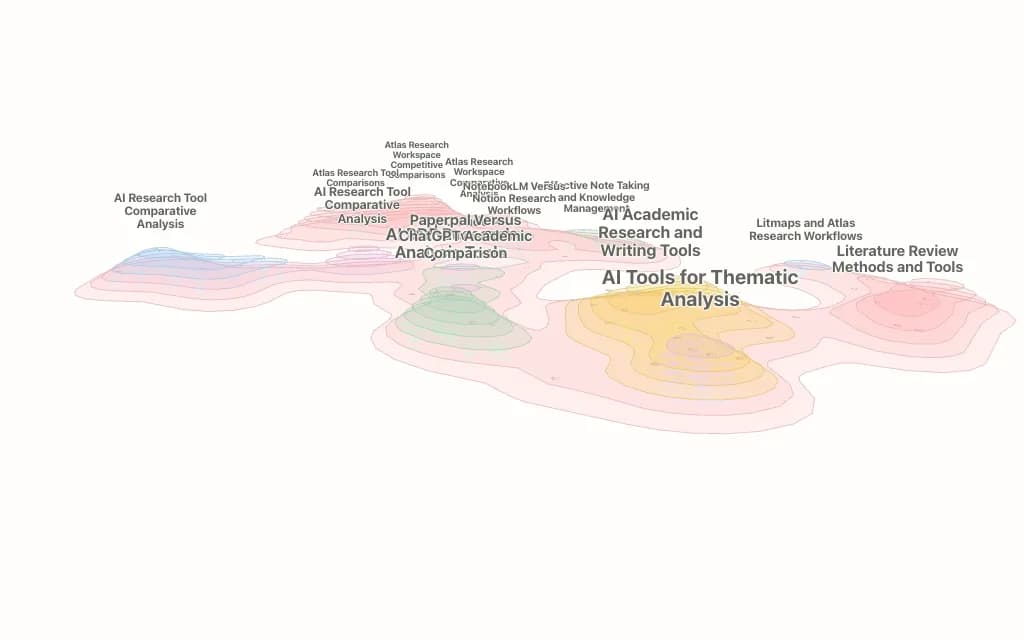
Use Atlas to turn sources into a map you can trust.
Atlas helps you read, connect, and synthesize material behind competitor comparisons with source-grounded notes, chats, and maps.
Start your workspace