
Topic hub
Study Notes
Study note workflows for students working across classes, readings, lectures, and exams, with tools for organizing concepts and reviewing with evidence.
295 articles · Updated Oct 5, 2026
Start here
A Priori Codes: Apply a Framework Without Forcing Fits
Acquiescence Bias: Check the Item Before Trusting Agreement
Research & Synthesis
Action Research With a Cycle Evidence-and-Reflection Note
Research & Synthesis
Analytic Memo: Trace Ideas to Source Excerpts
Author Contribution Statement: Check Roles Before Submission
Research & Synthesis
Explore
Research & Synthesis
Research & Synthesis
Acquiescence Bias: Check the Item Before Trusting Agreement
Understand acquiescence bias with a worked survey-item example. Check wording, answer scales, reverse scoring, and the evidence behind reported safeguards.
Research & Synthesis
Action Research With a Cycle Evidence-and-Reflection Note
Connect action research plans, actions, observations, and reflections in a cycle note. Check what changed, what the evidence supports, and what remains open.
Research & Synthesis
Author Contribution Statement: Check Roles Before Submission
Write an author contribution statement from confirmed work. Compare CRediT roles, journal rules, and a worked example before asking each person to approve.
Explore
Professional Knowledge Work
Professional Knowledge Work
Case Brief: A Worked Guide With Opinion Passage Checks
Write a case brief from your assigned opinion. Use a worked example to check facts, issue, rule, holding, and disposition against the original court passages.
Professional Knowledge Work
Case Chronology: Build a Source-Linked Event Timeline
Case chronology: build a dated event table from selected records, with pinpoint sources, checks for conflicting dates, and a clear path for human review.
Professional Knowledge Work
Competitive Landscape Analysis With a Checked Evidence Table
Competitive landscape analysis starts with a defined buyer and ends with checked claims. Build an evidence table, compare alternatives, and flag gaps.
Explore
Knowledge Compounding
Knowledge Compounding
Best Note Summarizer AI Tools for Notes You Can Verify
Compare note summarizer AI tools for messy notes, PDFs, meetings, mind maps, and cited follow-up, including when Atlas fits for source-linked note summaries.
Knowledge Compounding
Best AI Notes Summarizers for Study and Cited Review
Compare AI notes summarizers for messy notes, PDFs, meetings, mind maps, and source-checked follow-up, including where Atlas fits for cited summaries.
Knowledge Compounding
Best Notes AI Tools for Source-Checked Answers
Compare Notes AI tools for lectures, meetings, documents, study material, mobile capture, and the Atlas workflow for cited answers across saved notes.
Explore
AI-Assisted Learning
AI-Assisted Learning
AI for Student Research (2026): 9 Real Workflows Guide
AI for student research, grounded in 14 interviews with undergrads, masters, and PhDs across psychology, healthcare, CS, and humanities. Tools, workflows.
AI-Assisted Learning
How to Take Notes in Nursing School (2026): A Working System
How to take notes in nursing school 2026: the best methods (Cornell, concept maps, SOAP notes, drug cards), the apps to use, and a weekly review plan.
AI-Assisted Learning
Best Nursing Student Apps (2026): 10 Study & Clinical Tools
The 10 best apps for nursing students in 2026. Atlas, UpToDate, Epocrates, NCLEX prep apps, Anki, Notability, and clinical reference tools tested for nursing.
Full library
All articles
Research & Synthesis
Voluntary Response Bias: Check Who Chose to Reply
Understand voluntary response bias through a worked opt-in survey example. Trace recruitment, distinguish nonresponse and save a source-linked uncertainty note.
Professional Knowledge Work
Win Loss Analysis From Interviews to Checked Themes
Win loss analysis: compare buyer interviews in a source-linked theme matrix, keep contrary cases visible, and turn checked findings into a bounded next action.
Research & Synthesis
UX Research Report: A Source-Checked Structure and Example
Build a UX research report from interviews and study notes. Use a clear structure, worked example, and evidence checks before sharing recommendations.
Research & Synthesis
Abductive Coding: Follow a Surprise to a Better Explanation
Abductive coding starts when a finding challenges a theory. Use a worked case to compare rival accounts, trace claims to source lines, and test their limits.
Affinity Mapping: Turn Research Notes Into a Workshop Map
Affinity mapping for UX research, with a worked observation table: prepare source-linked notes, group them, handle outliers, and name clusters together.
After Action Review: Questions, Evidence, and Worked Example
Run an after action review with four focused questions, a planned-versus-actual evidence log, and clear next steps your team has agreed to test again.
Archival Research: Trace Records Back to Their Context
Learn archival research with a worked record table. Check finding aids, creators, dates, gaps, and conflicting accounts before writing a sourced history.
Research & Synthesis
Audit Trail in Qualitative Research: A Decision Log Example
An audit trail links qualitative research decisions to their reasons and source material. Build a dated log and see what the record can and cannot show.
Research & Synthesis
Comparative Analysis: Choose Dimensions and Check Evidence
Comparative analysis compares cases or source documents on shared dimensions. Build a cited matrix, mark missing evidence, and test apparent differences.
Confounding Variable: Spot It Before Trusting a Causal Claim
Learn what a confounding variable is with a simple example, then check how published studies report adjustment, limitations, and uncertain causal claims.
Constant Comparative Method: Compare Cases and Revise Categories
Constant comparative method, explained with a worked example: compare new incidents with earlier cases, check contradictions, and document category revisions.
Contribution Analysis: Test a Causal Story Against Evidence
Learn contribution analysis through a worked program example. Test each link in a theory of change, weigh rival causes, and write a bounded final finding.
Research & Synthesis
Convergent Mixed Methods Design With a Worked Joint Display
Plan a convergent mixed methods design, merge separately analyzed findings in a joint display, and explain agreement, difference, and unresolved results.
Research & Synthesis
Evaluation Plan: A Question-to-Evidence Template
Build an evaluation plan that links decisions, questions, criteria, data sources, methods, timing, and reporting. See a worked question-to-evidence matrix.
Evaluation Questions: How to Choose and Test a Useful Set
Write evaluation questions tied to a program and its users. Use a worked question-rationale matrix to check purpose, evidence gaps, and who approves the set.
External Validity: Test Whether a Finding Fits Your Setting
External validity asks whether a study finding can apply beyond its sample. Use a source-backed matrix to compare populations, settings, outcomes, and time.
Framework Analysis: Build a Case-by-Theme Matrix
Learn the five stages of framework analysis, build a case-by-theme matrix, and check every summary against its source transcript before drawing conclusions.
Genre Analysis: Compare Rhetorical Moves Across Model Texts
Genre analysis shows how to compare purpose, audience, section functions, and rhetorical moves across model texts, with a source-backed worked example.
Research & Synthesis
Historiographical Essay: Compare Historians' Arguments
Write a historiographical essay by comparing historians' claims, source bases, and methods. Use a worked reading matrix to turn source notes into an argument.
How Might We Statements: From Insight to Open Question
Write How Might We statements from user research. See a worked insight-to-question table, avoid hidden solutions, and keep each prompt tied to source evidence.
Research & Synthesis
In Vivo Coding: Keep Participant Words as Codes
Learn in vivo coding with a transcript example: select exact participant phrases, keep their context and citation, then explain your coding decisions.
Research & Synthesis
Inductive Thematic Analysis: From Codes to Themes
Learn inductive thematic analysis from source coding to challenged themes, with a worked evidence table, clear limits on researcher judgment, and an example.
Research & Synthesis
Integrative Review: Compare Different Kinds of Evidence
An integrative review brings studies and theory together. Use a mixed-evidence matrix to check each source's claim, type, and limit in your synthesis.
Research & Synthesis
Interpretative Phenomenological Analysis: A Case-First Guide
Interpretative phenomenological analysis starts with one person's account. See a worked case trace, cross-case themes, and checks for sound interpretation.
Related hubs
Keep browsing
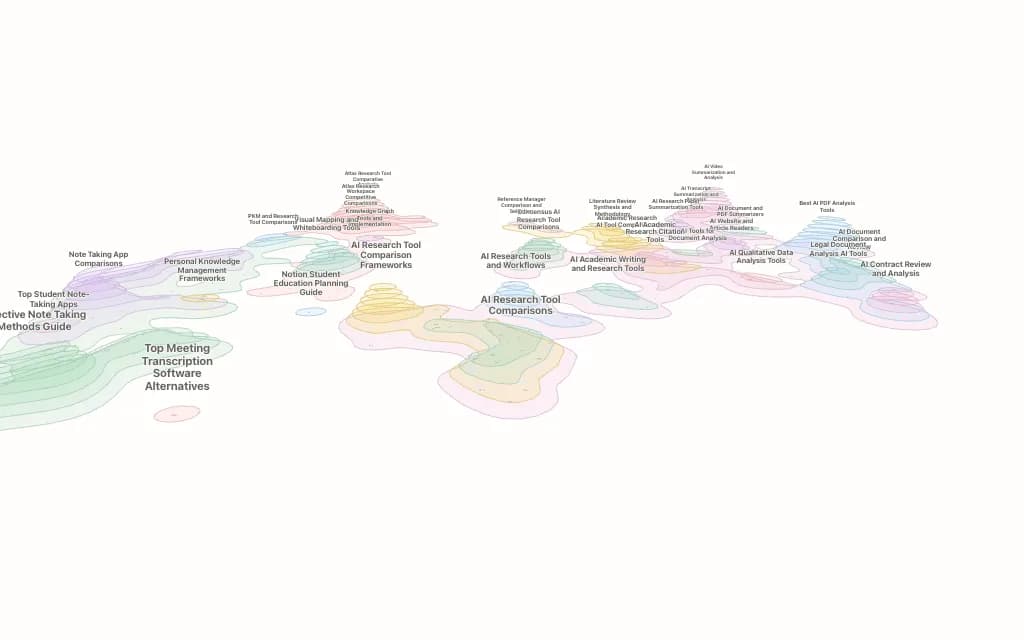
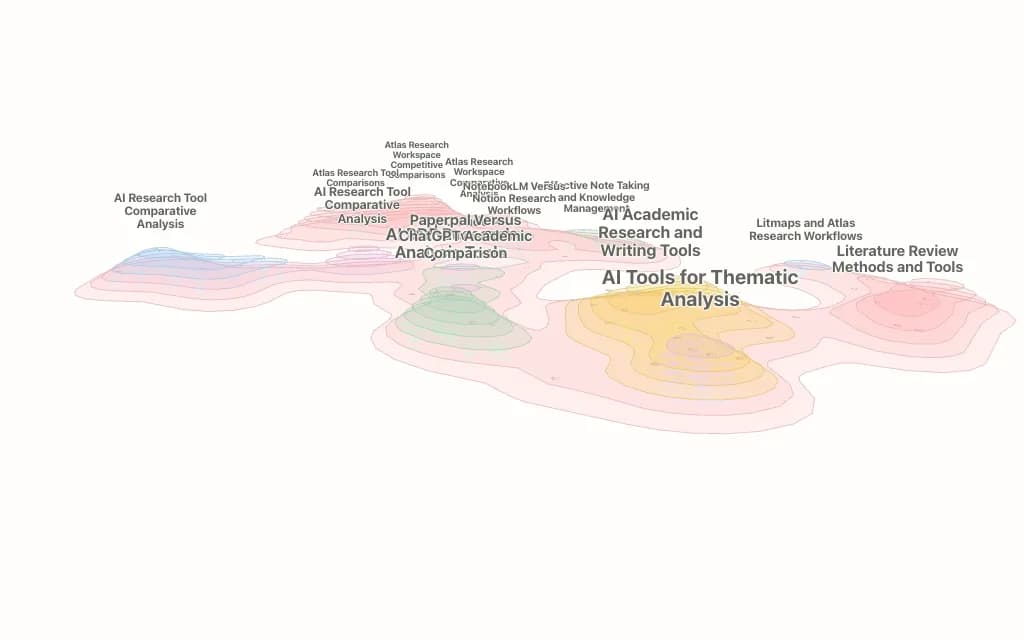
Use Atlas to turn sources into a map you can trust.
Atlas helps you read, connect, and synthesize material behind study notes with source-grounded notes, chats, and maps.
Start your workspace