
Topic hub
Study Notes
Study note workflows for students working across classes, readings, lectures, and exams, with tools for organizing concepts and reviewing with evidence.
295 articles · Updated Oct 5, 2026
Start here
A Priori Codes: Apply a Framework Without Forcing Fits
Acquiescence Bias: Check the Item Before Trusting Agreement
Research & Synthesis
Action Research With a Cycle Evidence-and-Reflection Note
Research & Synthesis
Analytic Memo: Trace Ideas to Source Excerpts
Author Contribution Statement: Check Roles Before Submission
Research & Synthesis
Explore
Research & Synthesis
Research & Synthesis
Acquiescence Bias: Check the Item Before Trusting Agreement
Understand acquiescence bias with a worked survey-item example. Check wording, answer scales, reverse scoring, and the evidence behind reported safeguards.
Research & Synthesis
Action Research With a Cycle Evidence-and-Reflection Note
Connect action research plans, actions, observations, and reflections in a cycle note. Check what changed, what the evidence supports, and what remains open.
Research & Synthesis
Author Contribution Statement: Check Roles Before Submission
Write an author contribution statement from confirmed work. Compare CRediT roles, journal rules, and a worked example before asking each person to approve.
Explore
Professional Knowledge Work
Professional Knowledge Work
Case Brief: A Worked Guide With Opinion Passage Checks
Write a case brief from your assigned opinion. Use a worked example to check facts, issue, rule, holding, and disposition against the original court passages.
Professional Knowledge Work
Case Chronology: Build a Source-Linked Event Timeline
Case chronology: build a dated event table from selected records, with pinpoint sources, checks for conflicting dates, and a clear path for human review.
Professional Knowledge Work
Competitive Landscape Analysis With a Checked Evidence Table
Competitive landscape analysis starts with a defined buyer and ends with checked claims. Build an evidence table, compare alternatives, and flag gaps.
Explore
Knowledge Compounding
Knowledge Compounding
Best Note Summarizer AI Tools for Notes You Can Verify
Compare note summarizer AI tools for messy notes, PDFs, meetings, mind maps, and cited follow-up, including when Atlas fits for source-linked note summaries.
Knowledge Compounding
Best AI Notes Summarizers for Study and Cited Review
Compare AI notes summarizers for messy notes, PDFs, meetings, mind maps, and source-checked follow-up, including where Atlas fits for cited summaries.
Knowledge Compounding
Best Notes AI Tools for Source-Checked Answers
Compare Notes AI tools for lectures, meetings, documents, study material, mobile capture, and the Atlas workflow for cited answers across saved notes.
Explore
AI-Assisted Learning
AI-Assisted Learning
AI for Student Research (2026): 9 Real Workflows Guide
AI for student research, grounded in 14 interviews with undergrads, masters, and PhDs across psychology, healthcare, CS, and humanities. Tools, workflows.
AI-Assisted Learning
How to Take Notes in Nursing School (2026): A Working System
How to take notes in nursing school 2026: the best methods (Cornell, concept maps, SOAP notes, drug cards), the apps to use, and a weekly review plan.
AI-Assisted Learning
Best Nursing Student Apps (2026): 10 Study & Clinical Tools
The 10 best apps for nursing students in 2026. Atlas, UpToDate, Epocrates, NCLEX prep apps, Anki, Notability, and clinical reference tools tested for nursing.
Full library
All articles
SPIRIT Checklist: Map a Protocol to SPIRIT 2025
Find the current SPIRIT checklist and map a trial protocol to its items. Use a worked example to track passages, missing details, and investigator queries.
Research & Synthesis
SQ3R Reading Strategy With a Checked Reading Note
Use the SQ3R reading strategy to survey, question, read, recite, and review a selected text. Try a worked reading note that separates recall from source checks.
Research & Synthesis
SRQR Checklist: Map Reporting Items to Your Manuscript
Use the SRQR checklist to map 21 reporting items to manuscript passages, distinguish partial reporting from missing information, and plan author review.
Research & Synthesis
Statement of the Problem: Write It From Research Evidence
Write a statement of the problem with context, a defensible research gap, and consequences. Follow a worked example, evidence outline, and revision checks.
Research & Synthesis
Stratified Sampling: Check the Groups and Selection
Understand stratified sampling through a worked allocation example, then check how a study defines strata, selects within them, and reports its limits.
Research & Synthesis
Stratified vs Cluster Sampling: Follow the Selection
Compare stratified vs cluster sampling with a school survey example. Trace which groups enter the sample, who is selected, and what the report leaves open.
Structured abstract with a manuscript evidence map
Structured abstract guidance with journal heading checks, a worked manuscript evidence map, and a draft example that preserves numbers and study limitations.
Structured Observation: Check Categories Against Events
Apply structured observation categories with a worked coding example. Check recorded events and keep unclear or missing evidence separate from zero counts.
Synthesis Paragraph: Connect Sources Without Losing Limits
Write a synthesis paragraph that connects research sources around one claim. Use a worked plan to keep attribution, disagreement, and evidence limits clear.
Research & Synthesis
Systematic Sampling: Check the Frame, Start, and Interval
Understand systematic sampling with a worked list example. Compare a study's frame, random start, interval, and ordering risks in a checked evidence note.
Theoretical Framework With a Worked Theory Choice
A theoretical framework explains why a theory fits your research question. Compare two theories, check their sources, and write a choice you can defend.
Theory Triangulation With a Worked Lens Note
Theory triangulation compares how multiple theories explain the same evidence. Build a passage-based comparison, test rival readings, and preserve disagreement.
Three Minute Thesis: Build a Checked Research Story
Build your three minute thesis with a source-linked speech outline. Connect the question, approach and finding, choose one slide, and rehearse to your rules.
TIDieR Checklist: Map Items to Reported Details
Use the 12-item TIDieR checklist to trace intervention details to source passages. Follow a worked example and keep planned and actual delivery distinct.
Research & Synthesis
Transferability in Qualitative Research: Judge Context Fit
Assess transferability in qualitative research with a worked context comparison. Record relevant matches, differences, gaps, and a bounded transfer claim.
Treatment Fidelity: Compare the Protocol With What Was Delivered
Understand treatment fidelity across design, training, delivery, receipt and enactment. Build a planned-versus-delivered evidence table without overclaiming.
Research & Synthesis
Typical Case Sampling: Check the Ordinary-Case Claim
Understand typical case sampling through a worked site example. Check the evidence for typicality, the relevant context, and the limits of the example.
Research & Synthesis
Undercoverage Bias: Find Who the Frame Leaves Out
Understand undercoverage bias with a worked neighborhood survey. Compare target groups with the frame, separate nonresponse and save an inclusion-gap note.
Usability Test Plan: Turn Questions into Tasks
Build a usability test plan from research questions and realistic tasks. Work through observation criteria, open recruitment choices, and a source review.
Usability Test Report: Connect Findings to Evidence
Write a usability test report from completed sessions. Link each finding to observed behavior, checked task outcomes, and a researcher-reviewed next action.
User Research Insights: Keep the Evidence
Turn observations into user research insights with linked evidence and clear limits. Use a worked note that keeps supporting excerpts and counterexamples.
UX Research Interview Guide With a Question Map
A UX research interview guide turns study questions into neutral prompts. Use a worked question map, follow-up probes, and a pilot review before interviews.
UX Research Plan: Questions, Methods, and a Worked Example
Plan a focused UX study with a worked example. Connect earlier findings to questions, participants, methods, and the choices your team still needs to make.
Professional Knowledge Work
Vendor Comparison Matrix: Compare Claims Before Scores
Build a vendor comparison matrix with proposal references, clear criteria, missing-evidence flags, and a worked example before your team assigns scores.
Related hubs
Keep browsing
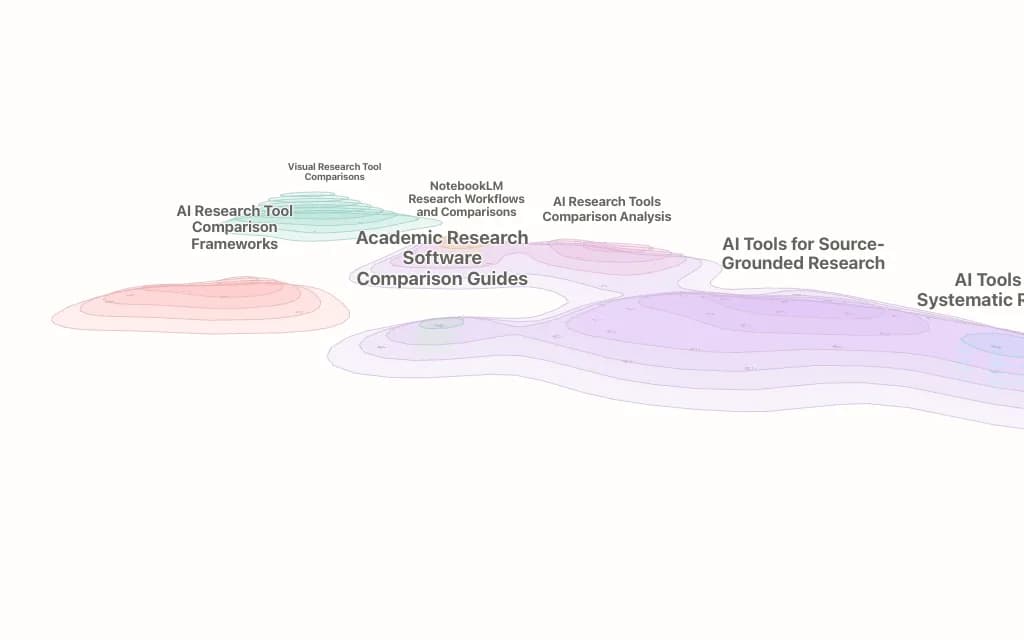
Use Atlas to turn sources into a map you can trust.
Atlas helps you read, connect, and synthesize material behind study notes with source-grounded notes, chats, and maps.
Start your workspace