
Topic hub
Document Analysis
Document analysis workflows for reports, papers, briefs, and dense source sets, with methods for extracting claims, comparing evidence, and tracing answers.
201 articles · Updated Oct 3, 2026
Explore
Research & Synthesis
Research & Synthesis
Acquiescence Bias: Check the Item Before Trusting Agreement
Understand acquiescence bias with a worked survey-item example. Check wording, answer scales, reverse scoring, and the evidence behind reported safeguards.
Research & Synthesis
ARRIVE Guidelines With a Reporting Evidence Note
Use ARRIVE guidelines to locate animal-study reporting in a manuscript. Build an item-to-text note, check gaps, and keep reporting distinct from study validity.
Research & Synthesis
Ceiling Effect: Check What a Maximum Score Can Show
Understand the ceiling effect with a worked score example. Trace scale bounds, reported top scores, and limits before interpreting a lack of measured change.
Explore
Professional Knowledge Work
Professional Knowledge Work
Case Brief: A Worked Guide With Opinion Passage Checks
Write a case brief from your assigned opinion. Use a worked example to check facts, issue, rule, holding, and disposition against the original court passages.
Professional Knowledge Work
Competitive Landscape Analysis With a Checked Evidence Table
Competitive landscape analysis starts with a defined buyer and ends with checked claims. Build an evidence table, compare alternatives, and flag gaps.
Professional Knowledge Work
Competitive product analysis with checked source claims
Competitive product analysis with a worked evidence table, source checks, unknowns, and plan conditions to compare products without inventing a winner.
Explore
Knowledge Compounding
Knowledge Compounding
Best Notes AI Tools for Source-Checked Answers
Compare Notes AI tools for lectures, meetings, documents, study material, mobile capture, and the Atlas workflow for cited answers across saved notes.
Knowledge Compounding
Atlas vs Capacities (2026): An In-Depth Research Comparison
Atlas is a visual research workspace. Capacities is an object-based note app. Compare paper deconstruction, cited answers, research context, and tool fit.
Knowledge Compounding
Atlas vs Claude for Research (2026): Workspace Comparison
Atlas Workspace vs Claude for research: compare citation grounding, paper maps, project context, long-document analysis, drafting, and AI assistant work.
Explore
Visual Thinking
Visual Thinking
Knowledge Graph Generator Guide for Source-Grounded Maps
Learn what knowledge graph generators create, when to use graph database builders, and when Atlas Knowledge Maps fit source navigation and synthesis best.
Visual Thinking
Best Concept Map Generators for Source-Based Maps
Compare concept map generators for templates, AI study maps, PDFs, whiteboards, exports, and source-based Atlas Knowledge Maps you can check against sources.
Visual Thinking
How to Organize PDFs by Page Order, Tags, and OCR
Organize PDF files by reordering pages with a browser tool, then use clear names, folders, tags, OCR, and PDF metadata to keep a larger library searchable.
Full library
All articles
Research & Synthesis
Critical Discourse Analysis With a Worked Framing Table
Critical discourse analysis connects language choices with power and context. Build a framing table that separates textual evidence from interpretations.
Critical Incident Technique: Keep Context With Each Account
Use the critical incident technique to compare significant events. Keep context, actions, reported effects, selection rules, and missing details visible.
Crossover Study Design: Check Sequences, Periods and Carryover
Read a crossover study design with a worked evidence table. Check treatment order, period timing, washout claims and paired analysis against reported passages.
Research & Synthesis
Customer Feedback Analysis With Themes and Counterexamples
Customer feedback analysis connects recurring needs to source examples. Use a worked theme note, counterexamples, and sample limits before choosing an action.
Descriptive Research: Match the Question to the Observations
Plan descriptive research with a clear population, phenomenon, and source of observations. Use a worked example to keep report claims within the evidence.
Diary Study: Compare Experiences Without Losing Time
Plan a diary study and compare dated entries with a worked example. Preserve context, missing reports, and contradictory experiences before drawing conclusions.
Research & Synthesis
Discriminant Validity: Check Distinct-Construct Evidence
Discriminant validity concerns empirical distinction between constructs. Compare definitions, measures, reported evidence and limits with a worked note.
Empirical Research: Trace Data to Claims
Identify empirical research by tracing observations, methods, and results. Use a paper table to separate reported data from theory and unsupported claims.
Experimental research design through reported methods
Read experimental research design with a worked evidence table. Check what changed, how groups were assigned, what controls did, and which details remain open.
Focus Group Analysis: Keep Speaker Context
Use focus group analysis to trace themes, agreement, dissent, and speaker context. Build a worked source note without treating silence as a group's consent.
Hawthorne Effect Explained Through Study Evidence
Hawthorne effect means behavior may change when people know they are studied. Learn to separate observation awareness, reported change, and causal evidence.
Industry Analysis With a Checked Evidence Brief
Build an industry analysis from dated reports and company materials. Use a worked evidence brief to check industry boundaries, drivers, competition and risks.
Internal Consistency and the Limits of Alpha
Internal consistency concerns links among items in a measure. Check the construct, score, sample and reported coefficient before interpreting alpha or omega.
Intra-Rater Reliability Through Repeated Judgment Evidence
Intra-rater reliability checks one rater's repeated judgments. Trace what was repeated, the rating interval, blinding and reported agreement in a study.
IRAC Method: Build a Fact-to-Rule Analysis
Learn the IRAC method with a worked issue, rule, application, and conclusion. Connect facts to rule passages and flag gaps before you write your answer.
Legal Brief Outline With Record and Authority Checks
A legal brief outline links each argument to record facts and legal authority. Follow a worked example, court format checks, and a counsel review workflow.
Manipulation Check: Separate the Intended State From the Outcome
Read a manipulation check without confusing delivery, the intended state, and the study outcome. Use a worked evidence note to qualify the reported result.
Professional Knowledge Work
Market Research Report Template With a Source Map
Use a market research report template to organize supplied findings and methods. Build a source map, check claim limits, and write a traceable recommendation.
Methods paper from procedure to validation evidence
Methods paper guidance with a worked reporting outline, a real source workflow figure, and checks that connect method claims to validation and limitations.
Research & Synthesis
Multistage Sampling: Trace Each Selection Stage
Understand multistage sampling with a school-to-class-to-student example. Reconstruct each reported draw, check gaps, and save a source-linked stage map.
Research & Synthesis
N-of-1 Trial: Read Treatment Periods and Evidence Limits
Read an N-of-1 trial paper with a worked StatinWISE example. Check treatment periods, distinguish individual and pooled results, and save a cited evidence note.
Parallel Forms Reliability and Evidence of Equivalence
Parallel forms reliability compares different test versions. Check content, administration order and reported results before treating forms as interchangeable.
Participant Observation: Keep Your Role in the Evidence
Understand participant observation with a worked field-note example. Check events, researcher involvement and interpretations before reporting a finding.
Phenomenological Research Design: Choose a Coherent Approach
Plan a phenomenological research design by linking your lived-experience question, participants, researcher stance, and analysis. Compare two published studies.
Related hubs
Keep browsing
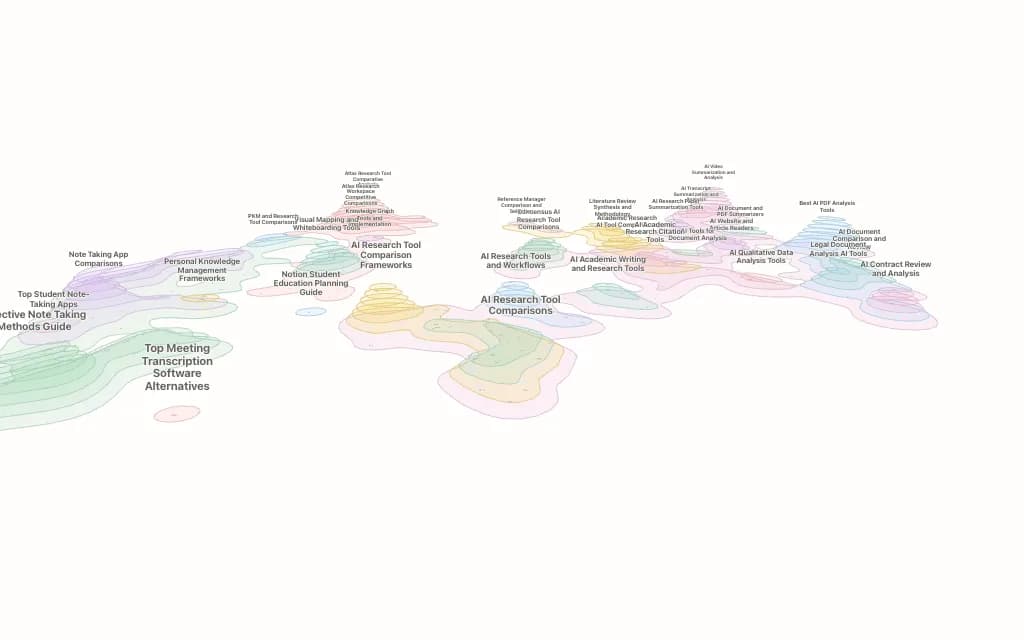
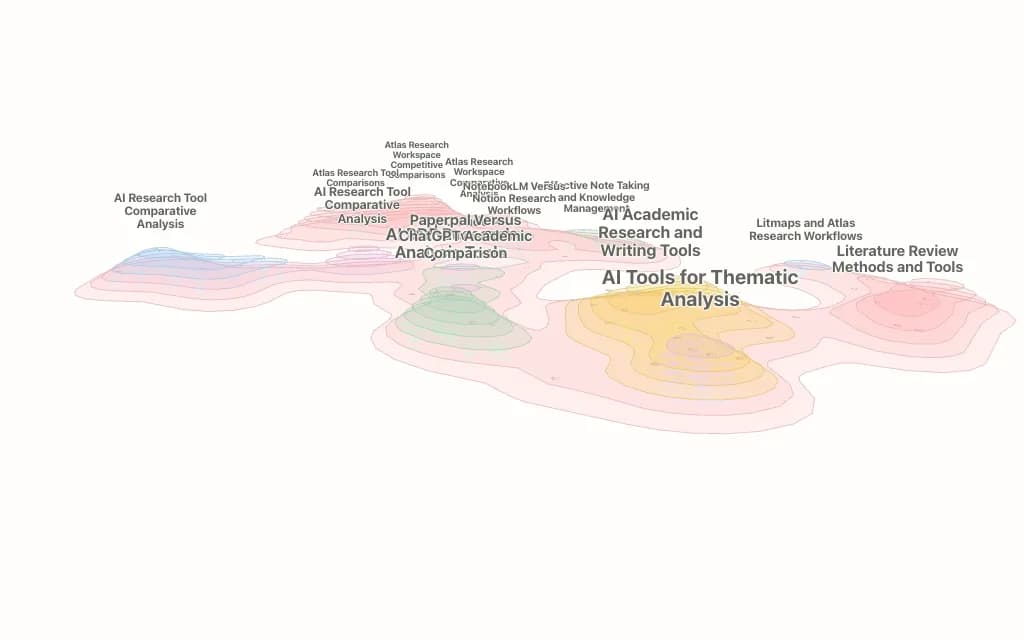
Use Atlas to turn sources into a map you can trust.
Atlas helps you read, connect, and synthesize material behind document analysis with source-grounded notes, chats, and maps.
Start your workspace